
When Indian chef Brehadeesh Kumar was a young boy, his fascination with Japan began not in a kitchen, but with a 10-yen coin. The coin, a gift from his grandfather, bore the image of Kyoto’s Byodo-in Temple’s Phoenix Hall a symbol of grace, balance, and timeless beauty. What began as childhood curiosity would later shape his life’s passion: bringing authentic Japanese cuisine to Indian tables.
A Coin That Sparked a Culinary Journey
 WhatsApp Image 2024 07 01 at 13.58.28 4cfca4e0
Growing up in Chennai, Kumar often gazed at that coin, wondering about the country it came from. The symmetry of the temple engraving, the unfamiliar Japanese script, and the idea of a faraway culture so deeply rooted in artistry stayed with him.
As he later recalled, “I didn’t know what Japan was really like, but that coin felt special like a small window into a world of precision and beauty.”
Years later, while studying culinary arts, Kumar’s interest reignited when he encountered Japanese cooking techniques in his coursework. The philosophy behind Japanese cuisine simplicity, respect for ingredients, and seasonal harmony resonated deeply with him. “It wasn’t just cooking,” he says, “it was mindfulness on a plate.”
Training in Japan: A Lesson in Discipline and Detail
Determined to learn from the source, Kumar pursued professional training in Japan. His journey took him to Tokyo and Kyoto, where he apprenticed in local kitchens under seasoned chefs who upheld centuries-old traditions.
At first, the discipline was daunting. “Every movement mattered,” he recalls. “Even how you cut a vegetable or hold a knife said something about your respect for food.”
In Japan, he discovered the meaning of omotenashi the spirit of wholehearted hospitality which would later influence how he approached food back home. “It’s not just about taste,” he explains. “It’s about care, presentation, and the experience you create for the guest.”
Bringing Japan to India’s Culinary Scene
After returning to India, Kumar set out to introduce Japanese cuisine beyond sushi platters in five-star hotels. In Pune, a city known for its growing cosmopolitan culture and experimental food scene, he found the perfect place to begin.
He launched workshops and pop-up dining events, teaching locals how to prepare authentic dishes such as ramen, miso soup, teriyaki, and tempura but with ingredients adapted to Indian availability while preserving the essence of Japanese flavor.
“I wanted to show that Japanese food isn’t just raw fish or fancy dining,” he says. “It’s comfort food. It’s balance and warmth something that connects beautifully with Indian sensibilities.”
Kumar’s approach blends Japanese minimalism with Indian familiarity. His signature dishes like matcha-infused idli or miso butter dosa have gained attention for their creativity and respect toward both cultures. He often says, “I’m not fusing for novelty; I’m connecting philosophies.”
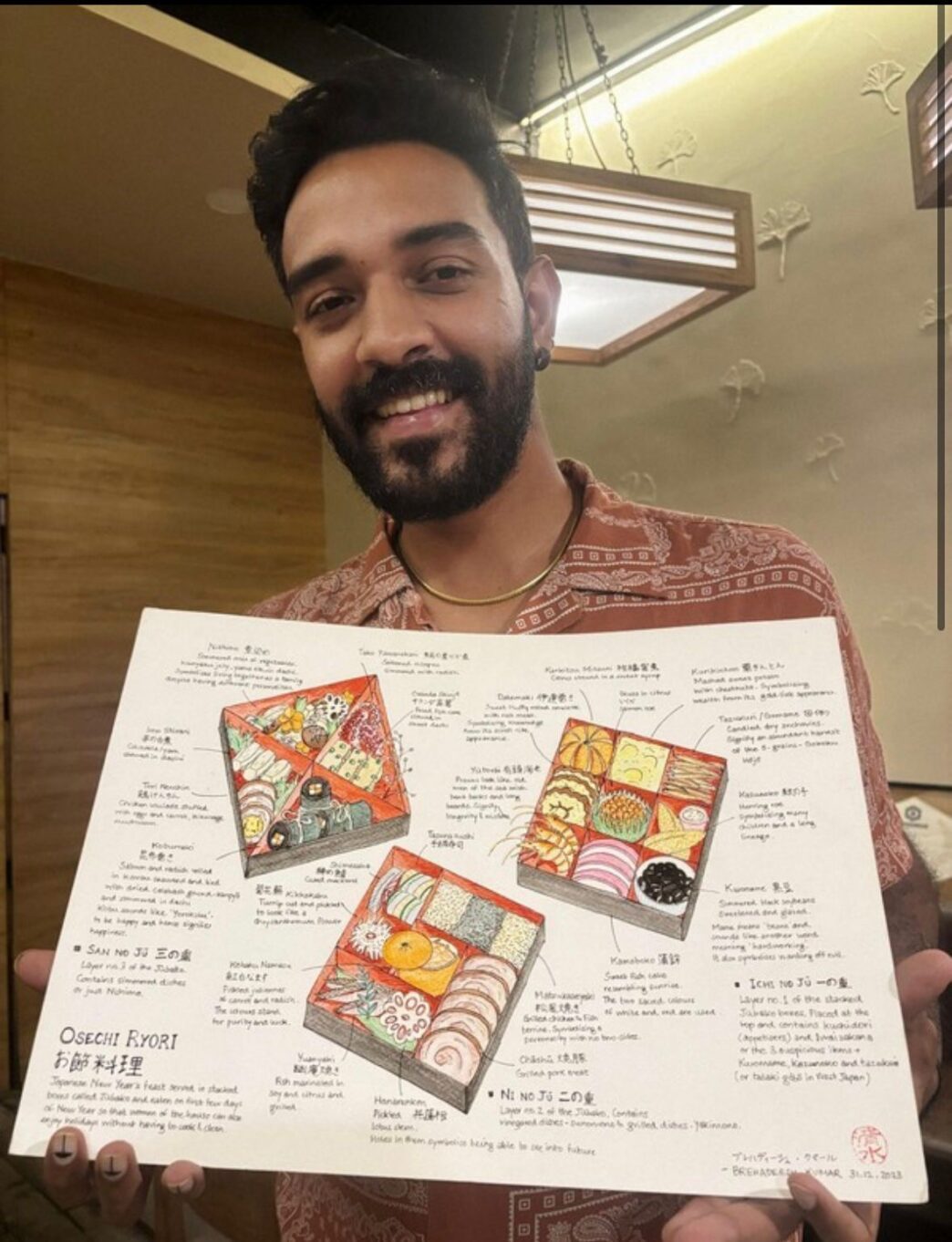
In his workshops, he emphasizes understanding the “why” behind Japanese cooking. Participants learn not only recipes but also the cultural context from the symbolism of bento arrangements to the seasonal spirit of washoku (traditional Japanese cuisine).
For Kumar, food education is as important as flavor. “Once people understand the story, they appreciate the food more deeply,” he says.
Growing Curiosity About Japan in India
Kumar’s efforts come at a time when interest in Japanese culture is steadily rising in India from anime and design to martial arts and cuisine. Young Indians, especially in urban centers, are seeking authentic experiences and are more open to global tastes.
Restaurants in Mumbai, Bengaluru, and Delhi now feature Japanese menus, while Japanese ingredients like nori, miso, and matcha are increasingly available in Indian supermarkets.
Kumar believes this trend is not just about exoticism but about connection. “Indians respect traditions and Japanese traditions have that same spirit. When people realize that, they feel a kinship.”
Kumar now runs hands-on Japanese cooking classes for students, professionals, and food enthusiasts. His sessions often begin with short stories like how soy sauce evolved or the meaning behind itadakimasu before moving to practical lessons on sushi rolling or broth making.
He also collaborates with Japanese cultural centers and embassies in India to host culinary exchange events, where Indian chefs learn authentic techniques and Japanese guests discover how local ingredients can reinterpret classic dishes.
“These experiences help build bridges,” he says. “Every meal is a small act of understanding.”
Beyond teaching, Kumar’s larger goal is to make Japanese cuisine a part of everyday Indian dining approachable, nutritious, and emotionally satisfying. He envisions a future where ramen shops and izakayas stand comfortably beside dosa stalls and curry houses.
“In both Japan and India, food is a form of respect,” he reflects. “We cook to care for people. That’s what connects us.”
Today, the 10-yen coin that started it all still sits framed in his Pune studio kitchen a quiet reminder of how curiosity, culture, and cuisine can shape a life.
Bridging Cultures, One Meal at a Time
Chef Brehadeesh Kumar’s journey is not merely a culinary success story. It’s a story of cultural empathy how a symbol on a coin led to a lifelong mission of sharing one culture’s soul through another’s table.
As diners in India learn to savor the umami of miso and the simplicity of sashimi, they are also tasting the spirit of a country that once inspired a young boy’s imagination and continues to inspire his kitchen today.
Originally written by:By Takuro Iwahashi
Link to the article : https://mainichi.jp/english/articles/20251110/p2g/00m/0in/012000c