
Japan is a country known for its deep-rooted rituals, respect for ancestry, and carefully preserved customs surrounding death. Today, it also holds a unique global record: the highest cremation rate in the world. According to Health Ministry data from 2012, an astonishing 99.94% of all deceased individuals in Japan were cremated. With nearly 1.57 million deaths each year, this high rate places immense pressure on the country’s end-of-life industry, pushing crematoria and funeral services to operate at maximum capacity.
Yet, beyond human cremation, Japan has witnessed another significant cultural shift one that reflects its changing relationship with animals.
 WhatsApp Image 2024 07 01 at 13.58.28 4cfca4e0
The Rise of Pet Companionship in Modern Japan
Over the past few decades, Japan has undergone a profound transformation in how it views and treats companion animals. Toward the end of the 20th century, as urban lifestyles evolved and birth rates declined, the number of pets began to surpass the number of children. Cats and dogs became cherished members of the family, filling emotional spaces that once belonged to larger households or traditional community structures.
This shift brought with it a new question: How should beloved pets be treated after death?
For many years, particularly in cities, it was not uncommon for deceased pets to be disposed of as burnable trash a practical but emotionally difficult practice for grieving owners. As bonds between humans and pets deepened, this method became increasingly unacceptable.
A New Era for Pet Funerals and Cremation
“Many people in Japan grew uncomfortable with disposing of the bodies of their beloved pets in the burnable trash,” explains Barbara R. Ambros, professor of East Asian religions at the University of North Carolina at Chapel Hill and a leading scholar on human–animal relationships in Japan.
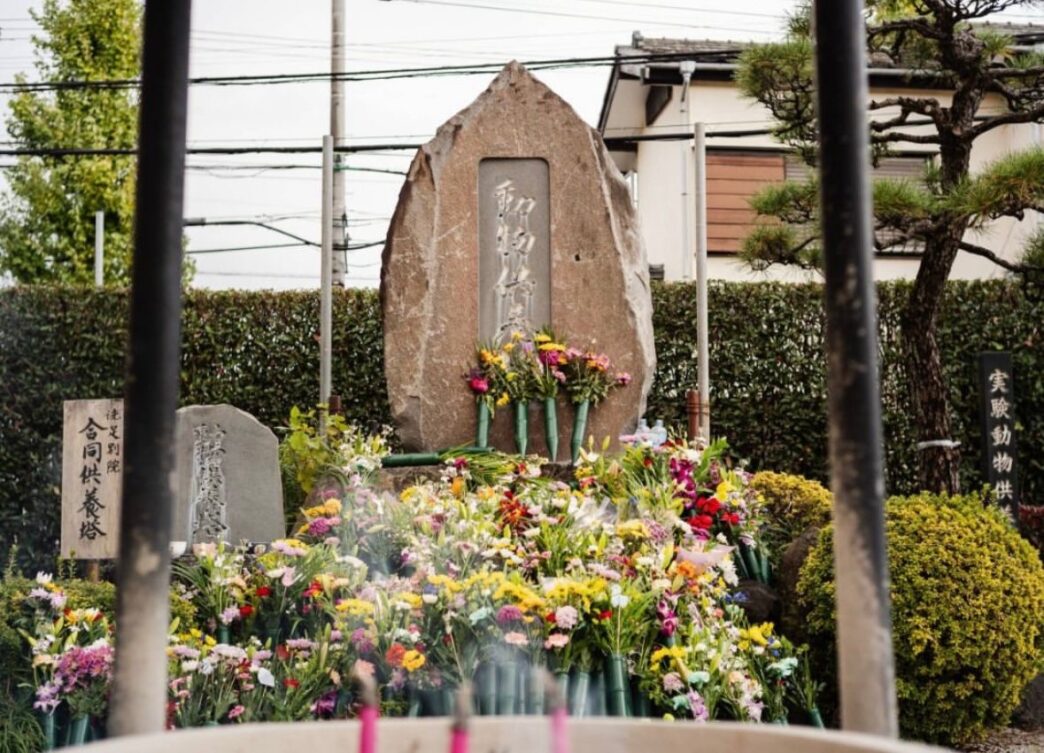
From the 1980s onward, Japan saw a rapid rise in pet cemeteries, crematoria, and ceremonial services, all developed to honor animals with dignity. Urban pet owners, seeking closure and proper farewell rituals, turned to these facilities in large numbers. What emerged was a new, emotionally sensitive industry that mirrored human funerals complete with altars, prayers, urns, memorial tablets, and annual remembrance ceremonies.
Buddhist Temples and the Pet Memorial Movement
Interestingly, the growth of pet funerals also created new opportunities for Buddhist institutions. As traditional temple memberships declined due to demographic changes and urban migration, performing pet memorials became a way to stay culturally relevant and financially sustainable.
“The practice of offering pet funerals also provided new opportunities for Buddhist institutions to make themselves relevant to their constituents,” Ambros notes.
Many temples now offer pet memorial tablets (ihai), joint burial plots, and even annual memorial services (hōyō) dedicated to animals. These rituals have become widely accepted as an extension of Japanese spiritual compassion a natural integration of pets into the broader cultural framework of remembrance and respect.
A Reflection of Changing Values
The rise of Japan’s pet funeral culture is more than an industry trend; it’s a reflection of shifting social values and emotional landscapes. As families become smaller and lifestyles evolve, pets have taken on roles as confidants, companions, and even surrogate children. Honoring them in death is an extension of the love and gratitude they receive in life.
Today, Japan’s pet cremation and funeral services stand as a testament to a society adapting its traditions to match its changing heart proving that reverence, compassion, and ritual can extend beyond human boundaries.
Originally news source: Japan Times
Link:https://www.instagram.com/p/DR6-P6gFxVf/?igsh=MWJtYXNzYWF0cnQ0OA==