
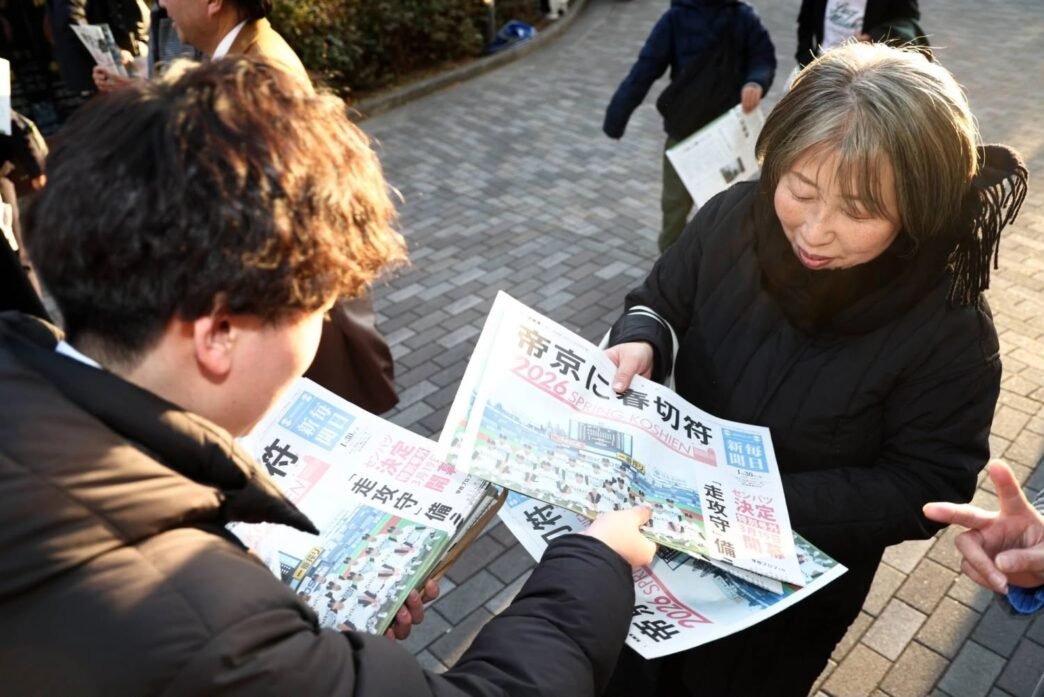
Japan’s long-standing newspaper culture has reached a significant milestone, with the country’s newspaper subscription rate falling below 50% for the first time since nationwide tracking began in 2008.
According to the Japan Press Research Institute’s fiscal 2026 survey, 49.8% of respondents said they had a monthly newspaper subscription, down 0.3 percentage points from the previous year. When the survey first began in 2008, the figure stood at 88.6%, highlighting the scale of the decline over nearly two decades.
 WhatsApp Image 2024 07 01 at 13.58.28 4cfca4e0
Newspaper Readership Falls Below Half
The latest findings indicate that traditional print newspapers are becoming less central to everyday news consumption in Japan.
The survey was conducted between July 17 and August 16, 2026. Researchers surveyed 5,000 people aged 18 and above nationwide and received 2,676 valid responses.
The results reflect a gradual shift in how people access information, with digital platforms offering faster access to breaking news, updates and a wider range of sources.
Internet and Television Remain Major News Sources
The survey also examined which media people used to obtain news during a typical week.
The findings showed:
● Commercial television: 84.2%
● Internet: 74.4%
● NHK television: 69.7%
● Newspapers: 49.7%
● Radio: 27.6%
The share of respondents who received news from newspapers during the week also fell below 50% for the first time. Commercial television ranked first, followed by the internet and public broadcaster NHK.
A Long-Term Shift Since 2008
The decline in newspaper subscriptions has been building for years.
In 2008, 88.6% of survey respondents reported having newspaper subscriptions. By 2025, the rate had already fallen to 50.1%, before slipping further in the latest survey.
The trend reflects broader changes in media habits, including the growing availability of news websites, mobile applications and online video platforms.
For younger audiences in particular, digital services provide a convenient way to follow breaking developments without relying on a physical newspaper delivered to the home.
What the Decline Means for Japan’s Media Industry
The changing subscription figures present a challenge for newspaper publishers, which have traditionally relied on paid circulation and advertising revenue.
As print readership declines, media organisations face pressure to develop digital subscriptions, strengthen online journalism and find sustainable business models.
However, the shift does not necessarily mean that newspapers have lost all their influence. Print publications continue to provide reporting, analysis and local coverage, while many publishers also operate digital platforms.
The central challenge is finding ways to maintain journalism and public access to reliable information as audience habits evolve.
Why This Matters
1. A Historic Milestone
For the first time since 2008, fewer than half of survey respondents reported having a monthly newspaper subscription.
2. Digital Media’s Growing Role
The internet now reaches a much larger share of weekly news consumers than newspapers do.
3. Pressure on Traditional Publishers
Newspaper companies must adapt their business models as print subscriptions decline.
4. Changing News Habits
Japan’s experience reflects a broader transformation in how audiences discover, consume and share information.
Final Word
Japan’s newspaper subscription rate falling to 49.8% marks a turning point for one of the country’s most established media traditions.
With television and the internet reaching more news consumers, newspaper publishers face the challenge of adapting to a changing media environment while maintaining the reporting and public-service role that journalism provides. The latest survey offers a clear snapshot of how rapidly Japan’s news habits have evolved since 2008.