
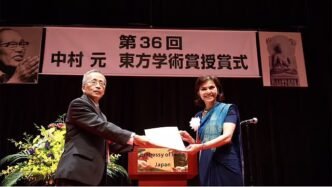
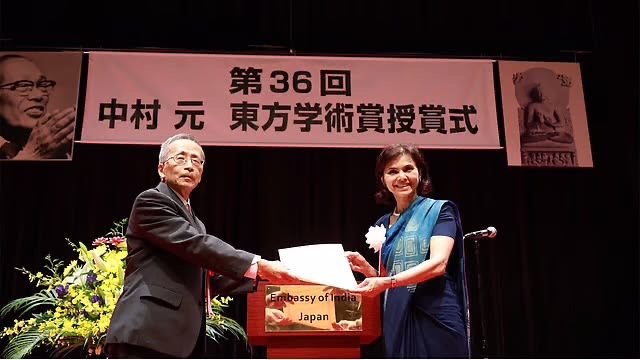
The Embassy of India in Japan has honoured Japanese scholar Yoshimizu Kiyotaka for his longstanding research and contributions to the study of Indian philosophy and culture, highlighting the deep intellectual and cultural connections between the two countries.
Yoshimizu, a researcher with the Toyo Bunko Research Department, received the 36th Nakamura Gen Eastern Academic Award at a ceremony held at the Indian Embassy in Tokyo on October 9, 2026. The award was presented by India’s Ambassador to Japan, Nagma Mohamed Mallick.
 WhatsApp Image 2024 07 01 at 13.58.28 4cfca4e0
Prestigious Award Celebrates Academic Contributions
The Nakamura Gen Eastern Academic Award recognises researchers whose work contributes to the study and development of Indian philosophy, Buddhism and Oriental studies.
Yoshimizu’s recognition reflects years of academic work examining Indian intellectual traditions and their significance in the wider study of Asian philosophy and culture.
The award is intended for researchers under the age of 45, acknowledging scholarly contributions that help deepen understanding of India’s philosophical and cultural heritage.
Yoshimizu’s Research at Toyo Bunko
Yoshimizu is affiliated with the Toyo Bunko Research Department, a research institution associated with the study of Asian history, languages and cultures.
His academic interests include Indian philosophy, Buddhism and early medieval Hindu thought. His published research has explored philosophical texts and ideas that have shaped the development of Indian intellectual traditions.
Such scholarship helps make complex historical texts and philosophical debates more accessible to researchers and students in Japan and internationally.
India and Japan Share Deep Cultural Connections
India and Japan have a long history of spiritual and cultural exchange, with Buddhism serving as one of the most important links between the two societies.
One notable historical connection dates back to 752 AD, when the Indian monk Bodhisena participated in the consecration ceremony of the Great Buddha at Todaiji Temple in Nara, Japan.
Over the centuries, these connections have expanded through academic research, religious exchanges, literature, art and educational cooperation.
Today, universities and research institutions in both countries continue to support the study of Indian languages, Buddhist traditions and philosophical thought.
Academic Recognition Strengthens Bilateral Understanding
The award highlights the role of researchers in sustaining cultural relationships beyond diplomacy and trade.
Academic studies of Indian philosophy and Buddhism help preserve historical knowledge while encouraging new conversations between scholars from different cultural backgrounds.
Research collaborations, student exchanges and cultural programmes also create opportunities for younger generations to learn about the intellectual traditions of both countries.
The recognition of Yoshimizu underscores the importance of these academic connections in strengthening mutual understanding between India and Japan.
1. Promotes Indian Philosophy Abroad
The award recognises research that introduces Indian philosophical traditions to wider academic audiences in Japan.
2. Highlights the Importance of Buddhism
Buddhist history remains a major link between Indian and Japanese cultural heritage.
3. Encourages Academic Research
Honouring scholars helps draw attention to research in philosophy, history and Oriental studies.
4. Strengthens India-Japan Cultural Ties
Academic and cultural exchanges complement the countries’ broader diplomatic and strategic partnership.
The presentation of the 36th Nakamura Gen Eastern Academic Award to Yoshimizu Kiyotaka reflects the continuing importance of scholarship in India-Japan relations. By recognising his contributions to the study of Indian philosophy and culture, the Indian Embassy in Japan has highlighted how academic research can preserve shared heritage and deepen understanding between the two countries.
As India and Japan continue to expand educational and cultural cooperation, scholars working across their intellectual traditions remain important contributors to a lasting bilateral friendship.