Japan Looks for Smarter Ways to Manage Public Waste
Japan is exploring technology-driven solutions to improve public waste disposal as the country faces increasing pressure from tourism and busy urban neighbourhoods.
Although Japanese streets are widely recognised for their cleanliness, finding a public rubbish bin can be difficult for both residents and international visitors. In many areas, people are expected to carry their waste home or dispose of it at designated locations.
 Asahi Travel Service Pvt Ltd
With visitor numbers increasing and crowded shopping districts generating more rubbish, businesses and local authorities are experimenting with smart rubbish bins and mobile collection robots to make waste management more efficient.
Smart Bins Help Reduce Overflowing Waste
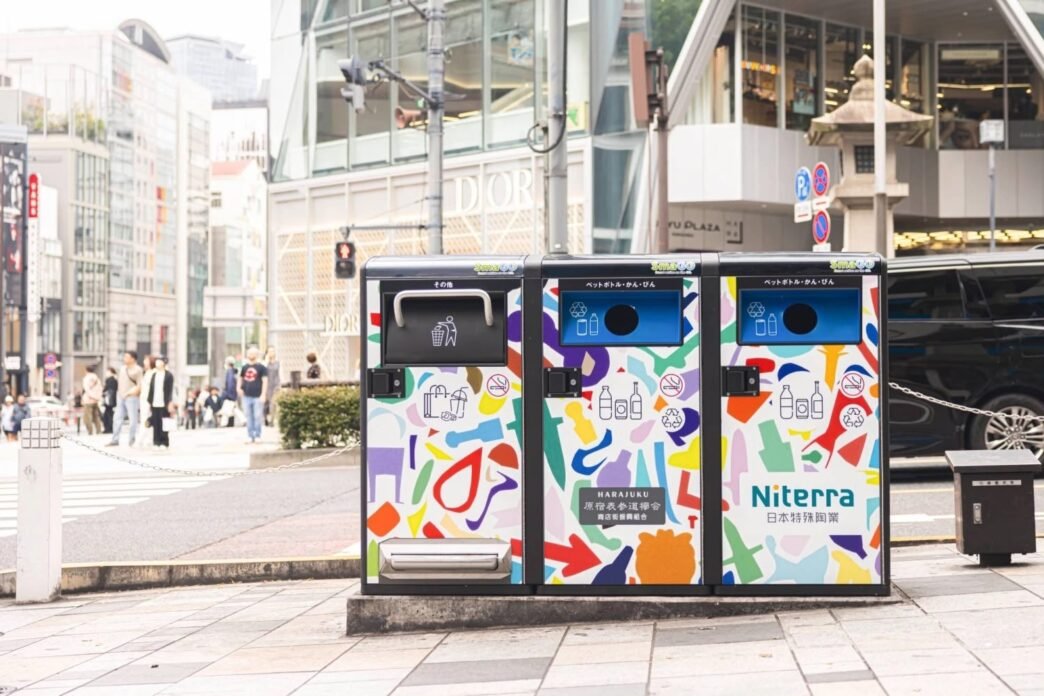
One solution gaining attention is SmaGO, a smart rubbish bin developed and distributed by Japanese company Forcetec.
These bins use solar power to operate an internal compression system that reduces the volume of collected waste. They can compress rubbish to approximately one-fifth of its original volume, allowing them to hold more waste than conventional bins.
Their connected technology also monitors how full each bin is and sends information to collection teams, helping workers plan their routes and avoid unnecessary collection trips.
The system has already been introduced in locations such as Tokyo’s Omotesando and Osaka’s Dotonbori, where tourism and pedestrian traffic create significant waste-management demands.
Akihabara Introduces 22 Smart Rubbish Bins
Tokyo’s Akihabara district has taken another step towards improving its public waste facilities.
On November 8, 2026, Chiyoda Ward began operating 22 SmaGO smart bins across 10 locations around Akihabara Station and Chuo-dori.
The installation includes 10 compression bins for general waste and 12 non-compression bins for recyclable materials such as bottles, cans and plastic bottles.
The initiative aims to reduce littering, prevent overflowing bins and improve collection efficiency in an area that attracts large numbers of domestic and international visitors.
According to Forcetec, its smart bins have been installed at approximately 80 locations across Japan.
Robots Bring Rubbish Collection Directly to Commuters
Alongside smart stationary bins, Japan is also testing mobile rubbish-collecting robots.
East Japan Railway Company (JR East) conducted a trial at Shinjuku Station, one of the world’s busiest railway stations, to examine whether automated bins could reduce the workload of sanitation workers.
The trial involved three mobile robots designed to move through the station’s underground concourse and collect rubbish from passengers. Standing slightly over one metre tall, the robots travel at a cautious speed of approximately 20 centimetres per second.
Their sensors allow them to navigate crowded areas and stop when necessary, while their movement is designed to make it easier for commuters to dispose of waste without searching for a fixed rubbish bin.
The experiment, scheduled to run until November 20, 2026, is also examining passenger acceptance, operational safety and the robots’ ability to function in busy public spaces.
Technology Could Change Japan’s Public Waste System
The growing use of smart bins and mobile robots reflects a wider effort to combine technology with everyday urban services.
Connected bins can help authorities understand where rubbish accumulates and when collection is required. Mobile robots, meanwhile, could provide additional convenience in large railway stations, shopping centres and other crowded locations.
However, technology alone cannot solve every waste-management challenge. Authorities must also consider installation costs, maintenance, public acceptance, recycling systems and the availability of suitable disposal facilities.
The aim is to create a system that makes responsible waste disposal easier while reducing the pressure on cleaning staff.
Final Word
Japan’s experiments with smart rubbish bins and mobile collection robots demonstrate how technology can support cleaner and more convenient public spaces.As tourism and urban activity continue to grow, these innovations could help cities manage waste more efficiently while maintaining the cleanliness for which Japan is widely known. What began as a search for better public rubbish bins may eventually become an important part of the country’s smarter urban infrastructure.