
JAXA Reveals New Rover for Lunar Exploration
Japan’s space agency, the Japan Aerospace Exploration Agency (JAXA), has unveiled a test model of its upcoming lunar rover designed to search for water at the Moon’s south pole.
 Asahi Travel Service Pvt Ltd
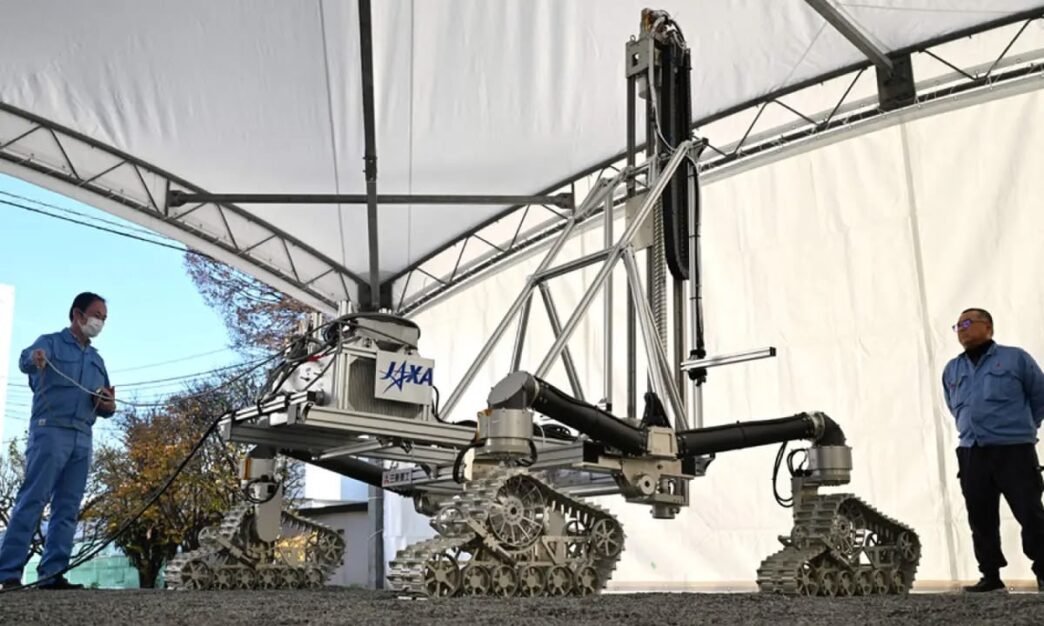
The demonstration took place on November 25 at JAXA’s Chofu Aerospace Center in Tokyo. The rover is part of the Lunar Polar Exploration (LUPEX) mission, a joint project between Japan and India aimed at investigating the presence, quantity and distribution of water resources on the lunar surface.
The mission represents another important step in the growing space partnership between the two countries.
Four-Legged Design Built for Lunar Terrain
The LUPEX rover features an unusual four-legged mobility system fitted with belt-like caterpillar tracks. This design is intended to help it move across the Moon’s loose and dusty surface without becoming stuck in the fine lunar soil, known as regolith.
During the demonstration, the test rover moved across a gravel-covered course, climbed over rocks and crossed a depression designed to resemble a lunar crater. It also demonstrated its ability to turn on the spot.
The trials are designed to evaluate the rover’s mobility and support the development of technologies needed for future lunar exploration.
India and Japan Target 2028 Lunar Mission
Under the LUPEX partnership, Japan is responsible for developing the H3 launch vehicle and the rover, while India is developing the lunar lander.
The mission is currently scheduled for launch in fiscal 2028 aboard Japan’s H3 rocket from the Tanegashima Space Center.
After reaching the lunar south pole, the rover is expected to conduct exploration for approximately 100 days, with the possibility of an extended mission. It will carry scientific instruments and drilling equipment to investigate the lunar surface and underground resources.
Drilling Beneath the Lunar Surface to Find Water
One of the mission’s most important objectives is to investigate whether water exists beneath the Moon’s surface and determine how much may be available.
The rover is designed to collect and analyse samples from depths of up to approximately 1.5 metres. The findings will help scientists understand the quantity, distribution and condition of lunar water.
Project manager Takeshi Hoshino highlighted the long-term importance of the mission, explaining that the ultimate goal is to explore the possibility of using lunar water to produce rocket fuel.
If practical, this could reduce the need to transport large quantities of resources from Earth and support longer-term human activities on the Moon.
A Major Step in India-Japan Space Cooperation
The LUPEX mission reflects the growing technological cooperation between India and Japan in space exploration. By combining Japan’s rover and launch capabilities with India’s lander development, the two countries are working towards a more detailed understanding of the lunar environment.
The mission could also contribute valuable knowledge for future lunar bases and sustainable space exploration.
The LUPEX rover is more than a new lunar exploration machine. It represents a shared ambition by India and Japan to understand and potentially utilise resources beyond Earth. If successful, the mission could bring scientists one step closer to making lunar water a valuable resource for future space travel.
Japan is considering changes to its Japanese-language testing system for foreign workers as the number of applicants continues to rise. The proposed move could make language assessment more responsive to the country’s evolving foreign employment policies.