Originally written by: HIROSHI HIYAMA
Link to the article:https://www.japantimes.co.jp/news/2026/04/09/japan/japan-waste-water-energy/
 WhatsApp Image 2024 07 01 at 13.58.28 4cfca4e0
In a world urgently searching for sustainable energy solutions, Japanese engineers have unveiled an innovative technology that transforms wastewater into a valuable source of clean energy. By harnessing the natural process of osmosis, this breakthrough could redefine how cities manage waste and generate power simultaneously.
Osmosis, a fundamental scientific concept, occurs when water moves across a semi-permeable membrane from a region of low solute concentration to a region of high concentration. While commonly associated with biology, Japanese researchers have adapted this process into an energy-generating system known as pressure-retarded osmosis (PRO).
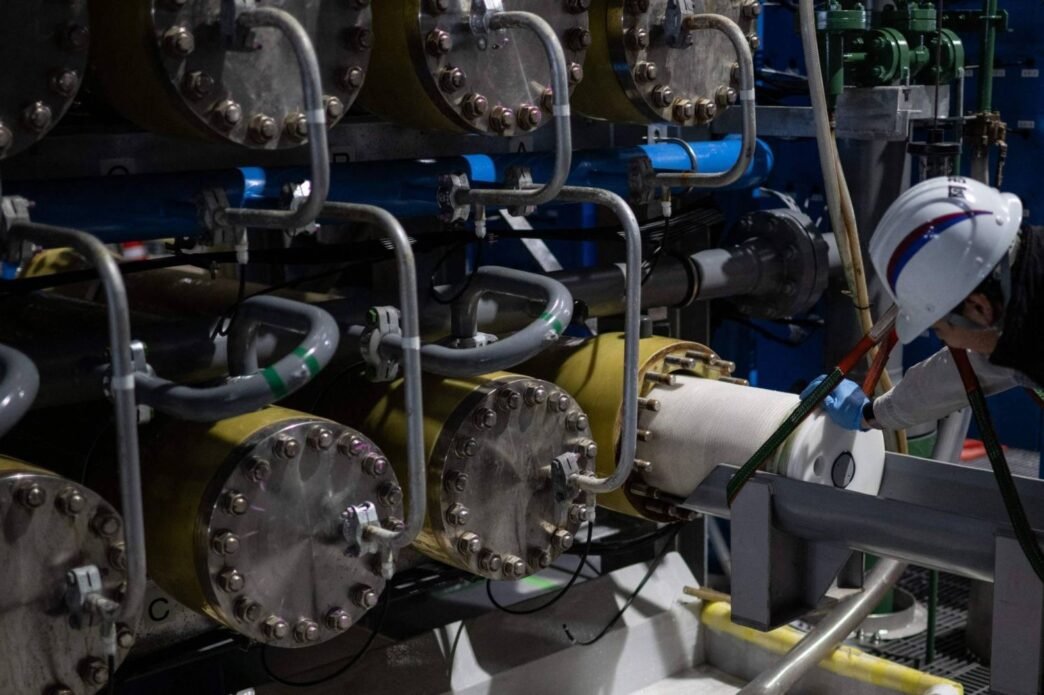
In this system, treated wastewater and seawater are brought together, separated by a specialized membrane. As freshwater flows into the saltwater side through osmosis, pressure builds up. This pressure is then used to spin turbines, generating electricity without burning fossil fuels or producing harmful emissions.
What makes this innovation particularly compelling is its ability to utilize existing wastewater infrastructure. Urban treatment plants, often seen as energy-intensive facilities, can now become power-generating hubs. This dual-purpose approach not only reduces operational costs but also contributes to a circular economy where waste is repurposed into a resource.
Japan, known for its commitment to technological advancement and environmental responsibility, is leading the way in integrating such systems into real-world applications. Pilot projects have already demonstrated promising results, with engineers working to improve membrane efficiency and scalability for widespread adoption.
Beyond energy generation, this technology offers environmental benefits. By reducing reliance on traditional power sources, it helps cut greenhouse gas emissions. Additionally, it supports better water management practices, especially in densely populated urban areas where wastewater volumes are high.
However, challenges remain. The efficiency of osmosis-based systems depends heavily on membrane durability and cost. Researchers are actively exploring new materials to enhance performance while making the technology economically viable.
As the global community continues to seek cleaner and smarter energy solutions, Japan’s osmosis innovation stands out as a powerful example of how science can turn everyday waste into a driver of sustainability. If scaled successfully, this approach could transform wastewater treatment plants worldwide into silent power stations proving that even what we discard holds the potential to energize our future.