
Original news source:https://japantoday.com/category/national/M7.5-quake-hits-off-Aomori-tsunami-warning-issued
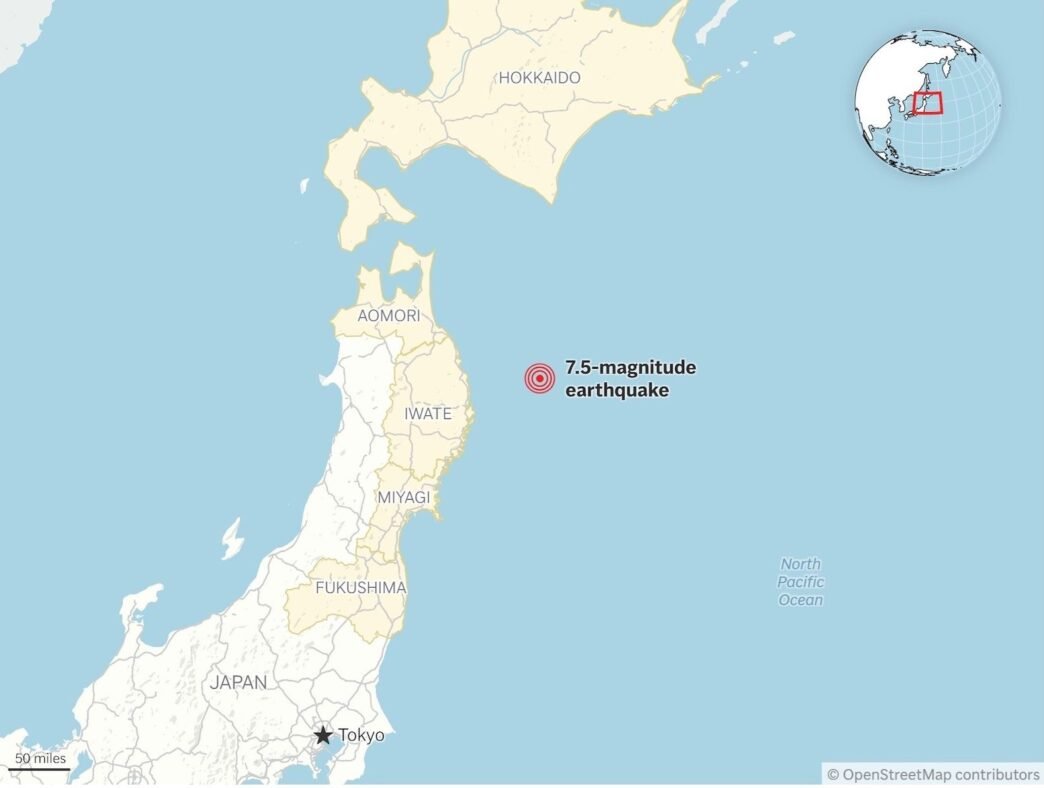
Moments after a powerful 7.4-magnitude earthquake struck off the coast of Japan, the first tsunami waves have begun reaching the shoreline triggering immediate alerts and raising concerns about what could follow in the coming hours.
 WhatsApp Image 2024 07 01 at 13.58.28 4cfca4e0
Initial reports confirm waves measuring around 0.5 meters, a size that may seem moderate but signals the start of a potentially escalating situation. Coastal regions are now on high alert, with authorities closely monitoring sea levels, wave patterns, and seismic aftershocks.
Early Signs, Bigger Risks Ahead
Experts warn that the first wave is rarely the strongest. Tsunamis often arrive in a series, with later waves growing in intensity and causing greater damage. This “multi-wave effect” makes the situation particularly unpredictable and dangerous.
As ocean activity continues, emergency services are preparing for the possibility of stronger surges. In many cases, it can take hours before the full impact of a tsunami is realized.
Japan, known for its advanced disaster preparedness systems, has activated coastal warning networks and evacuation advisories in vulnerable regions. Real-time monitoring systems are tracking wave progression, while local authorities are urging residents to stay alert and follow official guidance.
The memory of the devastating 2011 Tōhoku earthquake and tsunami still looms large, reinforcing the urgency of early response and evacuation when necessary.
Tsunamis are not just about the height of waves they bring powerful currents capable of sweeping away infrastructure, vehicles, and people. Even smaller waves can pose significant risks, especially in low-lying coastal zones.
The unpredictable nature of such events means that conditions can shift rapidly. What begins as a manageable situation can escalate within minutes.
A Critical Question: Are Protocols Enough?
This unfolding situation raises an important question: are current coastal evacuation protocols sufficient?
While Japan is among the most prepared nations in the world, natural disasters continue to test the limits of even the most advanced systems. Strengthening early warning communication, improving evacuation speed, and ensuring public awareness remain key priorities not just for Japan, but for coastal regions globally.
Authorities continue to monitor the situation closely, with updates expected as more data becomes available. Residents in affected areas are advised to remain vigilant and prepared to move to higher ground if conditions worsen.
Because when the ocean moves like this every second counts.