

At a time when artificial intelligence is reshaping economies and redefining global power structures, the conversation is no longer about who is participating, it’s about who is leading, and how. The evolving dynamics between India and Japan present one of the most fascinating contrasts in this race.
A recent high-level interaction between Vikram Misri and Kimi Onoda underscores the growing importance of AI collaboration between the two nations. But beyond diplomacy, a deeper narrative is unfolding one that reflects two very different approaches to technological leadership.
 WhatsApp Image 2024 07 01 at 13.58.28 4cfca4e0
Two Different Strengths, One Shared Future
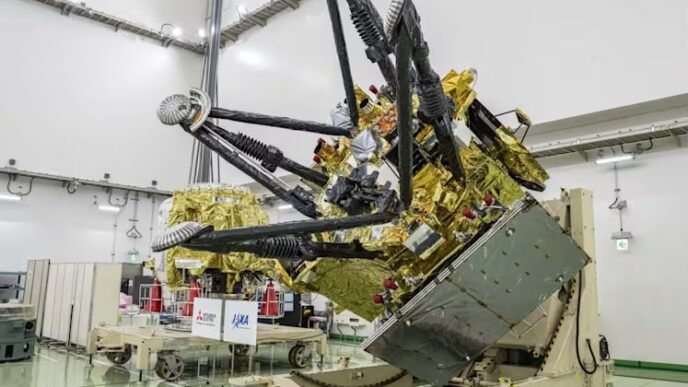
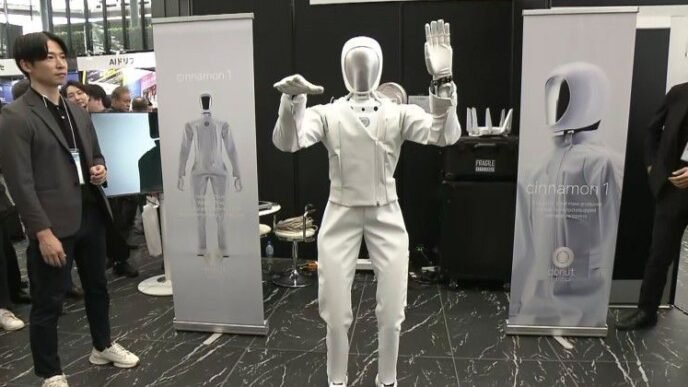
Japan has long been synonymous with precision. Its legacy in robotics, manufacturing, and high-quality engineering systems places it at the forefront of deep-tech innovation. From industrial automation to automotive intelligence, Japan excels where perfection, reliability, and long-term thinking matter most.
India, in contrast, represents velocity. With one of the world’s largest pools of engineers, an expanding digital infrastructure, and a thriving startup ecosystem, it is rapidly emerging as a software-driven AI powerhouse. The country’s ability to deploy AI solutions at scale across sectors like fintech, healthcare, and governance gives it a unique edge.
This is not a case of one nation being ahead and the other behind. It is a case of different kinds of leadership.
Speed vs Precision Or a Powerful Combination?
If Japan builds with discipline, India builds with speed.
If Japan focuses on perfection, India focuses on scalability.
Individually, both approaches are powerful. But together, they could be transformational.
- India’s talent ecosystem + Japan’s engineering precision
- India’s data scale + Japan’s hardware excellence
- Software innovation + manufacturing dominance
This combination has the potential to create a new global benchmark one where AI is not just fast or accurate, but both.
The Strategic Opportunity
For India, the path forward is clear: strengthen research capabilities, invest in semiconductor infrastructure, and deepen its hardware ecosystem. While software remains its strength, long-term leadership will require balance.
For Japan, the challenge lies in speed. By embracing startup culture, accelerating digital adoption, and encouraging agile innovation, it can complement its already formidable strengths in deep technology.
Collaboration Over Competition
The global AI race is often framed as a competition. But the India–Japan equation suggests a different possibility: collaboration as a strategy for dominance.
Rather than asking who will win, the more relevant question is what happens when they work together?
An India–Japan AI alliance could redefine not just regional influence, but global technological leadership. It could create systems that are scalable yet precise, innovative yet reliable, fast yet deeply engineered.
The Road Ahead
The future of AI will not belong to nations that move fast alone, or those that move perfectly alone. It will belong to those who can combine both.
India and Japan stand at that intersection.
And if they choose partnership over parallel progress, the world may not just witness a shift in the AI race, it may witness a complete redefinition of it.