
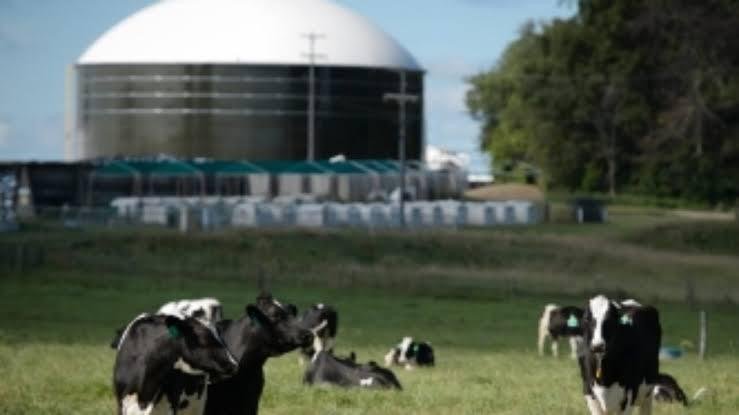
India and Japan are taking their long-standing agricultural partnership to the next level by expanding cooperation beyond dairy production into biogas development and circular economy solutions.
The evolving collaboration aims to transform agricultural waste into renewable energy while promoting sustainable farming practices, reducing carbon emissions, and creating additional income opportunities for dairy farmers.
 WhatsApp Image 2024 07 01 at 13.58.28 4cfca4e0
As both countries prioritize climate-friendly development, the partnership reflects a shared vision for building resilient and resource-efficient agricultural systems.
Dairy Cooperation Enters a New Sustainable Phase
India and Japan have collaborated in the dairy sector for decades, contributing to technology exchange, capacity building, and productivity improvements.
The next phase focuses on:
● Biogas generation
● Waste-to-energy technologies
● Sustainable dairy farming
● Resource efficiency
● Climate-smart agriculture
● Renewable energy adoption
● Circular economy practices
The initiative seeks to maximize the value of agricultural resources while minimizing environmental impact.
Biogas Creates Value from Agricultural Waste
Biogas technology converts organic waste such as cattle manure and agricultural residues into clean energy that can be used for households, farms, and industries.
Key benefits include:
● Renewable energy production
● Reduced greenhouse gas emissions
● Improved waste management
● Organic fertilizer generation
● Lower dependence on fossil fuels
● Rural energy security
● Additional farmer income opportunities
The technology supports both environmental sustainability and rural economic development.
Circular Economy Supports Modern Agriculture
A circular economy emphasizes reusing resources instead of discarding them, creating a more sustainable production system.
In the dairy sector, this includes:
● Recycling livestock waste
● Producing organic fertilizers
● Generating renewable energy
● Conserving natural resources
● Reducing industrial emissions
● Improving farm efficiency
● Supporting sustainable supply chains
These practices contribute to long-term agricultural resilience and environmental protection.
India and Japan Share Expertise in Green Innovation
Both countries are investing in technologies that promote clean energy and sustainable food production.
Areas of collaboration include:
● Smart farming solutions
● Renewable energy systems
● Dairy technology modernization
● Research and development
● Sustainable infrastructure
● Climate adaptation strategies
● Knowledge exchange programs
Combining India’s large dairy sector with Japan’s technological expertise creates opportunities for innovative agricultural solutions.
Sustainable Dairy Can Support Rural Development
Integrating renewable energy into dairy farming can generate multiple social and economic benefits.
Potential advantages include:
● Lower energy costs
● Increased farm profitability
● Cleaner rural environments
● Improved resource utilization
● Job creation in green sectors
● Enhanced food security
● Long-term sustainability
Experts believe circular economy models can strengthen both agricultural productivity and environmental stewardship.
Why This Partnership Is Gaining Attention
1. It Combines Agriculture with Clean Energy
The collaboration links dairy farming with renewable energy production through biogas technology.
2. Circular Economy Is Becoming a Global Priority
Resource-efficient systems are increasingly recognized as essential for sustainable development.
3. India and Japan Share Complementary Strengths
India’s large agricultural base and Japan’s technological innovation create opportunities for impactful collaboration.
4. Sustainable Farming Supports Climate Goals
Biogas and circular economy practices help reduce emissions while improving rural livelihoods.
Frequently Asked Questions (FAQs)
Q: What is the focus of the India-Japan dairy partnership?
A: The partnership is expanding to include biogas technology, renewable energy, and circular economy solutions alongside dairy development.
A: Biogas is a renewable energy source produced from organic waste such as livestock manure and agricultural residues.
Q: What is a circular economy in agriculture?
A: It is a system that reuses and recycles resources to reduce waste, improve efficiency, and create sustainable production cycles.
Q: How can dairy farmers benefit?
A: Farmers can generate clean energy, produce organic fertilizers, reduce waste, and create additional income opportunities.
Q: Why is this collaboration important?
A: It supports sustainable agriculture, renewable energy adoption, climate action, and stronger India-Japan cooperation in green innovation.
Final Word: A New Chapter in India-Japan Sustainable Agriculture
The expansion of India-Japan dairy cooperation into biogas and circular economy initiatives represents a forward-looking approach to agriculture and environmental sustainability.
By transforming agricultural waste into valuable resources and embracing innovative farming practices, both nations are demonstrating how international partnerships can drive cleaner energy, stronger rural economies, and more resilient food systems.
As the global focus on sustainability continues to grow, this collaboration has the potential to become a model for integrating agriculture, renewable energy, and circular economy principles across Asia and beyond.