
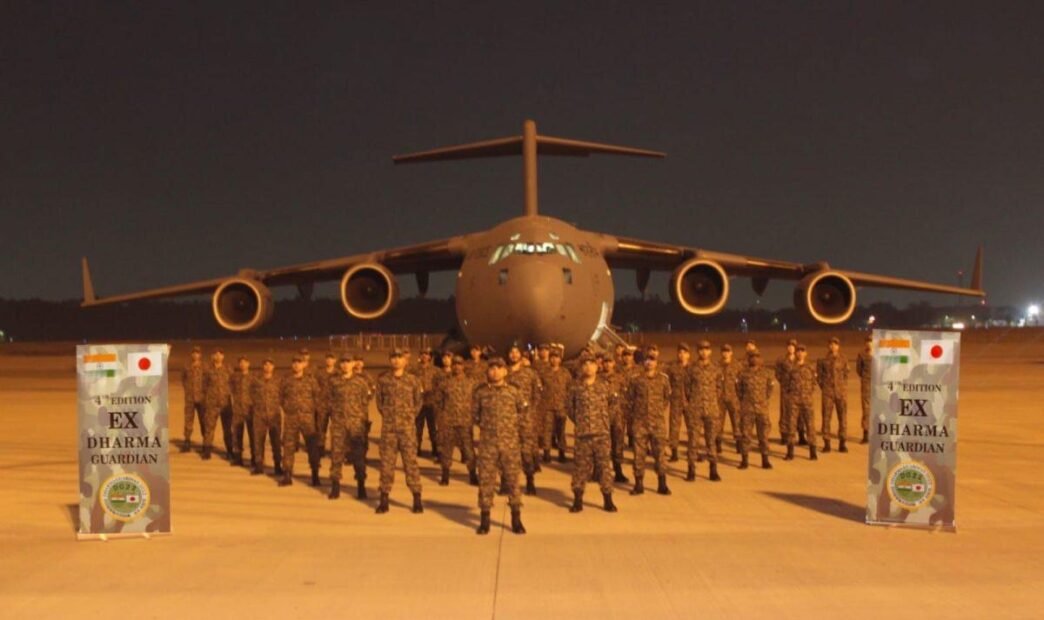
India and Japan have successfully concluded Exercise Dharma Guardian 2026, marking another milestone in their growing defence and security partnership. The joint military exercise brought together personnel from both nations to enhance interoperability, share operational expertise, and strengthen cooperation in addressing regional and global security challenges.
The annual exercise reflects the shared commitment of India and Japan to promoting peace, stability, and a free and open Indo-Pacific.
 WhatsApp Image 2024 07 01 at 13.58.28 4cfca4e0
Strengthening Defence Cooperation
Dharma Guardian 2026 focused on improving coordination between the armed forces of both countries through realistic training scenarios and joint operational planning.
Key areas of cooperation included:
● Tactical combat drills
● Counter-terrorism operations
● Urban warfare exercises
● Disaster response coordination
● Peacekeeping operations
● Joint planning and communication
● Leadership and skill development
The exercise provided valuable opportunities for troops to exchange knowledge and build mutual understanding.
A Growing Strategic Partnership
Over the years, India and Japan have significantly expanded their defence collaboration, supported by their Special Strategic and Global Partnership.
The relationship now covers:
● Defence and security cooperation
● Maritime collaboration
● Technology and innovation
● Cybersecurity initiatives
● Humanitarian assistance and disaster relief
● Regional stability efforts
● Military-to-military exchanges
Dharma Guardian has become an important platform for strengthening these shared objectives.
Joint exercises allow both militaries to develop common operating procedures and improve coordination during multinational missions.
The training emphasized:
● Teamwork under challenging conditions
● Rapid decision-making
● Information sharing
● Combined operational planning
● Field coordination
● Modern combat techniques
● Crisis response capabilities
Such collaboration prepares both forces for future security and humanitarian missions.
Supporting a Free and Open Indo-Pacific
India and Japan continue to work together in promoting peace, security, and rules-based cooperation across the Indo-Pacific region.
Their defence engagement contributes to:
● Regional stability
● Maritime security
● International cooperation
● Counter-terrorism preparedness
● Humanitarian assistance
● Disaster management
● Strategic dialogue
The successful conclusion of Dharma Guardian 2026 reinforces the importance of trusted partnerships in addressing evolving global challenges.
Why Dharma Guardian 2026 Matters
1. It Deepens India-Japan Defence Relations
The exercise strengthens military cooperation and reinforces mutual trust between the two nations.
2. It Improves Joint Operational Readiness
Troops gain practical experience through realistic training and collaborative exercises.
3. It Promotes Regional Security
The partnership supports a stable, peaceful, and rules-based Indo-Pacific.
4. It Encourages Long-Term Strategic Cooperation
Regular military exchanges continue to expand collaboration beyond defence into technology, disaster response, and security initiatives.
Frequently Asked Questions (FAQs)
A: Dharma Guardian is a bilateral military exercise conducted by India and Japan to enhance defence cooperation and operational interoperability.
Q: What was the focus of Dharma Guardian 2026?
A: The exercise emphasized counter-terrorism training, tactical operations, joint planning, disaster response, and military coordination.
A: It strengthens defence ties, improves joint preparedness, and supports shared goals of peace and stability in the Indo-Pacific region.
Q: How does it benefit India and Japan?
A: The exercise enhances military cooperation, builds mutual trust, facilitates knowledge exchange, and contributes to broader strategic collaboration.
Final Word: A Partnership Built on Trust and Shared Vision
The successful conclusion of Dharma Guardian 2026highlights the steady growth of India-Japan defence relations and their shared commitment to regional and global security. By training together and exchanging expertise, both nations continue to build a resilient partnership that promotes peace, cooperation, and stability while preparing for the security challenges of the future.