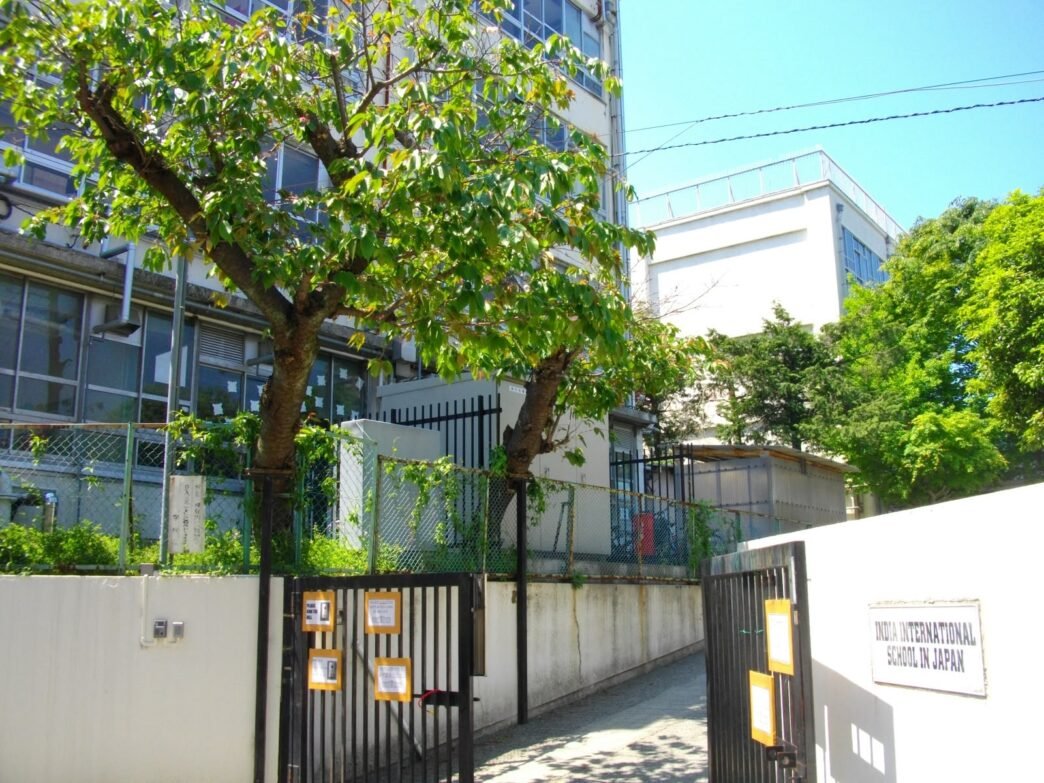
A proposal to establish a premium Indian international school in Osaka is seeking interest and potential collaboration from the Indian community, education institutions and prospective academic partners in Japan.
The proposed school would serve families across the Osaka–Kobe–Kyoto and wider Kansai region, offering an English-medium Indian curriculum combined with Japanese language education, STEM learning, digital skills and global competencies.
 WhatsApp Image 2024 07 01 at 13.58.28 4cfca4e0
The initiative is being proposed by Ved Prakash Singh, Associate Professor at Osaka University, on behalf of a proposal team comprising education professionals and India–Japan specialists based in the Kansai region.
Proposed Indian International School in Osaka
The proposed institution is envisioned as a premium Indian international school initially serving Grades 1 to 6, with an initial capacity of approximately 120 students.
The long-term vision is to develop the institution into a full K–12 school serving the growing Indian and international community in western Japan.
The proposed academic model would be based on a CBSE-oriented Indian curriculum with international teaching practices, delivered primarily in English.
Who Would the School Serve?
The proposed school is intended to serve a diverse community, including:
- Indian families living in Japan
- Nepalese, Bangladeshi, Sri Lankan and other South Asian families
- Japanese families seeking English-medium international education
- International families looking for an Indian-oriented academic option
The initiative aims to provide families with a combination of Indian academic foundations, cultural connection, English-medium education and global readiness.
Why Osaka?
According to the proposal team, the Kansai region has seen a growing presence of Indian and South Asian professionals working in areas such as IT, research, manufacturing, management and start-ups.
With the Indian community expanding across Osaka, Kobe and Kyoto, the proposal identifies an opportunity to create a dedicated Indian curriculum school in western Japan.
The team also points to the limited availability of some international-school options as a potential opportunity for a high-quality Indian education institution.
What Would the School Offer?
The proposed school would combine Indian academic foundations with international and modern learning approaches.
Planned academic features include:
- English-medium instruction
- CBSE-oriented Indian curriculum
- Japanese language education
- STEM and robotics
- Digital literacy and innovation
- Indian cultural education
- Global values and mindfulness
The proposed campus would also include smart classrooms, a library, activity spaces, robotics and IT laboratories, along with facilities designed with Japanese safety and earthquake-resilience expectations in mind.
India-Japan Education Connection
The initiative is also envisioned as more than an educational institution.
The proposed school could become a platform for India-Japan educational and cultural exchange, connecting students, families, educators and institutions from both countries.
For Indian families in Japan, such an institution could provide continuity with the Indian education system while helping children develop language and cultural familiarity with Japan.
Preliminary Financial Proposal
The proposal outlines an initial Phase 1 capacity of 120 students and estimates annual tuition revenue of approximately ¥96 million, based on an assumed annual tuition fee of ¥800,000 per student.
Including proposed one-time admission fees, estimated first-year revenue is projected at approximately ¥108 million.
The proposal estimates first-year running costs at approximately ¥80.4 million, resulting in a preliminary projected annual surplus of around ¥27.6 million.
These figures are described as conservative preliminary estimates and would require detailed feasibility studies, regulatory review and financial due diligence before any investment decision.
Initial Investment Requirement
The proposal estimates approximately ¥64 million in initial setup investment.
The preliminary budget includes expenses for:
- Security deposit and advance rent
- Interior renovation and branding
- Furniture and smart classroom equipment
- Laboratory and IT infrastructure
- Licensing, legal and compliance
- Marketing and admissions
- Library facilities
- Playground
- Website development
- Working capital
The final investment requirement would depend on the selected location, regulatory requirements, campus size and partnership structure.
Collaboration Opportunities
The proposal team is open to exploring different partnership models with academic institutions, education groups and potential investors.
Possible models include:
Franchise Partnership
An established education brand could provide academic and operational support.
Academic and Brand Collaboration
An academic institution could collaborate on curriculum, quality standards and institutional development.
Joint Venture
Indian and Japanese partners could establish and operate the school together.
Institutional Partnership
A long-term partnership could combine academic expertise, investment and operational capabilities.
An Appeal to the Indian Community in Japan
The proposal comes with an appeal to the Indian community, education professionals, businesses and potential academic partners in Japan who may be interested in supporting the establishment of an Indian international school in Osaka.
The initiative seeks to identify families who would value such an educational option, as well as organisations and individuals interested in contributing to its development.
The proposal team is inviting interested stakeholders to come forward for discussions regarding the school’s feasibility, location, academic model, regulatory pathway and potential partnership structure.
Proposed Next Steps
Before the school can be established, the proposal team plans to undertake further work, including:
- Detailed feasibility and market assessment
- Identification of suitable locations in Osaka
- Review of Japanese regulatory and licensing requirements
- Discussions with academic and investment partners
- Development of the school’s academic and operational framework
- Joint due diligence and financial assessment
- Preparation of a phased establishment and admissions roadmap
Final Word
The proposal for an Indian International School in Osaka represents an opportunity to develop a dedicated Indian education platform for families across the Kansai region.
With a proposed English-medium, CBSE-oriented academic model and a strong focus on STEM, Japanese language, technology and global learning, the initiative aims to combine Indian educational values with the opportunities of living and studying in Japan.
At this stage, the school is a proposal seeking community interest, collaboration and potential partners rather than an established institution.
Indian families, education professionals, academic institutions, businesses and potential partners in Osaka and the wider Kansai region who are interested in this initiative are invited to express their interest and participate in further discussions.
Interested in supporting or exploring an Indian international school in Osaka? Please contact the proposal team to discuss the opportunity, share your interest and explore possible collaboration.