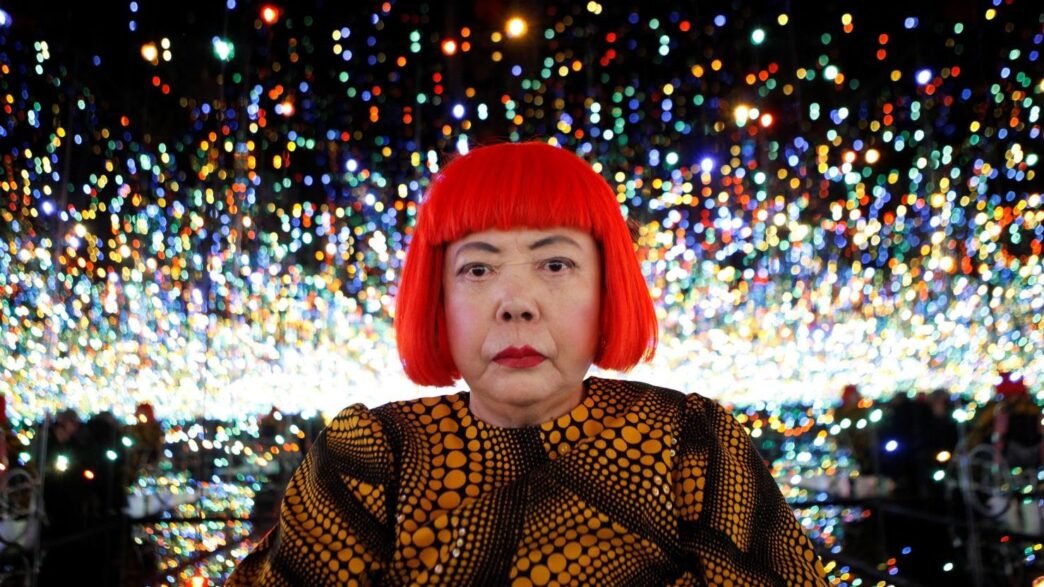
Japanese avant-garde artist Yayoi Kusama, one of the world’s most recognizable contemporary artists, has died at the age of 97. Her studio said she died at a hospital in Tokyo on August 14, 2026. The cause of death was not disclosed.
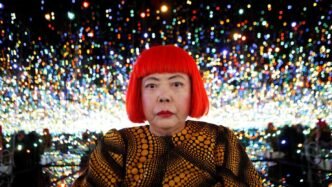
Known around the world for her vibrant polka-dot paintings, pumpkin sculptures and immersive Infinity Mirror Rooms, Kusama transformed personal experiences and recurring visual motifs into an artistic language that reached audiences across generations.
 WhatsApp Image 2024 07 01 at 13.58.28 4cfca4e0
Kusama’s career stretched across painting, sculpture, installation, performance, writing and fashion. Her repetitive patterns—particularly dots and nets—became her signature and helped make her work instantly recognizable.
Her best-known creations include:
● Polka-dot paintings and sculptures
● Infinity Mirror Rooms
● Pumpkin sculptures
● Infinity Net paintings
● Large-scale immersive installations
● Experimental performance works
● Fashion and design collaborations
Her work was exhibited by major institutions including New York’s Museum of Modern Art and Whitney Museum of American Art, as well as Museum Ludwig in Germany.
From Japan to the New York Avant-Garde
Born in Matsumoto, Japan, in 1929, Kusama began creating art at a young age. She moved to New York in 1957, where she became part of the city’s avant-garde art scene during the late 1950s and 1960s.
Her experimental works challenged conventional ideas about painting, sculpture and performance. She also became known for provocative performances and anti-war artistic activities during the 1960s.
Despite facing significant challenges as a Japanese woman working in the American art world, Kusama eventually established herself as an influential figure in postwar contemporary art.
Turning Personal Visions Into Art
Kusama’s distinctive artistic style was closely connected to visions and hallucinations she experienced from childhood. She transformed recurring images of dots, nets, lights and patterns into works that explored repetition, infinity and the disappearance of individual identity.
Her Infinity Mirror Rooms, in particular, became internationally famous for surrounding visitors with seemingly endless reflections of lights and objects.
A Remarkable Late-Career Revival
After returning to Japan in the 1970s, Kusama continued producing art while living voluntarily at a psychiatric hospital in Tokyo. Her studio was located nearby, allowing her to maintain an extraordinary creative routine for decades.
Her international popularity grew dramatically later in life, with major exhibitions attracting huge crowds around the world. Her pumpkin sculptures and immersive installations became especially popular with younger audiences and helped introduce contemporary art to millions of visitors.
Japan recognized her contribution to culture by awarding her the Order of Culture in 2016, one of the country’s highest honours for artistic achievement.
Kusama’s studio said she continued painting until her final days, remaining committed to her artistic practice throughout her life. Her work ultimately became a bridge between Japanese culture and the international contemporary art world.
Her legacy extends far beyond the famous dots. She demonstrated how deeply personal experiences could be transformed into a universal artistic language capable of connecting with people around the world.
1. Redefined Japanese Contemporary Art
Kusama became one of Japan’s most internationally influential contemporary artists.
2. Made Immersive Art Mainstream
Her Infinity Mirror Rooms helped transform museum visits into highly immersive experiences.
Her distinctive visual language influenced artists, designers, fashion houses and popular culture.
4. Proved Creativity Has No Age Limit
Kusama continued producing art into her 90s, maintaining an extraordinary dedication to creativity.
Yayoi Kusama leaves behind one of the most distinctive artistic legacies of modern Japan. From her early experiments in Matsumoto and her groundbreaking years in New York to the global success of her polka dots, pumpkins and Infinity Mirror Rooms, she turned a deeply personal artistic vision into a worldwide cultural phenomenon. Her death at 97 marks the end of an extraordinary life but her art will continue to fill museums, inspire new generations and make audiences see the world differently.