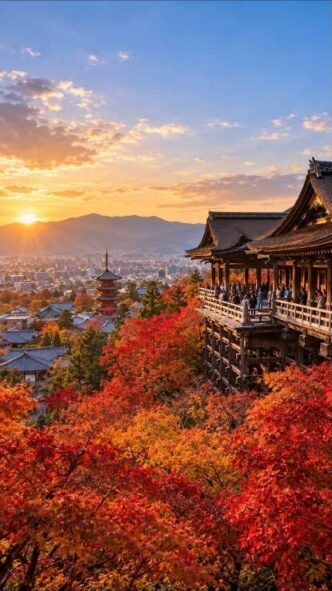
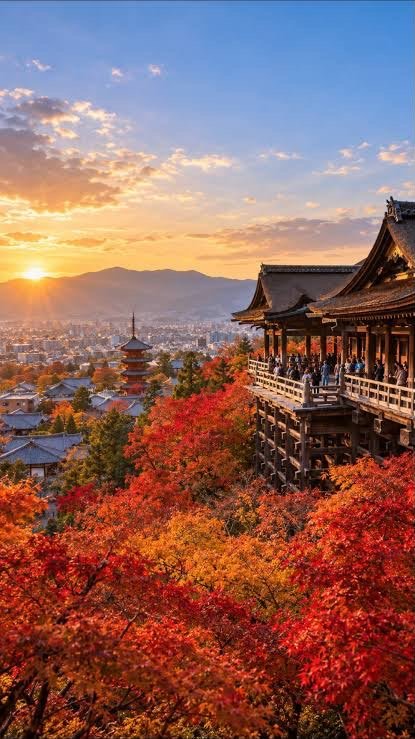
As autumn arrives, the mountains surrounding Kyoto prepare for one of Japan’s most anticipated seasonal spectacles. Forests across the ancient capital gradually shift from green to vibrant shades of red, orange and gold, creating dramatic landscapes around temples, rivers and mountain trails.
While Kyoto’s famous temples attract large numbers of autumn visitors, the city’s mountainous areas offer a different way to experience the season—through hiking paths, quiet forests, historic temples and riverside scenery.
 WhatsApp Image 2024 07 01 at 13.58.28 4cfca4e0
Takao Turns Into an Autumn Wonderland
Located northwest of central Kyoto, Takao is particularly well known for its autumn foliage.
The mountainous area is surrounded by forests and the Kiyotaki River, while historic temples including Jingo-ji and Kosan-ji add cultural landmarks to the landscape. Kyoto’s official tourism guide describes Takao as one of the city’s notable locations for viewing autumn leaves.
Visitors can combine foliage viewing with:
● Mountain walks
● Historic temple visits
● Riverside scenery
● Traditional Japanese food
● Photography opportunities
Ohara Brings Mountains and Maple Trees Together
North of central Kyoto, Ohara offers a quieter countryside atmosphere surrounded by mountain scenery.
The area is home to historic temples including Sanzen-in, while the Yase area is known for its maple-tree groves and views along the Takano River.
For travelers looking for a slower autumn experience, Ohara provides a combination of temples, gardens, forests and rural landscapes.
Kurama and Kibune Offer a Forest Escape
The Kurama and Kibune area is another popular destination for experiencing Kyoto’s changing colors.
A hiking route connects Kurama-dera Temple and Kifune-jinja Shrine, allowing visitors to experience the surrounding forest on foot. The sightseeing train known as Kirara also offers views of the seasonal landscape along its route.
Autumn foliage does not arrive everywhere at the same time. Kyoto’s official foliage information tracks individual locations because the timing varies by area and year. Previous seasonal data shows many popular mountain and temple areas reaching their strongest colors from mid-November into early December.
For 2026, Kyoto’s official tourism information already lists several autumn events and special openings, including seasonal activities around Mount Hiei and other foliage destinations.
More Than Just a Photo Opportunity
Kyoto’s autumn landscape is closely connected with the city’s cultural heritage.
A walk through the mountains can combine nature with centuries-old temples, traditional architecture and seasonal Japanese customs. In places such as Takao, visitors can experience forests and historic Buddhist sites within the same journey.
1. Nature Meets History
Kyoto’s mountain areas allow visitors to experience autumn scenery alongside historic temples and cultural sites.
2. Different Areas Offer Different Views
Takao, Ohara, Kurama and Kibune each provide distinct landscapes and travel experiences.
3. Autumn Extends Beyond Central Kyoto
Travelers can move away from the busiest central attractions and explore quieter mountain districts.
4. A Seasonal Tradition
The changing maple leaves are an important part of Kyoto’s autumn identity and attract visitors from Japan and abroad.
Kyoto’s autumn beauty is not limited to its famous streets and temples. As the surrounding mountains change from green to crimson, orange and gold, areas such as Takao, Ohara and Kurama offer a spectacular glimpse of Japan’s seasonal landscape.
For travelers visiting Kyoto in autumn, the mountains provide a chance to slow down, walk through colorful forests and experience the ancient city from a different perspective.