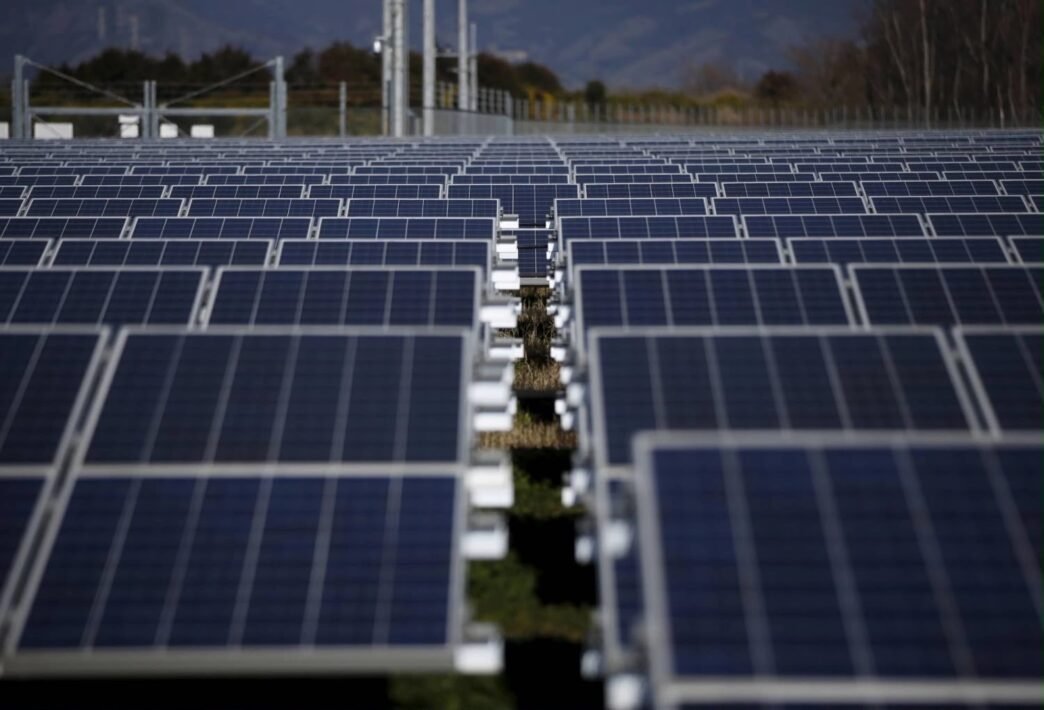
As Japan accelerates its transition toward renewable energy, one challenge continues to stand in the way: finding enough land for large-scale solar farms. With mountains covering much of the country and urban areas densely populated, suitable open space is limited. Increasingly, developers are discovering an unexpected solution—former golf courses.
Across Japan, a growing number of abandoned or underused golf courses are being transformed into solar power facilities, giving new purpose to land that once catered to the country’s golf boom.
 WhatsApp Image 2024 07 01 at 13.58.28 4cfca4e0
Japan faces unique geographic challenges when it comes to renewable energy development. Roughly 70 percent of the country is mountainous, leaving relatively little flat land available for large infrastructure projects.
As cities expand and agricultural land remains protected, finding space for utility-scale solar installations has become increasingly difficult.
This has led developers to explore alternative locations, including:
● Former golf courses
● Closed industrial sites
● Reclaimed land
● Reservoir-based floating solar projects
● Underutilized rural properties
Many golf courses built during Japan’s economic boom of the 1980s and 1990s have struggled with declining membership and changing demographics. As some facilities closed, their large open spaces became attractive locations for renewable energy projects.
Golf courses offer several advantages:
● Existing road access
● Large contiguous land areas
● Minimal residential development
● Suitable terrain for solar installations
● Existing utility connections in some locations
These characteristics make conversion projects more cost-effective than developing entirely new sites.
Supporting Japan’s Energy Transition
Japan has increased its focus on renewable energy in recent years as it works to diversify its energy mix and strengthen long-term energy security.
Solar power has become one of the country’s most important renewable energy sources, and repurposing former golf courses helps expand capacity without placing additional pressure on urban land.
Several local governments and private companies have supported such projects as part of broader sustainability and decarbonization goals.
Balancing Development and Conservation
While solar projects contribute to clean energy production, developers must also consider environmental impacts, local community concerns, and land management requirements.
Many projects include measures to preserve vegetation, manage water runoff, and maintain biodiversity where possible.
Former golf courses provide valuable space for renewable energy development.
2. Supports Clean Energy Goals
Solar installations help Japan expand renewable power generation.
Closed golf courses gain a new economic purpose.
4. Strengthens Energy Security
Greater domestic renewable energy production reduces dependence on imported fuels.
Japan’s limited availability of open land has forced renewable energy developers to think creatively. By transforming former golf courses into solar power facilities, the country is finding innovative ways to expand clean energy generation while giving new life to underutilized spaces. What were once fairways and greens are increasingly becoming an important part of Japan’s sustainable energy future.