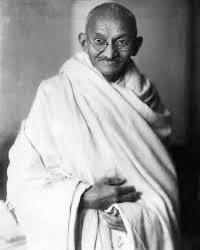
Every year on October 2, India celebrates Gandhi Jayanti to honour the birth anniversary of Mahatma Gandhi, one of the most influential leaders of the country’s independence movement. Known worldwide for his philosophy of non-violence, truth and peaceful resistance, Gandhi’s legacy extends far beyond India’s borders.
His birthday is also observed as the International Day of Non-Violence, designated by the United Nations in 2007 to promote a culture of peace, tolerance and understanding across the world.
 WhatsApp Image 2024 07 01 at 13.58.28 4cfca4e0
In 2026, Gandhi Jayanti offers an opportunity to reflect on how his ideals continue to inspire international communities, particularly in Japan, where his statues and busts serve as reminders of peace, human dignity and the rejection of violence.
Gandhi Jayanti and the legacy of non-violence
Born on October 2, 1869, in Porbandar, Gujarat, Mohandas Karamchand Gandhi became a central figure in India’s struggle for independence from British colonial rule.
His philosophy of Ahimsa (non-violence) and Satyagraha (truth and non-violent resistance) shaped major movements, including the Salt March of 1930 and the Quit India Movement of 1942.
Rather than relying on armed struggle, Gandhi promoted peaceful protests, civil disobedience and collective action. His methods influenced several international civil rights and anti-colonial movements.
Gandhi Jayanti is observed across India through prayer meetings, commemorative events, tributes and educational programmes. The day also encourages people to reflect on the relevance of truth, compassion, equality and peaceful conflict resolution in modern society.
How many Gandhi statues are there in Japan?
Japan has several public monuments dedicated to Mahatma Gandhi. Based on documented locations, at least three notable public installations can be identified:
1. Tokyo – Tetsugakudo Park
Tokyo is home to a Gandhi statue at Tetsugakudo Park. The monument reflects the recognition of Gandhi’s philosophy and his international influence.
2. Hiroshima – Motoyasu River
Hiroshima has a bronze bust of Gandhi installed near the Motoyasu River, close to the Atomic Bomb Dome. Unveiled by Indian Prime Minister Narendra Modi on May 20, 2023, the 42-inch bust was gifted by India as a symbol of friendship and goodwill between the two countries.
3. Matsue – Suetsugu Park, Shimane Prefecture
A Gandhi bust was unveiled at Suetsugu Park, adjacent to Matsue City Hall, on June 2, 2025. The installation was inaugurated by India’s Ambassador to Japan, Nagma Mohamed Mallick, and Matsue Mayor Akihito Uesada. It represents the growing cultural and diplomatic friendship between India and Japan.
These are three identifiable public installations, including both statues and busts. However, this is not a verified exhaustive count of every Gandhi monument in Japan. The exact nationwide total remains uncertain.
Why is the Gandhi statue in Hiroshima significant?
The Gandhi bust in Hiroshima holds particular historical and symbolic importance because it connects the philosophy of non-violence with a city that experienced the devastating consequences of nuclear warfare.
On August 6, 1945, Hiroshima was struck by an atomic bomb during World War II. The city subsequently became an international symbol of the urgent need for peace and nuclear disarmament.
The installation of Gandhi’s bust in Hiroshima in May 2023 carried a message that extended beyond cultural diplomacy. It brought together Gandhi’s philosophy of Ahimsa and Hiroshima’s commitment to building a peaceful world.
According to the Hiroshima City Government, the bust was accepted because Gandhi’s principles of non-violence and the city’s promotion of peace culture share common values. The city also highlighted the monument’s significance in encouraging international friendship and dialogue.
The monument is situated near the Atomic Bomb Dome, allowing visitors to encounter two powerful reminders of history: the devastating consequences of war and the possibility of choosing peaceful approaches to resolving conflict.
Annual floral tribute ceremonies have also taken place at the monument. These events bring together Indian and Japanese representatives, local officials and members of the community to remember Gandhi and reaffirm the importance of peace.
Gandhi’s message and India-Japan friendship
Gandhi’s presence in Japan through public monuments represents more than the remembrance of an Indian freedom fighter. It reflects the shared interest of India and Japan in promoting international understanding, cultural exchange and peace.
Japan’s experience of the atomic bombings of Hiroshima and Nagasaki gives Gandhi’s philosophy of non-violence a particular resonance. His belief that lasting peace requires justice, compassion and respect for human dignity remains relevant to conversations about war, nuclear weapons and international cooperation.
The monuments in Tokyo, Hiroshima and Matsue also provide opportunities for younger generations and international visitors to learn about Gandhi’s contribution to history and his influence on movements for peaceful social change.
Gandhi Jayanti 2026: A reminder of peace in a divided world
As Gandhi Jayanti is observed on October 2, 2026, the significance of his teachings extends to global challenges such as armed conflicts, discrimination, intolerance and nuclear threats.
From India’s independence movement to the peace memorials of Hiroshima, Gandhi’s legacy illustrates how non-violent resistance can become a powerful force for social and political change.
The Gandhi bust in Hiroshima is especially meaningful because it stands in a city shaped by one of humanity’s most destructive experiences of war. Its presence serves as a reminder that peace is not simply the absence of conflict but an ongoing commitment to compassion, dialogue and human dignity.
On Gandhi Jayanti, the monuments dedicated to him in Japan offer a reminder that the pursuit of peace is a shared responsibility that transcends national borders.