Australia Strengthens Its Position in the Solomon Islands
Australia has secured a major diplomatic and strategic victory in the Pacific after signing a new security treaty with the Solomon Islands, strengthening Canberra’s influence in a region where China has been expanding its presence.
 Asahi Travel Service Pvt Ltd
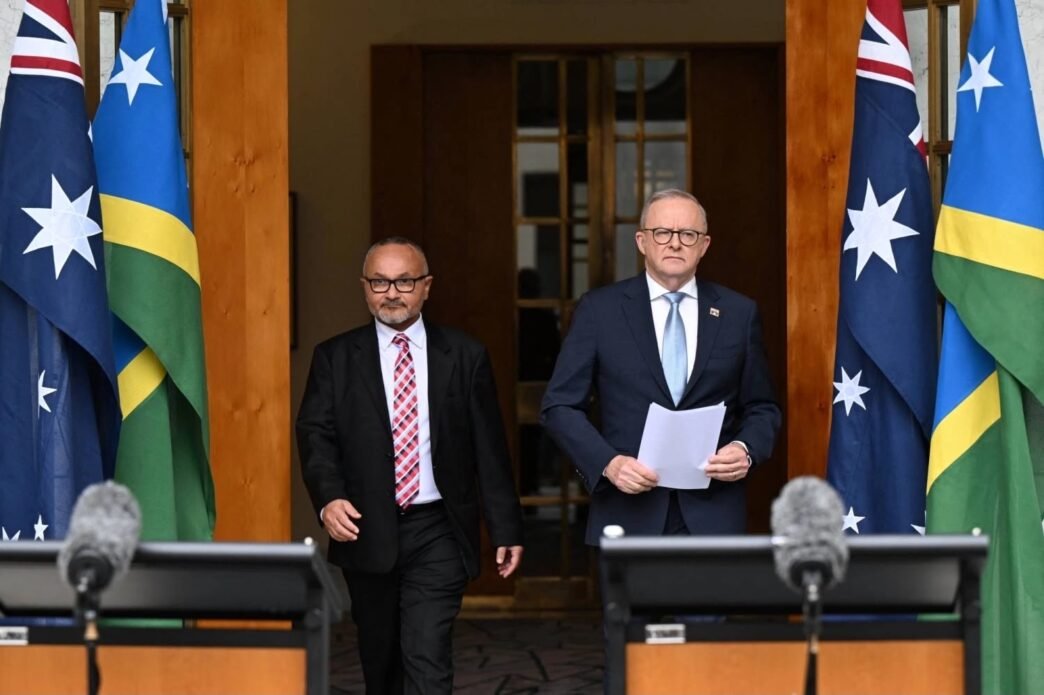
Australian Prime Minister Anthony Albanese and Solomon Islands Prime Minister Matthew Wale signed the agreement in Canberra on November 25, 2026. The treaty formally establishes Australia as the Solomon Islands’ primary security partner and introduces restrictions on foreign military and security bases within the island nation.
The development marks a significant shift in regional relations, particularly following the controversial security agreement signed between China and the Solomon Islands in 2022.
New Treaty Limits Foreign Military Presence
Under the agreement, the Solomon Islands has committed not to allow foreign military or security bases on its territory. It has also agreed to ensure that sensitive infrastructure remains protected from militarisation, foreign interference and unauthorised access.
The treaty will strengthen cooperation between Australia and the Solomon Islands in policing, border protection and national security.
Australia will support the development of the Royal Solomon Islands Police Force and provide assistance in strengthening border security. The agreement also requires consultation with Australia on certain critical infrastructure and security arrangements involving countries outside the Pacific Islands Forum.
The provisions are intended to strengthen regional security while respecting the Solomon Islands’ sovereignty.
China’s Security Agreement Faces an Uncertain Future
The latest development follows growing uncertainty surrounding the 2022 security agreement between China and the Solomon Islands.
The earlier agreement allowed Chinese police personnel to provide training and support in the Pacific nation, raising concerns among Australia, the United States and other regional partners about Beijing’s potential military presence.
According to Australian media reports, the Solomon Islands government has informed China that it will not renew the agreement when it expires in April 2027.
However, Prime Minister Matthew Wale declined to publicly confirm its cancellation, citing confidentiality provisions in the existing arrangement. He said discussions with China were continuing.
Beijing, meanwhile, stated that its cooperation with Pacific island countries was based on mutual respect and equality and should not be viewed through the lens of geopolitical competition.
Australia Promises Investment and Development Support
Beyond security cooperation, the new treaty includes significant economic and development commitments.
Australia has pledged approximately AU$740 million over ten years, including grants and concessional loans, to support education, healthcare, infrastructure, policing and climate resilience in the Solomon Islands.
The agreement also introduces improved visa arrangements and employment opportunities for Solomon Islanders in Australia’s aged-care and childcare sectors.
Additional cooperation will focus on roads, bridges, renewable energy and community development. These commitments are expected to support the Solomon Islands’ development priorities while strengthening its relationship with Australia.
A Wider Contest for Influence in the Pacific
The agreement reflects Australia’s broader effort to strengthen relationships with Pacific island nations amid increasing Chinese influence in the region.
Canberra has previously signed security and cooperation agreements with countries including Papua New Guinea, Fiji and Vanuatu.
The Solomon Islands occupies an important strategic position in the South Pacific, making its partnerships significant for regional security and the wider Indo-Pacific balance.
The latest treaty could reshape regional diplomatic relations, although the Solomon Islands’ government continues to emphasise its independence in making foreign policy decisions.
Australia’s new treaty with the Solomon Islands marks an important development in Pacific diplomacy and security cooperation. While the agreement strengthens Canberra’s position and creates new limits on foreign military access, the future of the island nation’s relationship with China remains an important question. The development highlights how Pacific nations are navigating growing geopolitical competition while balancing security, economic development and national sovereignty.