

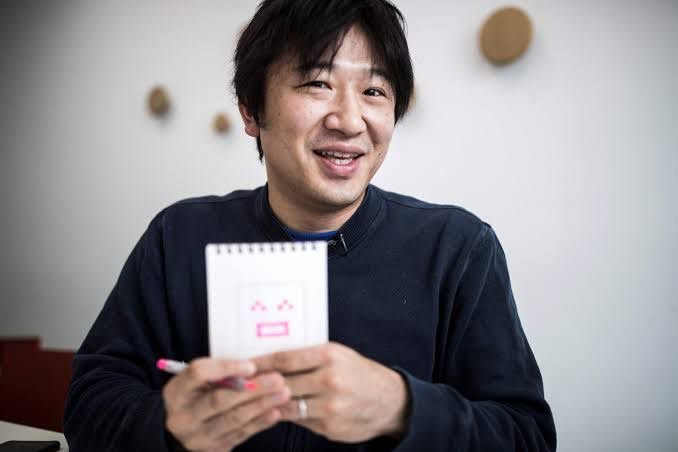
The tiny symbols we use every day to express laughter, love, excitement and countless other emotions have their roots in Japan’s early mobile internet era.
In 1999, Japanese telecommunications company NTT DOCOMO released an original collection of 176 emoji, designed by Japanese designer Shigetaka Kurita. Each symbol was created within an extremely limited 12×12-pixel grid.
 WhatsApp Image 2024 07 01 at 13.58.28 4cfca4e0
What began as a small solution to a communication problem eventually became a global visual language.
The Problem Was More Than Just Words
Early mobile communication was far more restrictive than today’s messaging apps.
Text could communicate information, but it was difficult to convey tone, emotion and subtle meaning through short digital messages.
Kurita saw an opportunity to use simple pictures to add meaning that words alone sometimes struggled to convey.
The result was a collection of tiny symbols designed to communicate ideas quickly and visually.
Kurita’s original emoji had to fit into a 12×12-pixel grid just 144 pixels.
Despite the severe limitation, he created recognizable representations of everyday concepts, including:
● Weather symbols
● Hearts and other expressive symbols
● Faces and emotions
● Hand gestures
● Everyday pictograms
● Music-related symbols
His designs drew inspiration from manga, pictograms and other visual forms, helping create symbols that could communicate across language barriers.
176 Symbols That Changed Messaging
In 1999, NTT DOCOMO introduced Kurita’s 176 original emoji for its mobile phones and pagers.
The term itself combines the Japanese words “e” (picture) and “moji” (character).
The original set may look extremely simple compared with today’s colorful emoji libraries, but the basic concept was revolutionary: a small picture could add emotional context to a text message.
Emoji initially belonged to Japan’s rapidly developing mobile-phone culture.
Their influence expanded dramatically as smartphones and global messaging platforms adopted emoji. In 2011, Apple added an emoji keyboard to its operating system, helping accelerate their worldwide adoption.
Today, emoji have become a familiar part of digital communication across languages and cultures.
Kurita’s original designs eventually gained recognition far beyond the technology industry.
The Museum of Modern Art (MoMA) in New Yorkacquired the original set of 176 emoji in 2016. The museum described the designs as an important example of how digital communication can shape the way people express themselves.
The collection demonstrates how something created for a practical technological purpose can eventually become part of design and cultural history.
Emoji Became a New Visual Language
One of the most important aspects of emoji is their ability to add emotional context to written communication.
A simple message can feel very different depending on whether it ends with ❤️, 😂, 😭 or 👍.
MoMA notes that emoji can function almost like body language in digital communication, helping restore tone and emotion that can disappear when conversations are reduced to text.
1. A Japanese Innovation Went Global
What began with Japanese mobile phones eventually became a worldwide communication phenomenon.
2. Design Solved a Communication Problem
Kurita’s work demonstrated how visual symbols could compensate for the emotional limitations of text.
The original designs had to work within only 144 pixels, proving that effective communication doesn’t always require complexity.
4. Emoji Changed Digital Culture
Emoji are no longer simply decorative icons—they have become an established part of how people communicate online.
The story of emoji is a reminder that big cultural changes can begin with very small ideas. From a handful of 12×12-pixel symbols created in Japan to a visual language used around the world, Shigetaka Kurita’s designs transformed the way people express emotion through technology.