India and Japan have taken another step toward strengthening their climate partnership with the launch of a new Operational Manual for the India-Japan Joint Crediting Mechanism (JCM).
The manual was jointly launched in New Delhi on September 30, 2026, by Japan’s Ambassador to India Keiichi Ono and then Secretary of India’s Ministry of Environment, Forest and Climate Change, Tanmay Kumar. It provides a detailed framework for implementing projects under the bilateral mechanism.
 WhatsApp Image 2024 07 01 at 13.58.28 4cfca4e0
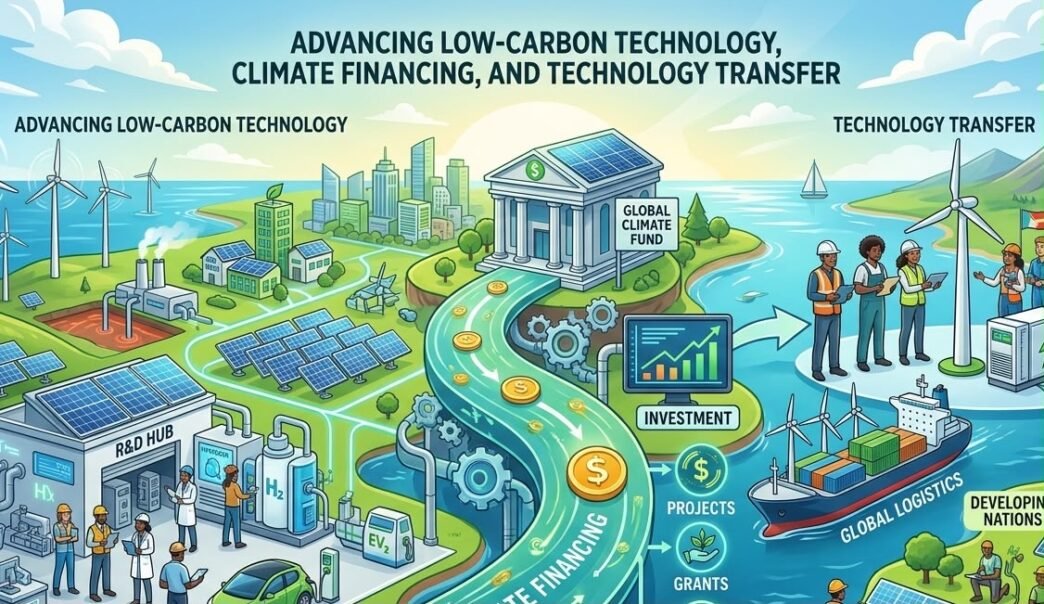
Promoting Low-Carbon Technology
The India-Japan JCM is designed to encourage the deployment of advanced low-carbon technologies in Indiawhile supporting emission reductions and sustainable development.
The mechanism is also intended to help mobilise climate finance and strengthen technology cooperation between the two countries.
Potential projects under such a framework can help bring Japanese technology and investment into India’s transition toward lower-carbon development.
A Framework Under the Paris Agreement
The new manual gives practical shape to cooperation under Article 6.2 of the Paris Agreement, which provides a framework for countries to cooperate through internationally transferred mitigation outcomes.
India and Japan signed their Memorandum of Cooperation for the JCM on August 7, 2025. The two countries subsequently adopted the Rules of Implementation on June 8, 2026, establishing governance arrangements and procedures for projects and carbon credits.
From Project Ideas to Carbon Credits
One of the key features of the new manual is that it establishes procedures covering the entire project cycle.
These include:
● Submission of a Project Idea Note
● Project development and approval
● Validation and verification
● Monitoring of emission reductions
● Issuance of JCM credits
● Authorisation and transfer of credits
The framework is intended to provide greater clarity and transparency for organisations seeking to participate in JCM projects.
Financing is an important part of the transition to cleaner technologies.
By establishing a clearer framework for JCM projects, India and Japan aim to create conditions that can encourage investment in low-carbon projects while supporting measurable emission reductions.
The mechanism is also expected to strengthen confidence and transparency in international carbon markets.
Technology Cooperation Between India and Japan
The initiative builds on the broader economic and technological relationship between the two countries.
At the 16th India-Japan Annual Summit in July 2026, the two governments announced several areas of cooperation involving clean energy, batteries, mobility, critical minerals and other emerging technologies.
The JCM adds another channel through which Japanese technological expertise and investment can contribute to India’s climate and development priorities.
1. Accelerating Green Technology
The mechanism can help facilitate the deployment of advanced low-carbon technologies in India.
2. Greater Access to Climate Finance
A structured carbon-credit framework can support financing for eligible climate projects.
3. Stronger India-Japan Cooperation
The initiative adds a climate-focused dimension to the countries’ expanding economic and technology partnership.
4. Greater Carbon-Market Transparency
Detailed procedures for validation, verification, credit issuance and authorisation are intended to strengthen confidence in the mechanism.
The launch of the India-Japan JCM Operational Manualmarks a shift from establishing the framework to putting bilateral climate cooperation into practice.
With procedures now covering projects from initial proposals through the issuance and authorisation of credits, the mechanism provides a structured pathway for low-carbon technology deployment, climate finance and technology cooperation between India and Japan.