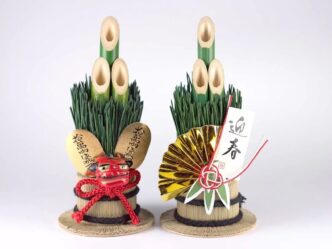

As the New Year approaches in Japan, entrances to homes, offices, shops, and temples are adorned with striking arrangements of bamboo and pine known as kadomatsu. More than simple decorations, kadomatsu are deeply symbolic New Year ornaments believed to invite good fortune, longevity, and prosperity for the year ahead.


The word kadomatsu literally means “pine at the gate” (kado = gate, matsu = pine). Traditionally placed in pairs at the entrance of buildings, kadomatsu serve as temporary dwellings for Toshigami-sama, the Shinto deity of the New Year who brings blessings, good harvests, and family well-being.
These decorations are usually displayed from late December until January 7 (or January 15 in some regions), marking the period when the New Year deity is welcomed and honored.
Symbolism Behind the Materials
Each element of kadomatsu carries a specific meaning rooted in Japanese culture and Shinto beliefs:
● Pine (Matsu): An evergreen tree symbolizing longevity, resilience, and steadfastness. Because it stays green year-round, pine represents enduring life and strength.
● Bamboo (Take): Known for its rapid growth and straight form, bamboo symbolizes vitality, honesty, and upward progress. The clean, angled cuts of bamboo shoots are said to point toward the future.
● Plum Branches (Ume): Often included to represent renewal and hope, as plum blossoms bloom early, even in cold weather.
● Straw Rope (Shimenawa): Sometimes tied around the arrangement, it marks the space as sacred and wards off evil spirits.
Together, these natural elements create a powerful talisman for welcoming positive energy into the New Year.
Kadomatsu dates back to the Heian period (794–1185) and has evolved over centuries. Originally simple pine branches placed at gates, the decoration became more elaborate during the Edo period, incorporating bamboo and artistic arrangements.
While traditional kadomatsu were handmade using natural materials, modern versions may include recycled materials or simplified designs, especially in urban settings. Despite these changes, the core symbolism remains intact.
In contemporary Japan, kadomatsu can be seen everywhere during the New Year season from small household displays to grand installations outside hotels, department stores, and corporate buildings. Many families buy pre-made kadomatsu, while others enjoy crafting their own as part of year-end preparations.
After the New Year period ends, kadomatsu are ceremonially burned during Dondoyaki, a traditional fire ritual held in mid-January. This act sends the New Year deity back to the spiritual realm and ensures continued good fortune.
Kadomatsu is not merely a festive décor; it reflects Japan’s deep respect for nature, spirituality, and seasonal change. By welcoming the New Year deity with kadomatsu, people express gratitude for the past year and hope for health, happiness, and success in the year to come.
As Japan steps into each new year, these elegant bamboo and pine arrangements stand quietly at doorways, carrying centuries of tradition and the promise of good luck for all who pass by.
Originally written by:By Jonathan Masaki
Link to the article : https://www.hawaiinewsnow.com/2025/12/30/kadomatsu-how-this-japanese-tradition-brings-good-luck-new-year/