Originally written by:ALEX K.T. MARTIN
Link to the article:https://www.japantimes.co.jp/life/2026/04/13/lifestyle/buddhism-shinto-ai-religioin/
 WhatsApp Image 2024 07 01 at 13.58.28 4cfca4e0
In a country where ancient traditions coexist with cutting-edge technology, Japan is once again pushing boundaries this time in the realm of spirituality. From robotic monks delivering sermons to AI-powered systems conducting rituals, temples and shrines across the country are quietly experimenting with what the future of faith might look like.
But the question remains: can artificial intelligence truly replace a priest?
The Rise of AI in Sacred Spaces
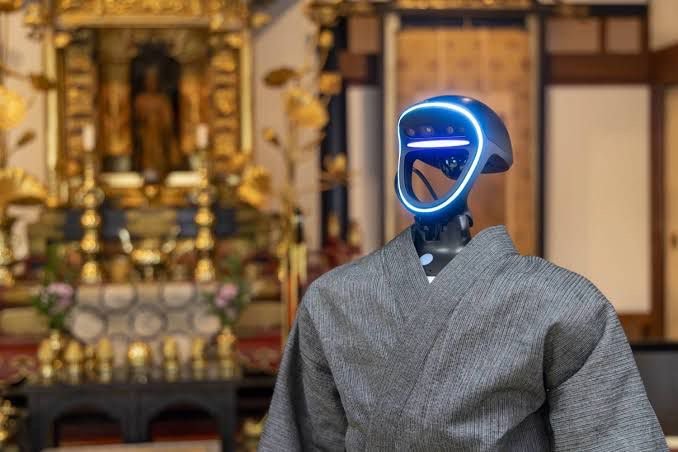
In recent years, several Buddhist temples in Japan have introduced AI-driven figures to assist in religious practices. One of the most talked-about examples is Mindar, a robotic priest at Kōdaiji Temple. Designed to resemble a compassionate bodhisattva, Mindar delivers sermons on Buddhist teachings using pre-programmed scripts and voice synthesis.
Similarly, digital platforms are emerging to automate rituals such as memorial services, prayer chants, and even fortune-telling roles traditionally carried out by human priests. These innovations are not just technological experiments; they are responses to a deeper issue facing Japan’s religious institutions.
Japan is experiencing a decline in the number of practicing priests, particularly in rural areas. Younger generations are less inclined to inherit temple duties, leaving many sacred spaces understaffed or abandoned. In this context, AI offers a practical solution ensuring that rituals continue even when human resources are scarce.
Temples are also grappling with declining attendance. By integrating AI, they hope to attract younger, tech-savvy audiences who may feel disconnected from conventional religious practices.
While AI can replicate the structure of rituals, critics argue it lacks the emotional depth and spiritual authenticity that human priests provide. A priest does more than recite scriptures they offer guidance, empathy, and a human connection during life’s most significant moments.
AI, no matter how advanced, operates on data and algorithms. It cannot अनुभव grief, joy, or moral conflict. For many believers, this raises concerns about whether AI-led rituals can truly fulfill spiritual needs.
A Complement, Not a Replacement
Rather than replacing priests, many experts believe AI will serve as a supportive tool. It can handle routine tasks, preserve teachings, and make religious content more accessible freeing human priests to focus on personal interactions and community building.
In fact, some temples are already using AI to archive centuries-old scriptures, translate texts, and provide virtual tours for global audiences. These applications enhance the reach of religion without diminishing its core values.
The Future of Faith in a Digital Age
Japan’s experiment with AI in temples is less about replacing priests and more about redefining their role in a rapidly changing world. It challenges long-held assumptions about spirituality, technology, and what it means to connect with the divine.
As AI continues to evolve, the line between tradition and innovation will only blur further. Whether machines can ever truly embody spiritual wisdom remains uncertain but their presence is already reshaping how faith is practiced.
In the end, the soul of religion may not lie in who or what delivers the message, but in how deeply it resonates with those who seek it.