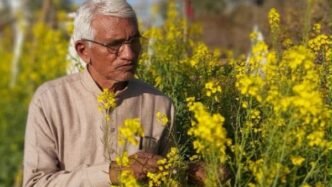
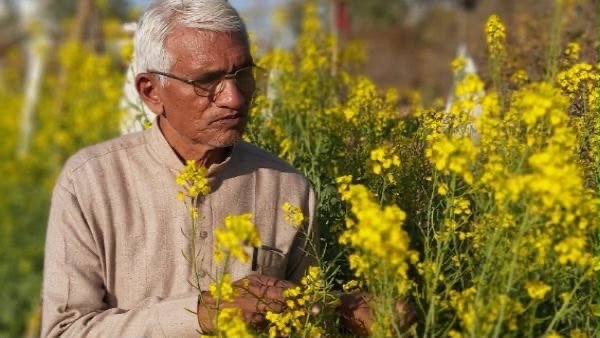
In the arid landscapes of Rajasthan, environmentalist Sundaram Varma has achieved what many considered impossible—transforming barren land into a thriving forest of more than 60,000 trees. Over the past three decades, Varma has relied on rainwater harvesting and natural ecological methods, using as little as one litre of water during the planting stage to establish trees that eventually become self-sustaining.
Instead of depending on continuous irrigation, his approach encourages roots to grow deep into the soil in search of naturally stored groundwater. By trapping rainwater beneath the surface, the forest has flourished in one of India’s driest regions, demonstrating how nature-based solutions can restore degraded ecosystems.
 WhatsApp Image 2024 07 01 at 13.58.28 4cfca4e0
A Model of Sustainable Conservation
Sundaram Varma’s work showcases how traditional knowledge and ecological practices can create lasting environmental impact.
Key achievements include:
● Growing over 60,000 trees in Rajasthan’s desert landscape
● Conserving nearly 200 million litres of water through rainwater harvesting
● Preserving around 700 native seed varieties
● Promoting self-sustaining forests with minimal irrigation
● Restoring biodiversity and improving soil health
● Inspiring sustainable land restoration initiatives
His methods have become an example of how conservation can be achieved with careful planning rather than excessive resource use.
Harnessing the Power of Rainwater
Rather than extracting groundwater, Varma focused on capturing seasonal rainfall and allowing it to replenish underground reserves. This approach helps trees develop stronger root systems capable of surviving dry conditions without regular watering.
The project demonstrates that effective water management can be just as important as water availability in restoring ecosystems.
Lessons for a Changing Climate
As climate change and water scarcity become increasingly urgent challenges, Varma’s forest offers valuable insights into sustainable environmental restoration. His work emphasizes the importance of preserving native plant species, improving soil resilience, and using local ecological knowledge to create long-term solutions.
The success of the project has inspired conservationists and environmental advocates seeking practical ways to combat desertification and biodiversity loss.
1. Combating Desertification
The project proves that degraded landscapes can be restored through sustainable ecological practices.
2. Conserving Water
Rainwater harvesting reduces dependence on groundwater while supporting healthy ecosystems.
3. Protecting Biodiversity
The preservation of 700 native seed varieties strengthens ecological resilience.
4. Inspiring Sustainable Development
The initiative highlights how innovation and traditional wisdom can work together to address environmental challenges.
Sundaram Varma’s remarkable transformation of Rajasthan’s dry landscape into a flourishing 60,000-tree forest is a powerful example of environmental stewardship. By combining rainwater conservation, native biodiversity, and sustainable forestry, his work demonstrates that restoring nature is not simply about using more resources it is about using them wisely. His achievement offers hope and inspiration for building a greener, more resilient future.