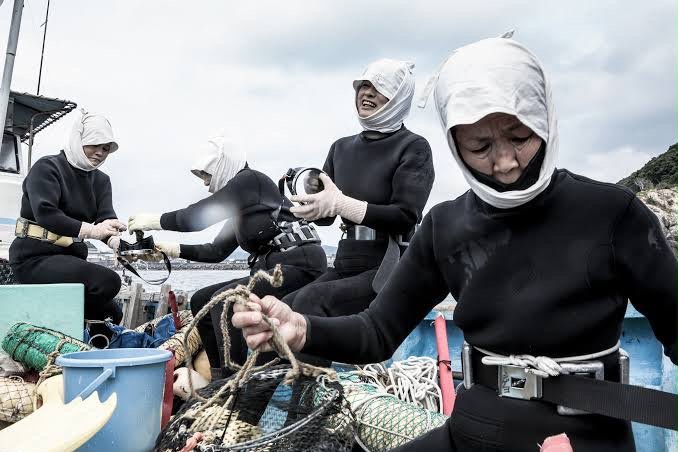
Along Japan’s coastline, a remarkable centuries-old tradition continues to survive through the work of the ama, often known as Japan’s “women of the sea.” These female free divers have traditionally entered coastal waters to collect seafood while relying on their skill, experience, and knowledge of the marine environment.
Among them are elderly divers who continue to practise the tradition, demonstrating how deeply the occupation is connected to coastal communities and Japanese cultural heritage.
 WhatsApp Image 2024 07 01 at 13.58.28 4cfca4e0
The word ama is commonly translated as “woman of the sea.” Ama communities have existed in parts of Japan for centuries, with women traditionally gathering seafood such as shellfish, seaweed, and other marine products.
Unlike modern commercial diving, traditional ama diving is based on breath-hold diving and does not rely on scuba equipment.
Key aspects of the tradition include:
● Free diving in coastal waters
● Collecting seafood and seaweed
● Traditional knowledge of the sea
● Passing skills between generations
● Strong connections with coastal communities
● Sustainable harvesting practices
An 80-Year-Old Diver Carries on the Tradition
One of the most striking examples of the tradition is an 80-year-old ama diver who continues to enter the cold coastal waters to harvest seafood.
Her story illustrates the physical endurance, experience, and dedication associated with the profession. For older ama divers, decades spent working in the sea have created an intimate understanding of local waters, seasons, tides, and marine life.
Their knowledge represents an important form of cultural heritage that cannot simply be replaced by modern technology.
A Tradition Passed Down Through Generations
Ama diving has traditionally been taught through experience, with knowledge passed between generations.
Young divers learn about:
● Local marine ecosystems
● Seasonal seafood
● Coastal conditions
● Traditional harvesting practices
● Community customs
● Safety and cooperation
This relationship between generations has helped keep the tradition alive despite major changes in Japan’s economy and coastal communities.
The Cultural Importance of Ama Diving
Ama diving is more than a way of collecting seafood. It has become an important symbol of Japan’s coastal heritage and traditional relationship with the sea.
Ama communities have developed distinctive customs, clothing, tools, rituals, and working practices over generations.
Their stories also provide a window into a form of work that existed long before modern commercial fishing and diving technologies.
Challenges Facing the Tradition
Despite its cultural importance, traditional ama diving faces challenges.
These include:
● An ageing population of divers
● Fewer younger people entering the profession
● Changes in coastal ecosystems
● Declining marine resources
● Economic pressures
● Changes in fishing practices
● Difficulty maintaining traditional communities
As older divers retire, communities are increasingly concerned about how the knowledge and traditions associated with ama diving can be preserved.
1. Preserving Cultural Heritage
Ama diving represents a distinctive part of Japan’s maritime history and cultural identity.
2. Passing Down Traditional Knowledge
Experienced divers possess generations of knowledge about coastal environments and marine life.
3. Supporting Coastal Communities
The tradition remains closely connected to local economies, food culture, and community life.
4. Inspiring Future Generations
Stories of elderly ama divers demonstrate the importance of preserving traditional skills and cultural practices.
Japan’s “women of the sea” represent a living connection to the country’s coastal past. The story of an 80-year-old ama diver continuing a centuries-old tradition highlights not only remarkable dedication but also the importance of protecting cultural practices that are gradually becoming rarer. As Japan’s coastal communities change, preserving the stories and knowledge of the ama remains an important part of the country’s cultural heritage.