
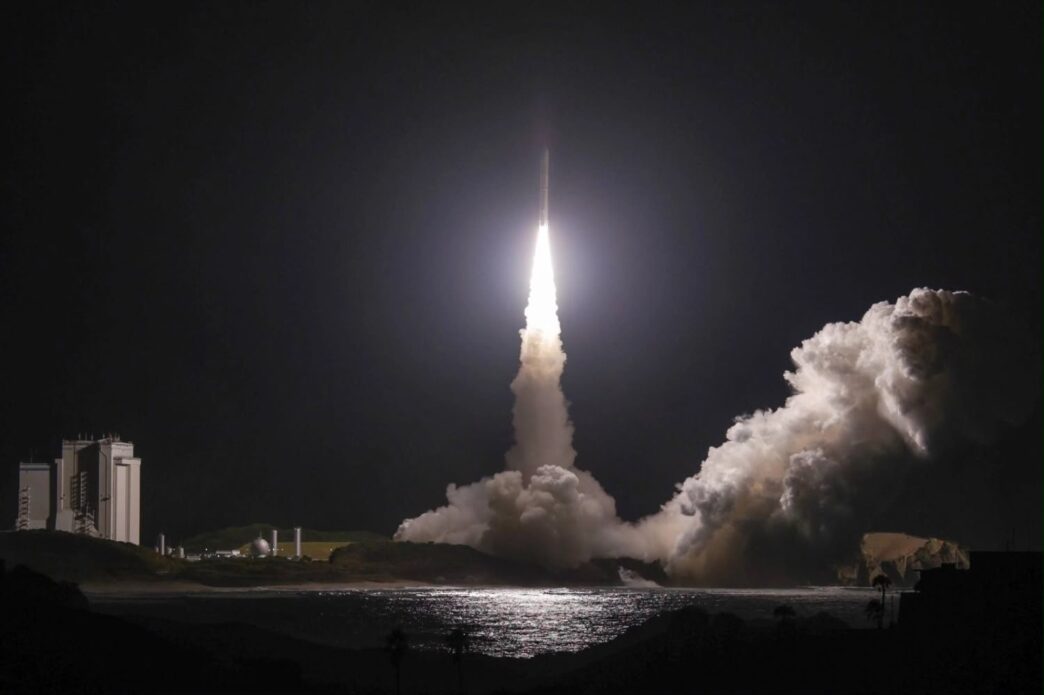
Japan has successfully launched an H3 rocket carrying the Michibiki No. 7 navigation satellite, marking another important milestone for the country’s space programme and satellite-positioning capabilities.
The launch was conducted by the Japan Aerospace Exploration Agency (JAXA) from the Tanegashima Space Center in Kagoshima Prefecture at 4:23 a.m. on August 11, 2026. The satellite was successfully released into its planned orbit around 30 minutes after liftoff.
 WhatsApp Image 2024 07 01 at 13.58.28 4cfca4e0
H3 Rocket Successfully Launches Michibiki-7
The mission involved the ninth flight of Japan’s H3 rocket. Michibiki-7 is part of Japan’s Quasi-Zenith Satellite System (QZSS), a satellite-navigation network designed to provide highly accurate positioning services.
Key highlights include:
● H3 rocket successfully launched
● Michibiki-7 deployed into its planned orbit
● Launch conducted from Tanegashima Space Center
● Liftoff took place at 4:23 a.m. local time
● Satellite deployment occurred about 30 minutes later
● Mission strengthens Japan’s positioning infrastructure
What Is the Michibiki Satellite System?
Michibiki satellites form the backbone of Japan’s QZSS navigation system. The network is designed to improve positioning accuracy and reliability, particularly across Japan and the wider Asia-Pacific region.
The technology can support applications such as:
● Car navigation
● Smartphones and location services
● Mapping
● Transportation
● Agriculture
● Disaster response
● Infrastructure management
The system is intended to complement global navigation satellite systems while providing Japan with greater control over its regional positioning capabilities.
Another Step Forward for Japan’s H3 Rocket
The successful mission is also significant for the H3 launch vehicle, Japan’s next-generation rocket developed to replace the H-IIA.
The H3 suffered a launch failure in December 2025 while carrying an earlier Michibiki satellite. A subsequent successful mission in June 2026 helped restore confidence in the rocket programme, making the latest launch another important achievement.
Why This Launch Matters
1. Stronger Navigation Infrastructure
Michibiki-7 adds another satellite to Japan’s regional positioning network, helping strengthen the reliability of location services.
2. Advancing Japan’s Space Programme
Successful H3 missions demonstrate Japan’s ability to develop and operate its own large launch vehicle.
3. Benefits for Everyday Technology
Accurate satellite positioning can support navigation, mapping, transportation, communications, and other technologies used in everyday life.
Following previous setbacks, the successful deployment represents another positive step for Japan’s efforts to establish the H3 as a reliable launch system.
Japan plans to expand its satellite-navigation capabilities as it develops the QZSS network. Additional satellites are expected to strengthen coverage and positioning accuracy, supporting both civilian applications and national infrastructure.
The continued success of H3 launches will also be important as Japan seeks to maintain an independent and competitive space-launch capability.
The successful launch of the H3 rocket carrying Michibiki-7marks an important achievement for Japan’s space and satellite-navigation programmes. With the satellite now in its planned orbit, Japan is strengthening its QZSS network while continuing efforts to establish the H3 rocket as a dependable vehicle for future missions.