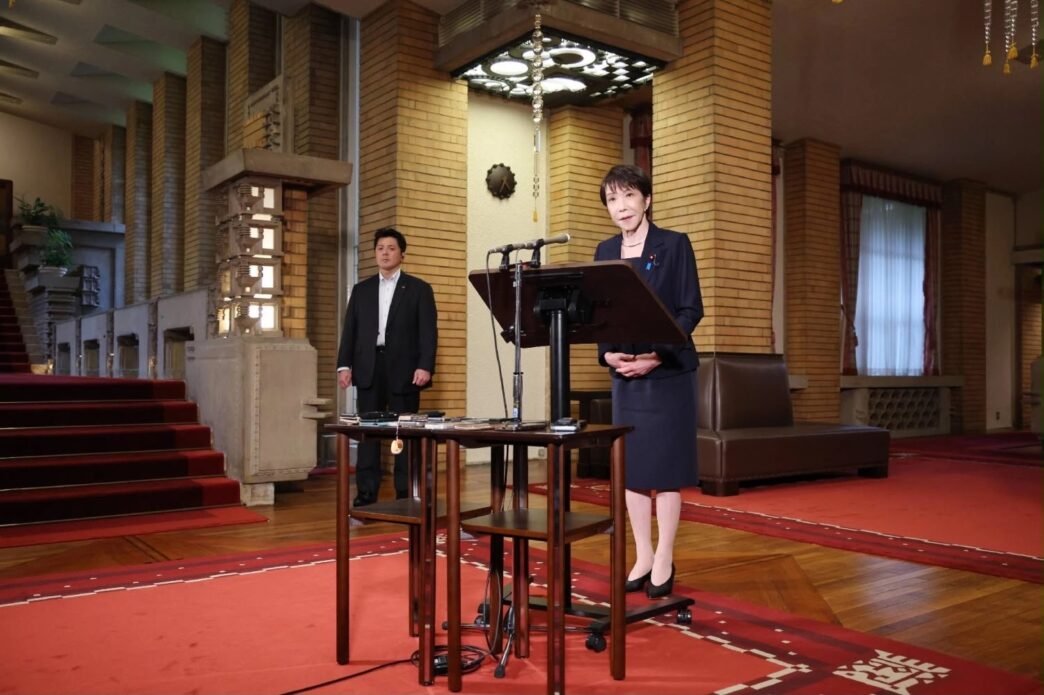
Japanese Prime Minister Sanae Takaichi has defended her habit of spending long periods working from Japan’s official prime ministerial residence, saying the arrangement allows her to work efficiently while reducing the burden placed on her security staff.
Takaichi explained her approach in posts on X on August 22, responding to growing attention over how much time she spends at the residence rather than at the Prime Minister’s Office.
 WhatsApp Image 2024 07 01 at 13.58.28 4cfca4e0
Takaichi Says the Residence Is Also a Workplace
Takaichi said she has strengthened the office functions at the official residence so that she can work and hold meetings with staff there, either remotely or in person, even outside normal office hours.
She also takes official documents to the residence for reading and work.
Her argument is straightforward: because the residence is located next to the Prime Minister’s Office, she does not need to commute and can respond quickly if an emergency requires her attention.
“To me, the official residence is also a workplace,” she said in her social-media explanation.
Reducing the Burden on Security Personnel
Takaichi also cited security considerations for limiting unnecessary trips outside the residence.
She said that whenever she leaves, a substantial number of security personnel, known as SP officers, must accompany her.
By remaining at the official residence during early mornings, late nights and holidays when she has no outside official duties, she said she can reduce the workload placed on those officers.
A Work Style That Has Drawn Attention
Takaichi has become known for an exceptionally demanding working style.
In July, she said on X that she sometimes gets zero to three hours of sleep per night, describing the pattern as something that had become normal since taking office. Her comments have prompted renewed discussion about the sustainability of her workload.
Reports have also highlighted the amount of time she spends at the official residence during weekends and public holidays.
Critics have questioned whether her highly solitary working style and limited interaction with officials and lawmakers could affect the way the government operates.
Takaichi moved into the official residence in December 2025.
The historic brick-and-stone building dates from 1929 and is located immediately beside the current Prime Minister’s Office.
The residence has a dramatic history: it was the site of two attempted military coups in the 1930s and has long been associated with stories that the building is haunted.
Interestingly, Takaichi said she has never seen a ghost, although she has encountered cockroaches inside the building.
1. Efficiency in Government
Takaichi argues that working from the residence allows her to use her time more efficiently.
2. Faster Emergency Response
The residence’s proximity to the Prime Minister’s Office allows her to reach the office quickly when necessary.
3. Reduced Security Burden
Staying at the residence can reduce the number of movements requiring security personnel.
4. Debate Over Leadership Style
Her approach has generated discussion about communication, work-life balance and how Japan’s prime minister should conduct government business.
Prime Minister Sanae Takaichi is defending her decision to treat Japan’s official residence as more than simply a home.
By turning the residence into an extension of her workplace, she says she can work longer, respond quickly to emergencies and reduce the burden on her security staff.
At the same time, her unusually intensive work schedule and preference for working from the residence have attracted growing public and political scrutiny, making her work style an increasingly notable feature of her leadership.