
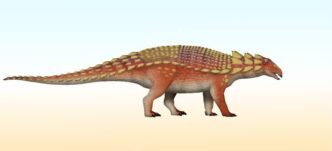
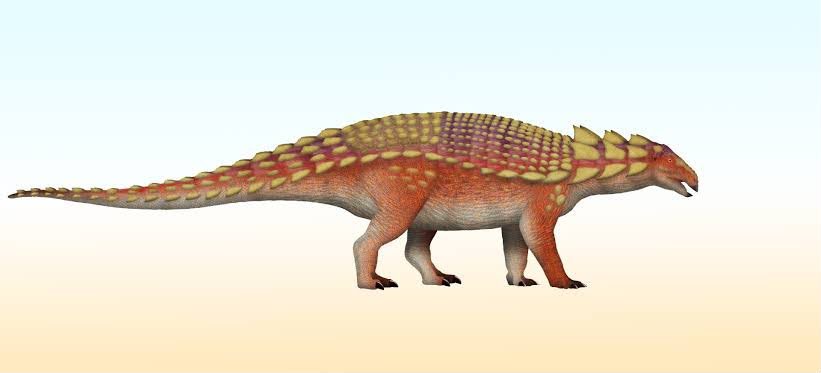
Scientists have identified a new species of armored dinosaur from Japan, adding an important new chapter to the country’s prehistoric history.
Named Nipponopelta yezoensis, the dinosaur was identified from fossil material discovered in Yubari, Hokkaido. The species lived during the Late Cretaceous, around 96–94 million years ago, when much of the region was part of a marine environment.
 WhatsApp Image 2024 07 01 at 13.58.28 4cfca4e0
Japan’s First Formally Described Ankylosaur
Nipponopelta yezoensis is particularly significant because it is the first ankylosaur formally described from Japan.
Ankylosaurs were heavily armoured, plant-eating dinosaurs that walked on four legs. Their bodies were protected by bony plates and spikes, providing defence against predators.
The newly recognised species belongs to the nodosaurid group of ankylosaurs, which is known mainly from North America and Europe, with relatively few Asian representatives.
Fossil Discovered in Hokkaido
The fossil material was originally discovered more than two decades ago in Hokkaido.
The important specimen is part of a skull that was initially identified as belonging to a nodosaurid, but its precise classification remained unresolved.
Researchers have now used three-dimensional CT reconstructions to examine previously hidden anatomical features. These characteristics provided enough evidence to establish Nipponopelta as a distinct new genus and species.
What Did Nipponopelta Look Like?
Nipponopelta was a quadrupedal herbivore protected by armour and spikes.
It is estimated to have reached approximately 5 metres in length, making it a substantial plant-eating dinosaur for its ecosystem.
Its armour would have helped protect the animal from predators, while its herbivorous lifestyle meant it likely fed on vegetation available in the ancient environment.
A Dinosaur That Lived in Ancient Japan
The discovery also provides clues about what Japan looked like during the Cretaceous period.
The fossils were found in rocks associated with the Hikagenosawa Formation, which formed in an ancient marine environment. The presence of Nipponopelta adds to evidence that dinosaurs inhabited the land surrounding these ancient coastal environments.
The discovery is therefore important not only for identifying a new species, but also for understanding the diversity of dinosaurs that once lived in the region.
Why This Discovery Matters
1. First Named Japanese Ankylosaur
Nipponopelta is the first formally described ankylosaur from Japan.
2. Expands Knowledge of Asian Dinosaurs
The discovery adds another nodosaurid to the relatively limited Asian fossil record.
3. Reveals Ancient Biodiversity
The species provides new information about dinosaur diversity in Cretaceous Japan.
4. Modern Technology Unlocks Old Fossils
Advanced CT scanning helped researchers examine anatomical features that were difficult to study from the original fossil alone.
Final Word
The identification of Nipponopelta yezoensis shows that Japan’s prehistoric record still holds important discoveries.
A fossil found in Hokkaido decades ago has now been recognised as belonging to a previously unknown armored dinosaur species, revealing another piece of the ancient ecosystem that existed in Japan nearly 100 million years ago.