
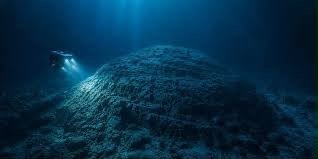
Japan’s Underwater ‘Godzilla’ Receives International Recognition
Japan’s enormous underwater geological formation, known as the Godzilla Megamullion, has been selected for the International Union of Geological Sciences’ (IUGS) list of 100 Geological Heritage Sites.
 Asahi Travel Service Pvt Ltd
The Japan Coast Guard announced the recognition on November 6, 2026. The formation was discovered in 2001 during a survey of Japan’s continental shelf, southeast of Okinotorishima, a remote Pacific island administered by Tokyo.
The designation recognises the site’s scientific importance and its contribution to understanding the Earth’s structure and the processes that shape the ocean floor.
A Geological Structure of Extraordinary Size
Located on the Philippine Sea Plate, the Godzilla Megamullion measures approximately 125 kilometres in length and 55 kilometres in width. It is around ten times larger than a typical megamullion and is considered the largest known formation of its kind.
A megamullion is a dome-shaped structure that forms on the ocean floor when tectonic fault activity associated with seafloor spreading exposes rocks from the Earth’s mantle.
The formation’s enormous size inspired its name, which refers to Japan’s famous fictional monster, Godzilla. The name was officially registered internationally in 2021.
Research Offers Insights into Earth’s Interior
The Godzilla Megamullion has attracted international scientific interest because it provides an opportunity to study rocks originating deep beneath the Earth’s crust.
Research conducted by an international team led by Japanese scientists has contributed to understanding mantle structure, oceanic crust formation and the geological processes involved in the movement of tectonic plates.
Scientists consider the formation an important reference site for studying how sections of the Earth’s mantle become exposed on the ocean floor. Its geological characteristics offer valuable information about the development of ocean basins and the structure of the planet’s interior.
Japan’s Contribution to Global Geological Heritage
The IUGS list identifies locations that hold particular importance for understanding Earth’s geological history. The Godzilla Megamullion’s selection marks the third round of recognitions under the international initiative.
Japan has previously received recognition for other important geological locations, including the Nojima Fault in Hyogo Prefecture, associated with the 1995 Great Hanshin Earthquake.
The inclusion of the Godzilla Megamullion further highlights Japan’s contribution to geological research and the importance of long-term oceanographic surveys in identifying significant natural formations.
Final Word
From its discovery during a Japan Coast Guard survey to its recognition by an international scientific organisation, the Godzilla Megamullion has become an important landmark in marine geology.
Its unusual name draws attention, but its scientific value is what makes the formation significant. The recognition is expected to support continued interest in research into the Earth’s mantle, tectonic activity and the formation of ocean floors.