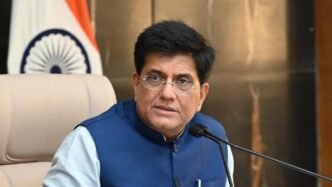
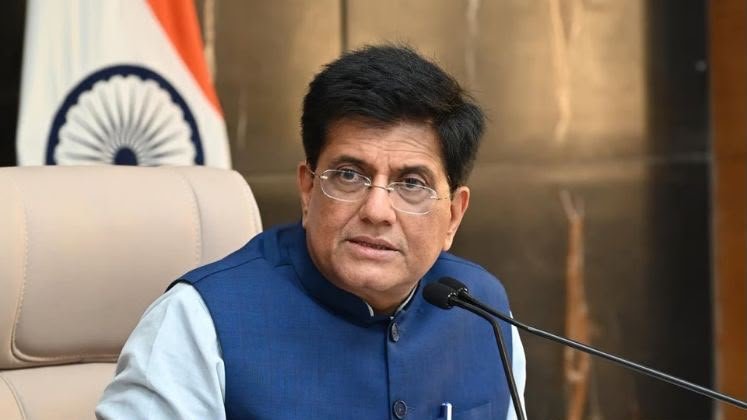
Union Commerce and Industry Minister Piyush Goyal has invited Japanese businesses to deepen their investments and partnerships in India, highlighting the growing strategic and economic importance of the India-Japan relationship.
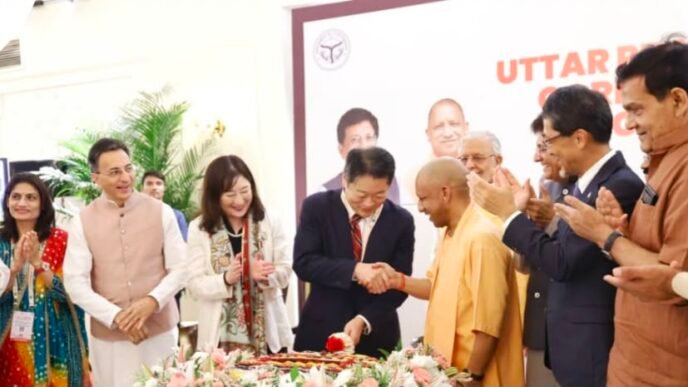
Goyal made the remarks while addressing a dinner hosted by the Government of Uttar Pradesh for a Japanese delegation in New Delhi in the presence of Uttar Pradesh Chief Minister Yogi Adityanath. The delegation from Yamanashi Prefecture reflected the expanding engagement between Japan and Indian states and regions.
 WhatsApp Image 2024 07 01 at 13.58.28 4cfca4e0
Goyal Highlights Growing India-Japan Partnership
Addressing the gathering, Goyal said India and Japan share an enduring partnership based on common aspirations for peace, progress and prosperity in the Indo-Pacific.
He emphasised that the relationship is moving beyond traditional economic cooperation and creating opportunities for collaboration across strategic and emerging sectors.
The Minister highlighted areas where India and Japan can complement each other, including manufacturing, agriculture, technology, infrastructure, energy and defence, the green and blue economy, and civilisational soft power.
Japan Targets ₹10 Trillion Investment in India
A major focus of the engagement is Japan’s long-term investment commitment to India.
Following the 16th India-Japan Annual Summit held in July 2026, the two countries set a target of 10 trillion yen in private investment from Japan to India over the next decade.
Goyal highlighted sectors such as artificial intelligence, semiconductors, critical minerals, batteries, energy and next-generation mobility as important areas for future investment and industrial cooperation.
India Offers Opportunities for Japanese Companies
Goyal pointed to India’s large market, young workforce, improving connectivity and expanding industrial base as factors that can make the country an attractive destination for Japanese investment.
He also highlighted Uttar Pradesh’s economic potential, noting the state’s ambition to become a USD 1 trillion economy and its growing industrial momentum.
For Japanese businesses, India’s expanding domestic market and manufacturing ecosystem can provide opportunities for establishing production, technology and supply-chain partnerships.
Strong Japanese Presence Already Visible in India
India-Japan economic cooperation is already visible through several major projects.
Goyal cited the Mumbai-Ahmedabad High-Speed Rail project, Japanese-assisted metro systems in Delhi, Ahmedabad, Bengaluru and Chennai, and 11 Japanese industrial townships across eight Indian states as examples of the partnership’s impact on the ground.
Japan is also among India’s major sources of foreign direct investment. According to the Embassy of India in Tokyo, cumulative Japanese investment in India from 2000 to June 2025 stood at around US$44.97 billion, making Japan the fifth-largest source country for FDI.
More Than 1,400 Japanese Companies in India
The scale of Japan’s corporate presence in India has also expanded significantly.
More than 1,400 Japanese companies are currently operating in India, with major names including Suzuki, Toyota, Honda, Sony, Hitachi and Mitsubishi.
This established business ecosystem provides a foundation for further investment, localisation of supply chains and technology partnerships.
Focus on Emerging Technologies and Supply Chains
Future India-Japan cooperation is expected to increasingly focus on strategic technologies and resilient supply chains.
The two countries have identified areas including semiconductors, critical minerals, information and communication technology, artificial intelligence, clean energy and pharmaceuticals for deeper economic-security cooperation.
An India-Japan AI initiative has also been launched to encourage collaboration in areas such as large language models, research, training and support for businesses and start-ups.
Goyal’s Upcoming Japan Visit
The outreach comes ahead of Goyal’s planned four-day visit to Japan from August 24 to 27, 2026.
The visit is expected to focus on strengthening trade and investment cooperation and advancing India’s economic engagement with one of its key strategic partners.
The timing highlights India’s push to convert high-level diplomatic commitments into greater business-to-business cooperation and investment.
Why This Matters
1. Attracting Japanese Investment
India is seeking to expand Japanese investment across manufacturing, technology, infrastructure and emerging industries.
2. Strengthening Supply Chains
Greater cooperation can help build resilient supply chains in strategic sectors such as semiconductors, critical minerals and clean energy.
3. Supporting Advanced Technology
AI, next-generation mobility and other emerging technologies are becoming increasingly important pillars of India-Japan economic cooperation.
4. Expanding State-Level Partnerships
The participation of the Yamanashi delegation demonstrates how India-Japan cooperation is increasingly extending beyond national governments to states and prefectures.
5. Creating New Industrial Opportunities
Deeper Japanese investment can support manufacturing, technology transfer, employment and integration of Indian businesses into global supply chains.
Final Word
Commerce Minister Piyush Goyal’s invitation to Japanese businesses comes at a significant moment for India-Japan economic relations.
With a 10 trillion yen investment target for the next decade, a large existing Japanese corporate presence in India and growing cooperation in AI, semiconductors, mobility, energy and critical minerals, the partnership is entering a new phase.
As India seeks to expand its manufacturing capabilities and attract high-quality foreign investment, deeper engagement with Japanese businesses could become an important driver of technology, industrial growth and resilient supply chains in the years ahead.
Yes this can be turned into a strong historical/environment article in the same SEO format. One important nuance: the 18 fish were bluegill presented to Crown Prince Akihito (later Emperor Akihito) during his 1960 visit to Chicago, and bluegill were subsequently introduced into Japan. The Lake Biwa population is often reported as having grown dramatically, though the exact 25 million estimate should be attributed rather than presented as a precise census.