
Japan witnessed a powerful earthquake in April 2026 that triggered widespread tsunami warnings across its northeastern coast. However, authorities later downgraded these warnings to advisories and eventually lifted them, even as residents described experiencing a deep “low rumbling” sound during the quake.
The incident once again highlights Japan’s vulnerability to seismic activity and the efficiency of its disaster response systems.
 WhatsApp Image 2024 07 01 at 13.58.28 4cfca4e0
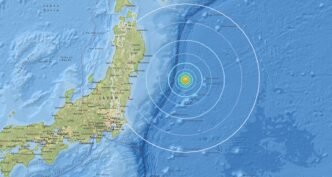
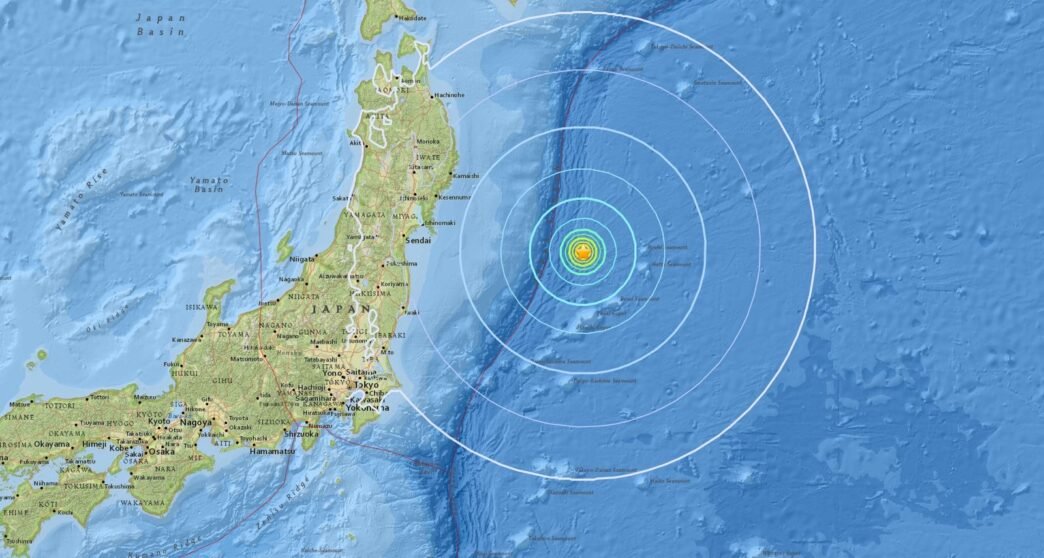
A strong offshore earthquake measuring around 7.4 to 7.7 magnitude struck near the northeastern coast of Japan, particularly affecting the Sanriku region.
Immediately after the quake:
● Tsunami warnings were issued for multiple coastal areas
● Evacuations were ordered across several prefectures
● Authorities warned of waves potentially reaching up to 3 meters
Within hours, however, the situation stabilized and alerts were downgraded.
Residents Report “Low Rumbling” Sensation
One of the most widely reported experiences during the earthquake was a deep, low rumbling sound felt before and during the tremors.
According to reports:
● People described the quake as starting with a vibration-like rumble
● The sound was followed by strong shaking across buildings
● The sensation was felt across a wide geographic area
These descriptions are typical of large seismic events, where underground tectonic movement produces audible low-frequency vibrations.
| Detail | Information |
| Earthquake Magnitude | ~7.4–7.7 |
| Location | Northeastern Japan (Sanriku coast) |
| Initial Alert | Tsunami warning issued |
| Updated Status | Downgraded to advisory, then lifted |
| Reported Experience | “Low rumbling” sound before shaking |
| Impact | Limited damage, minor injuries reported |
| Evacuations | Over 170,000 people advised to move to safety |
1. Tsunami Warnings Downgraded Quickly
Japan’s advanced early warning system allowed authorities to act within minutes.
● Initial warnings predicted potentially dangerous waves
● Observed tsunami waves were smaller than expected (under 1 meter in many areas)
● Alerts were downgraded from “warning” to “advisory” and later lifted
This rapid adjustment reflects improved accuracy in Japan’s monitoring systems.
2. Large-Scale Evacuations and Preparedness
At the peak of the emergency:
● Over 170,000 residents across multiple regions were advised to evacuate
● Coastal communities moved to higher ground
● Public transport and services were temporarily disrupted
Despite the scale, there were no major casualties, highlighting strong preparedness.
3. Japan’s Advanced Tsunami Warning System
Japan operates one of the most sophisticated tsunami alert systems in the world.
● Warnings are issued within minutes of an earthquake
● Alerts are categorized as Major Warning, Warning, or Advisory
● Continuous updates are provided as more seismic data becomes available
This system plays a critical role in minimizing damage and saving lives.
4. Risk of Aftershocks and Future Quakes
Following the earthquake, authorities warned of:
● Increased likelihood of aftershocks
● A slightly elevated risk of a larger “megaquake” in the coming days
Experts noted that the probability of a major quake temporarily rose up to 1%, significantly higher than normal levels.
1. Reinforces Japan’s Seismic Vulnerability
Japan lies along the Pacific “Ring of Fire,” making earthquakes a constant risk.
2. Highlights Importance of Early Warning Systems
Quick detection and communication helped prevent panic and reduce casualties.
3. Shows Public Awareness and Preparedness
Residents responded quickly to evacuation orders, reflecting strong disaster education.
Frequently Asked Questions (FAQs)
Q: Why were tsunami warnings downgraded?
A: Actual wave heights were lower than initially predicted, allowing authorities to reduce alert levels.
Q: What caused the “low rumbling” sound?
A: It is caused by underground seismic waves traveling through the Earth before surface shaking intensifies.
Q: Was there major damage?
A: Damage was limited, with only minor injuries reported.
Q: How strong was the earthquake?
A: It measured approximately 7.4 to 7.7 magnitude.
Q: Is Japan at risk of another earthquake?
A: Yes, authorities warned of increased aftershock activity and a slightly higher risk of a larger quake in the short term.
Final Word: Calm After the Shock, But Vigilance Remains
The downgrading of tsunami warnings in Japan after the April 2026 earthquake brought relief but not complacency.
The “low rumbling” many residents described serves as a reminder of the immense forces beneath the surface. While Japan’s systems once again proved effective, the event underscores a constant reality: in a country shaped by earthquakes, preparedness is not optional it’s essential.