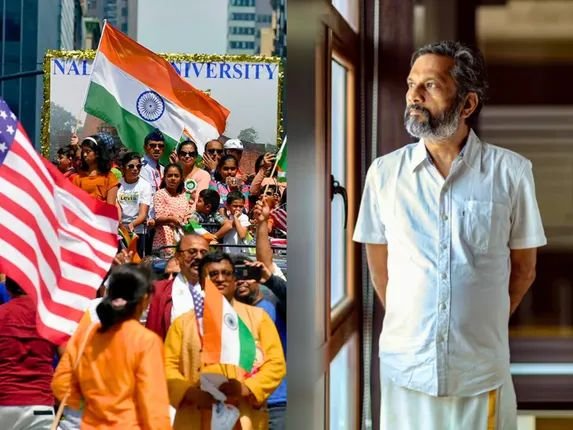
Introduction: A Billionaire’s Letter That Set the Internet on Fire
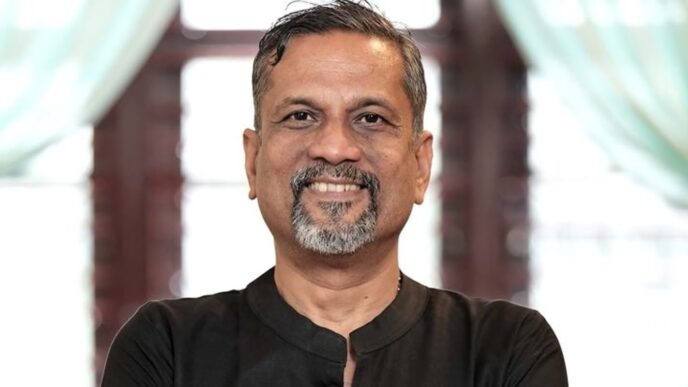
On April 27, 2026, Sridhar Vembu co-founder and Chief Scientist of Zoho Corporation posted what appeared to be a simple message on X (formerly Twitter). Addressed to “brothers and sisters from Bharat,” it was, in reality, a deeply personal and politically charged open letter to the millions of Indians living in the United States.
“As difficult as it is for many of you to contemplate this, please come back home,” he wrote. “Bharat Mata needs your talent.”
 WhatsApp Image 2024 07 01 at 13.58.28 4cfca4e0
Within hours, the post went viral. It sparked one of the most emotionally charged debates in the Indian internet space in recent memory cutting across pride, pragmatism, politics, and identity.
This article breaks down exactly what Vembu said, why he said it, how India responded, and what the data tells us about the bigger question at the heart of this debate: **Is reverse brain drain India’s next inflection point?**
Who Is Sridhar Vembu? The Man Behind the Letter
Sridhar Vembu is no ordinary tech founder. He left India for the United States 37 years ago, built Zoho Corporation into a multi-billion dollar global software company, and then made the unusual decision to move back to rural Tamil Nadu settling in Tenkasi, a small town, far from any major city.
He is widely regarded as one of India’s most unconventional technology entrepreneurs someone who has consistently chosen principle over profit, rural India over Silicon Valley, and long-term nation-building over short-term valuation metrics.
When he speaks about India’s future, he speaks with both the authority of global success and the credibility of someone who actually came home.
What Did Sridhar Vembu’s Open Letter Actually Say?
The Gratitude
Vembu opened his letter with a genuine acknowledgement. Like him, millions of Indians had arrived in America with little money but strong education and cultural roots. They built extraordinary lives. America, he wrote, had been good to them “gratitude is our Bharatiya way.”
The Warning
But the tone shifted quickly. Vembu pointed to something that many Indians in America feel but rarely say publicly: a growing segment of American society believes that Indians “take away” American jobs and that Indian success was “unfairly earned.” He suggested that this view, while not the majority, was not far from it either.
He urged Indians in the US not to place too much faith in electoral outcomes, arguing they were bystanders in what he described as a war between the “hard right” and the “woke left” both of which, in his view, can be hostile to Indian civilisational identity.
“If India remains poor,” he wrote, “the woke left will give us moral lectures with pity and the hard right, different moral lectures with scorn.”
The Core Argument
At the heart of Vembu’s letter is a powerful and strategic idea: the global respect that Indians command their standing, their security, their dignity is inseparable from India’s own technological and economic strength.
“Respect in today’s world, along with prosperity and security, comes from one source: a nation’s technological prowess,” he wrote.
India, he argued, had produced enough intellectual capital to achieve that strength. The problem is that it had exported far too much of it most of it to America.
The Call to Action
The letter ended with a direct appeal: return home. Bring back the expertise gained over decades of working in advanced fields. Mentor India’s young population. Do it with what he called “missionary zeal.”
“Our vast youthful population needs the technology leadership you gained over the years to guide them towards prosperity,” he wrote.
Why Now? The Context Behind the Letter
Vembu’s letter did not appear in a vacuum. It landed at an extraordinary moment in the history of Indian emigration and US immigration policy.
The H-1B Shock
The United States has long relied on the H-1B visa programme to attract skilled foreign workers, and Indians have been by far its largest beneficiaries. Indians account for over 70% of all H-1B visa holders, approximately 500,000 highly skilled individuals working in technology, healthcare, engineering, and finance.
Under the Trump administration, a proposed fee of $100,000 per new H-1B application sent shockwaves through the Indian tech community in the US. The policy disrupted thousands of professionals and their families, creating widespread uncertainty about the future of Indian talent in America.
For many Indians already in the US, the certainty of the American Dream had begun to unravel. For those planning to leave India, the path suddenly looked far more expensive and uncertain.
The Scale of India’s Brain Drain
The numbers behind India’s talent migration are staggering. Over 75,000 skilled Indian professionals migrate abroad every year, representing an annual capital outflow equivalent to ₹15,000 crore. Indian households collectively spent approximately $44 billion in 2024 on overseas education for their children a figure projected to reach $91 billion by 2030.
India is the world’s largest country of emigration, with approximately 18.5 million Indians living outside their country of birth as of mid-2024. The Indian diaspora in the United States alone comprises around 5.8 million people including those born in India and those of Indian origin. The US and UAE each host around 3.2 million Indian-born residents.
India now accounts for roughly one-third of all international students in major destination countries, compared to just 11% a decade ago.
In 2022 the single peak year recorded over 1.3 million people left India, a staggering 287% increase from the previous year.
The Economic Cost to India
When a skilled professional trained partly on subsidised Indian education infrastructure leaves permanently, India bears the cost of their education without receiving the economic returns. Research estimates that returning H-1B professionals could contribute between $50 billion and $75 billion per year to India’s economy through direct productivity, innovation returns, and indirect benefits like startup formation and knowledge spillovers.
The Reactions: A Nation Divided
Vembu’s letter triggered a sharp, emotional, and at times bitter debate. The responses revealed deep fault lines in how Indians think about identity, merit, institutions, and nationhood.
Those Who Agreed
Supporters called the letter “a timely reminder.” Many saw it as a rare instance of someone wealthy enough not to need the applause saying what needed to be said.
“Sridhar Vembu has a point. Nation building cannot happen if everyone leaves,” one commenter wrote.
Several responses pointed to the example of China, which successfully brought back a significant portion of its overseas scientific talent through structured government programmes, and asked why India could not do the same.
Vembu himself defended the appeal against those who argued India should develop talent at home rather than calling back expatriates. “Consider advanced fields like carbon fiber, or lasers or jet engines,” he replied on X. “We need expertise in all of these and that takes years of experience. That experience is valuable to bring back home. Second, migrants tend to be more driven it was the drive that propelled them outward.”
Those Who Pushed Back
Not everyone was convinced. Many responses pointed to the same systemic problems that drove emigration in the first place.
“Sir, the reason people migrated are still the same. There is no respect for merit in India. Three things are getting worse with time: reservation, pseudo-secularism, corruption,” one user wrote, with spelling that reflected the raw frustration behind the comment.
Others questioned whether India’s institutions, infrastructure, and work culture were genuinely ready to absorb returning global talent at scale. “The harsh reality is that the current political discourse doesn’t favour the entrepreneur or the taxpayer,” another response noted.
The pushback was not an attack on Vembu’s intentions it was a demand for honesty about the conditions that would need to change to make his vision realistic.
The Bigger Picture: Can India Turn Brain Drain Into Brain Gain?
What Reverse Migration Requires
Global experience with reverse brain drain from South Korea, China, and Taiwan shows that it does not happen through appeals alone. It requires a genuine ecosystem shift: better research infrastructure, meritocratic hiring, competitive salaries in frontier fields, and reliable public systems.
India has begun moving in this direction. The government’s VAIBHAV (Vaishvik Bhartiya Vaigyanik) initiative connects Indian-origin scientists abroad with domestic researchers and institutions for collaborative projects. The GIAN (Global Initiative of Academic Networks) programme invites overseas academics to teach at Indian universities. The VAJRA Faculty scheme funds overseas scientists to spend 3–12 months collaborating on Indian research.
These are meaningful but modest steps relative to the scale of the challenge.
The Structural Opportunity
The timing, for all its difficulty, is genuinely propitious. Several forces are converging simultaneously:
US immigration hostility is making America a less reliable long-term destination for Indian professionals. The $100,000 H-1B fee, enhanced visa screening announced in December 2025, and rising anti-immigration rhetoric create a genuine push factor.
India’s technology ambitions are accelerating. India is positioning itself as a global hub for AI, deep tech manufacturing, space technology, semiconductors, and digital infrastructure.
India’s demographic advantage is enormous and time-sensitive. The country has the world’s largest youth population but that population needs technology leadership, mentorship, and world-class professional standards to convert their potential into productive output.
Diaspora networks are increasingly organised and interested in India-linked investment and entrepreneurship, even among those not ready to relocate fully.
A research paper published in 2025 estimated that forced or voluntary repatriation of H-1B professionals could trigger an economic revolution in India, with returnees contributing $50–75 billion per year through productivity gains, foreign direct investment, and startup ecosystem acceleration.
What Should Indians in America Actually Do?
Vembu’s letter is not a demand it is an invitation. And like all genuine invitations, it leaves the choice with the individual.
Here is a realistic framework for Indians in the US thinking about this question:
If you are early-career (0–5 years of experience): The letter is less immediately relevant to you. Build deep technical expertise first. India will benefit more from someone returning with ten years of frontier-level experience in AI, advanced manufacturing, or biotech than from someone returning prematurely.
If you are mid-career (5–15 years): This is arguably the highest-value window for return. You have accumulated expertise and leadership experience but still have decades of productive work ahead. India’s startup ecosystem, research institutions, and deep-tech companies need exactly what you have.
If you are senior or in leadership: The opportunity to mentor, invest, and shape institutions is enormous. Even partial engagement advisory roles, board positions, visiting professorships, angel investment creates real value without requiring full relocation.
For everyone: The question is not binary. India does not need every Indian in America to return tomorrow. It needs engagement, investment, knowledge transfer, and for those who do return, a commitment to building rather than just earning.
Vembu’s Own Life as the Argument
Perhaps the most powerful part of Sridhar Vembu’s letter is not what he wrote, it is what he did.
He built a global software company. He had every reason to stay in the US or at least in a major Indian city. Instead, he moved to rural Tamil Nadu. He runs Zoho from Tenkasi. He has invested in local education and employment. He lives the argument he is making.
That is not nothing. In a world of performative nationalism and social media patriotism, it is actually quite rare.
His letter will not move everyone. Some of the criticisms it received are entirely valid India’s institutions, reservation policies, and governance structures remain genuine barriers to the kind of meritocratic environment that returning talent needs.
But the underlying proposition is hard to argue with: India’s rise and the global dignity of Indians are connected. Talent is the engine of that rise. And the window to act is now.
Conclusion: A Conversation That Needed to Happen
Whatever one thinks of Sridhar Vembu’s politics or his specific prescriptions, his letter has done something valuable: it has made a serious conversation undeniable.
The Indian diaspora is the largest in the world. Its collective expertise, capital, and networks are extraordinary. India is at a genuine inflection point in its technological and economic trajectory. US immigration policy is creating genuine uncertainty for Indian professionals in America.
These forces are aligning in a way that has not happened before. The question of whether talented Indians abroad will engage with or return to India is no longer abstract. It is urgent, practical, and consequential.
Bharat Mata may need your talent. The more important question is: what does India need to do to deserve it?
Sources and References