Japan has announced a promising scientific breakthrough after a deep-sea research mission uncovered rare earth–rich sediment from the ocean floor, an advance that could have far-reaching implications for global supply chains and clean-energy technologies.
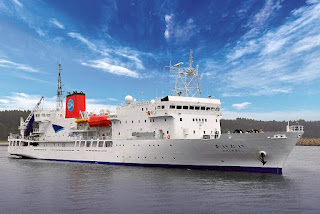
The discovery emerged from a government-backed expedition involving marine scientists from University of Tokyo and national research agencies, who retrieved sediment cores from extreme depths in the Pacific Ocean. Laboratory analysis revealed unusually high concentrations of rare earth elements (REEs) materials essential for smartphones, electric vehicles, wind turbines, and advanced defense systems.


Why Rare Earths Matter
Rare earths are not actually “rare,” but economically viable deposits are scarce and unevenly distributed. Today, much of the world’s supply is concentrated in a handful of countries, making REEs a strategic resource. For Japan, which imports nearly all of its rare earth needs, securing alternative sources has long been a national priority.
If deep-sea sediment can be responsibly mined, it could reduce reliance on overseas suppliers and stabilize access to materials critical for next-generation technologies.
What the Mission Found
According to researchers, the sediment retrieved contains a dense mix of rare earths embedded in fine clay particles. Earlier studies hinted at this potential, but the latest mission provided direct physical samples from the seabed—strengthening the case that the deposits may be both extensive and relatively uniform across large areas.
Scientists emphasize that the find does not mean immediate commercial extraction. Instead, it confirms geological potential and opens the door to feasibility studies on processing, cost, and environmental impact.
Opportunities and Caution
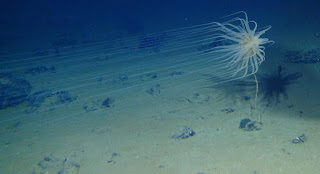
While the discovery is exciting, deep-sea mining remains controversial. Environmental groups warn that disturbing the seabed could harm fragile ecosystems that are still poorly understood. Japanese officials and researchers have stressed that any future development would require strict environmental safeguards, international cooperation, and further scientific study.
Japan has positioned the discovery as a long-term strategic option, not a rush to mine.
A Strategic Signal to the World
Beyond geology, the announcement sends a geopolitical message. As countries race to secure critical minerals for the green transition, Japan’s deep-sea research highlights how science and technology may unlock new resource frontiers while also raising global questions about governance of the oceans.
For now, the sediment cores represent possibility rather than production. But beneath thousands of meters of water, Japan may have found a resource that could quietly reshape the future of rare earth supply.
Originally written by: https://www.japantimes.co.jp/news/2026/02/02/japan/japan-rare-earth-deep-sea/?utm_medium=social&utm_type=image&utm_source=linkedin#Echobox=1770017854