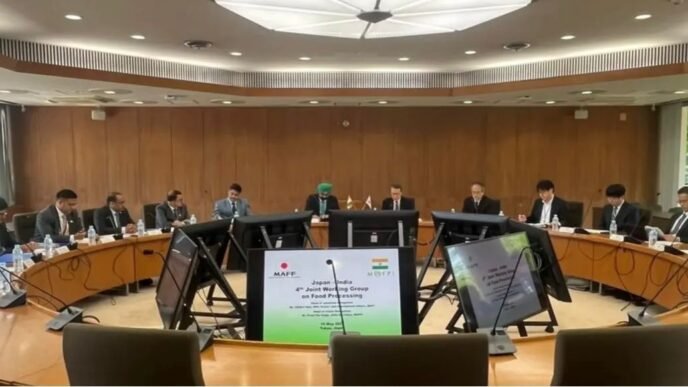
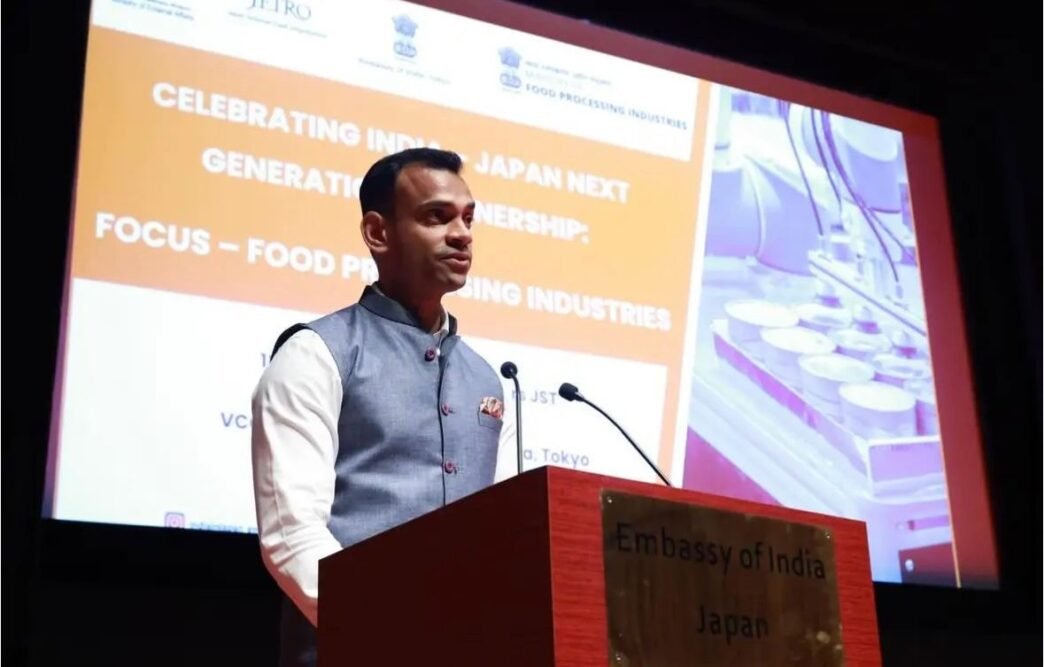
The Embassy of India in Tokyo hosted a major roadshow titled “Celebrating India-Japan Next Generation Partnership: Focus – Food Processing Industries”, highlighting growing cooperation opportunities between the two countries in the food processing sector.
The event brought together government officials, industry representatives, business organizations, and stakeholders from India and Japan to discuss investment, technology exchange, and innovation across food-related industries.
 WhatsApp Image 2024 07 01 at 13.58.28 4cfca4e0
The roadshow reflected the broader efforts by both nations to strengthen economic collaboration through emerging industries and next-generation partnerships.
Embassy Highlights Expanding Collaboration Opportunities
Speaking during the event, Deputy Chief of Mission R Madhu Sudan emphasized the wide-ranging opportunities for cooperation between India and Japan in food processing and related sectors.
Key areas highlighted included:
● Food processing industries
● Packaging technologies
● Cold chain infrastructure
● Agricultural value chains
● Food innovation
● Supply chain modernization
● Sustainable food systems
Officials noted that both countries possess complementary strengths that could support deeper industrial collaboration.
Senior Officials Discuss Investment and Innovation
The roadshow featured participation from senior representatives of both governments and industry organizations.
Among the speakers were:
● Joint Secretary Mr. Preet Pal Singh from India’s Ministry of Food Processing Industries
● Mr. Ken Sasaji, Deputy Director-General from Japan’s Ministry of Agriculture, Forestry and Fisheries
● Mr. Yuji Ando, Senior Director at JETRO
● Representatives from Invest India
● Representatives from FOOMA
Discussions focused on strengthening industrial partnerships and encouraging new business opportunities between Indian and Japanese companies.
Food Processing Sector Gains Strategic Importance
India’s food processing industry has become an increasingly important area for foreign investment and technological cooperation.
Key growth areas discussed during the event included:
● Food manufacturing
● Smart packaging solutions
● Refrigerated logistics
● Agricultural processing
● Automation technologies
● Food safety systems
● Export-oriented production
Japanese expertise in precision manufacturing and food technology is viewed as particularly valuable for India’s rapidly growing market.
Technology Exchange Remains a Major Focus
Participants emphasized the importance of technology exchange and innovation-driven cooperation between the two countries.
Areas of potential collaboration include:
● Advanced food machinery
● Sustainable processing methods
● AI-driven supply chains
● Smart storage systems
● Quality control technologies
● Energy-efficient logistics
● Automation in food production
Industry representatives noted that such partnerships could help improve efficiency and reduce food waste.
India and Japan Continue Strengthening Economic Ties
The roadshow also reflected the broader strategic and economic partnership between India and Japan.
In recent years, cooperation has expanded across sectors such as:
● Infrastructure
● Manufacturing
● Digital technology
● Renewable energy
● Startups and innovation
● Supply chain resilience
● Industrial investment
Food processing is increasingly emerging as another important pillar of bilateral cooperation.
Business and Industry Participation Expands
The event encouraged direct engagement between businesses, investors, and industry organizations from both countries.
Participants explored opportunities involving:
● Joint ventures
● Manufacturing partnerships
● Technology transfer
● Export collaboration
● Startup ecosystems
● Research cooperation
● Industrial modernization
Observers noted that private-sector collaboration could play a key role in driving future growth.
Why the India-Japan Food Processing Partnership Matters
1. Food Processing Is a Fast-Growing Sector
India’s expanding consumer market is creating major opportunities for investment and innovation.
2. Japan Brings Advanced Technology Expertise
Japanese companies are known for precision manufacturing and high-quality food technologies.
3. Bilateral Economic Cooperation Continues Growing
India and Japan are expanding partnerships across multiple strategic industries.
4. Innovation and Sustainability Are Key Priorities
Both countries are focusing on efficient, resilient, and sustainable food systems.
Frequently Asked Questions (FAQs)
Q: What was the focus of the Tokyo roadshow?
A: The event focused on India-Japan cooperation in food processing industries, packaging, cold chain systems, and technology exchange.
Q: Who organized the event?
A: The roadshow was hosted by the Embassy of India in Tokyo.
Q: Which organizations participated?
A: Participants included officials from India and Japan, along with organizations such as JETRO, Invest India, FOOMA, and government ministries.
Q: Why is food processing important for India and Japan?
A: The sector offers opportunities for investment, technology collaboration, supply chain modernization, and industrial growth.
Q: What areas of cooperation were discussed?
A: Discussions included packaging, logistics, automation, cold chain infrastructure, food safety, and innovation in food technologies.
Final Word: India and Japan Deepen Partnership Through Food Industry Cooperation
The roadshow hosted by the Embassy of India in Tokyo highlighted the growing importance of food processing as a new pillar of India-Japan economic cooperation.
By bringing together policymakers, businesses, and industry experts, the event reinforced both countries’ commitment to innovation, investment, and technology exchange in building modern and sustainable food systems.
As India and Japan continue expanding strategic and industrial ties, collaboration in food processing industries could play a major role in shaping the next generation of bilateral economic partnerships.