
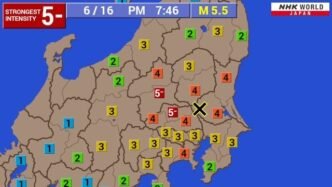
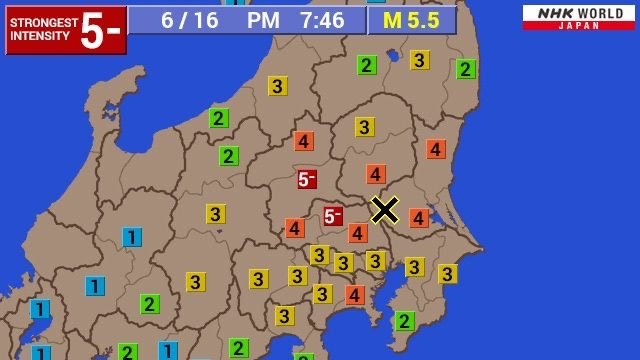
A magnitude 5.5 earthquake struck eastern Japan, with its epicenter located in the southern part of Ibaraki Prefecture, according to the Japan Meteorological Agency (JMA). The tremor was widely felt across the region, recording a lower 5 intensity on Japan’s seismic scale of 0 to 7 in southern Gunma Prefecture and northern Saitama Prefecture, making them the hardest-hit areas.
Authorities have confirmed that there is no risk of a tsunami, and no major damage or widespread injuries have been immediately reported.
 WhatsApp Image 2024 07 01 at 13.58.28 4cfca4e0
Strong Shaking Across the Kanto Region
Residents in several prefectures experienced noticeable shaking as the earthquake struck.
Areas most affected include:
● Southern Ibaraki Prefecture
● Southern Gunma Prefecture
● Northern Saitama Prefecture
● Parts of the Greater Tokyo region
● Nearby eastern Japan communities
Emergency services and local authorities quickly began monitoring infrastructure and public transportation for any potential impacts.
The Japan Meteorological Agency stated that the earthquake does not pose a tsunami threat, providing reassurance to coastal communities.
Officials continue to advise residents to:
● Stay alert for possible aftershocks
● Follow local government updates
● Secure unstable objects indoors
● Check emergency supplies
● Avoid damaged structures until inspected
● Use official information sources for updates
Japan’s Earthquake Preparedness
Situated along the Pacific Ring of Fire, Japan experiences frequent seismic activity and maintains one of the world’s most advanced earthquake monitoring and disaster preparedness systems.
The country’s safety measures include:
● Nationwide early warning systems
● Earthquake-resistant infrastructure
● Regular disaster preparedness drills
● Public emergency education
● Rapid response coordination
● Continuous seismic monitoring
● Community evacuation planning
These measures help minimize risks and improve public safety during natural disasters.
Community Response and Ongoing Monitoring
Authorities are continuing to assess the situation and monitor for aftershocks while transportation operators inspect rail lines, roads, and public facilities as a precaution.
Residents are encouraged to remain calm and stay informed through official announcements as the situation develops.
1. It Highlights Japan’s Disaster Readiness
Advanced monitoring systems enabled authorities to quickly assess the earthquake and confirm there was no tsunami risk.
2. It Demonstrates the Importance of Preparedness
Regular emergency planning helps communities respond effectively to seismic events.
3. It Reinforces Public Safety Awareness
Officials continue to encourage vigilance for aftershocks and adherence to safety guidelines.
4. It Reflects Japan’s Resilient Infrastructure
Modern engineering and coordinated emergency responses play a crucial role in reducing the impact of earthquakes.
Frequently Asked Questions (FAQs)
Q: How strong was the earthquake?
A: The earthquake measured magnitude 5.5, with a maximum observed intensity of lower 5 on Japan’s seismic scale in parts of Gunma and Saitama prefectures.
A: The epicenter was located in the southern part of Ibaraki Prefecture in eastern Japan.
A: No. The Japan Meteorological Agency has confirmed that the earthquake does not pose a tsunami threat.
Q: What should residents do after the earthquake?
A: People should remain alert for aftershocks, follow official guidance, check their surroundings for hazards, and stay updated through reliable emergency information channels.
Final Word: Vigilance and Preparedness Remain Key
The magnitude 5.5 earthquake served as another reminder of Japan’s active seismic environment. While authorities have confirmed there is no tsunami threat, ongoing monitoring and public preparedness remain essential. Thanks to advanced warning systems and resilient infrastructure, communities across eastern Japan continue to respond with calm and caution as officials keep a close watch on the situation.