

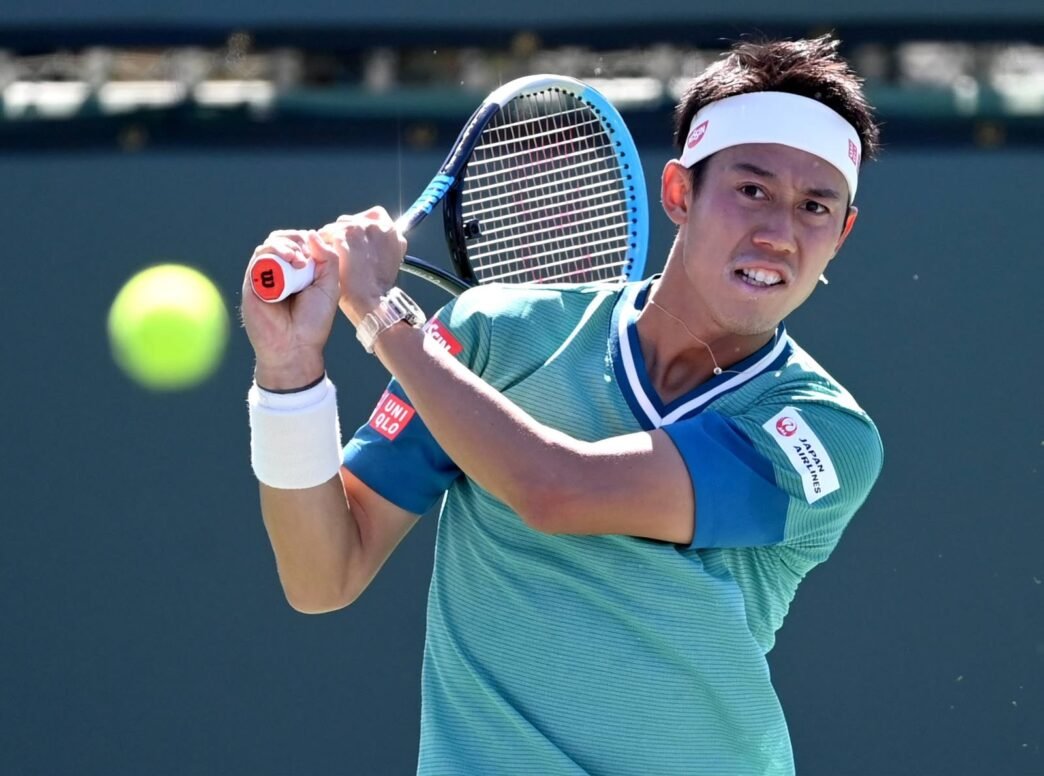
Japanese tennis star Kei Nishikori has brought his remarkable professional career to an end, playing his final match in front of home fans at the Japan Open in Tokyo on October 1, 2026. The 36-year-old received an emotional farewell at the Ariake Coliseum after losing 6-4, 6-4 to American Frances Tiafoe in the first round.
For nearly two decades, Nishikori represented Japan on the international tennis stage, becoming one of the most successful men’s players in Asian tennis history. From reaching a historic Grand Slam final to winning an Olympic medal, his achievements helped bring greater international attention to Japanese tennis.
 WhatsApp Image 2024 07 01 at 13.58.28 4cfca4e0
His farewell in Tokyo marked the conclusion of a career defined by major milestones, memorable performances and repeated comebacks from injuries.
A Historic Career That Put Japanese Tennis on the Global Map
Born on December 29, 1989, in Matsue, Shimane Prefecture, Nishikori began playing tennis at a young age. His talent took him to the United States, where he trained at the IMG Academy in Florida and developed his game against international competition.
His breakthrough came in 2008, when he won the Delray Beach Open at just 18 years old, becoming the youngest player to win an ATP Tour title since 1998.
Nishikori continued to rise through the rankings, eventually reaching world No. 4 in March 2015. He also became the first Japanese men’s player to enter the ATP Top 10, setting a new benchmark for the country’s tennis history.
His success demonstrated that Japanese players could compete consistently against some of the world’s leading tennis stars, inspiring greater interest in the sport among fans and young athletes in Japan.
The 2014 US Open: A Milestone in Tennis History
One of the defining moments of Nishikori’s career came at the 2014 US Open, where he made history as the first Asian man to reach a Grand Slam singles final.
During his remarkable run in New York, Nishikori defeated world No. 1 Novak Djokovic in the semifinals in four sets. The victory established him as a serious contender at the highest level of professional tennis.
He eventually faced Croatia’s Marin Cilic in the final but lost in straight sets. Despite missing out on the championship, his performance marked a significant milestone for Asian men’s tennis.
The achievement also demonstrated his ability to challenge some of the most dominant players of his generation and compete deep into major tournaments.
Olympic Bronze Medal and 12 ATP Titles
Another major highlight came at the 2016 Rio Olympics, where Nishikori won the men’s singles bronze medal after defeating Spanish tennis star Rafael Nadal in a three-set match.
The victory made him the first Japanese man to win an Olympic tennis singles medal since tennis returned as a full medal sport in 1988.
Across his professional career, Nishikori collected 12 ATP Tour singles titles. Among his most memorable victories were his Japan Open triumphs in 2012 and 2014, both achieved in front of home supporters in Tokyo.
His achievements included four appearances in ATP Masters 1000 finals and repeated deep runs at Grand Slam tournaments, establishing his place among the leading players of his era.
Injuries and the Challenges of a Long Career
Despite his accomplishments, Nishikori’s career was repeatedly interrupted by injuries. Problems involving his wrist, elbow, hip and other physical issues affected his ability to compete consistently and forced him to miss important tournaments.
His return to competition after lengthy injury absences became a recurring part of his career. Although he continued to demonstrate his skill and determination, his ranking gradually declined as younger players emerged on the international circuit.
Nishikori announced his retirement on April 30, 2026, stating that he would end his professional career after the season. In his announcement, he reflected on his lifelong ambition to compete on the world stage and expressed pride in reaching the highest levels of the sport.
His decision brought an end to a journey that had included major victories, difficult setbacks and years of competition against some of tennis’s biggest names.
An Emotional Farewell in Tokyo
Nishikori’s final match carried special significance because it took place at the Japan Open, a tournament where he had created some of his most memorable moments.
Following his defeat to Frances Tiafoe on October 1, the Tokyo crowd applauded the former world No. 4 as he acknowledged the supporters at the Ariake Coliseum.
The farewell included a video tribute featuring messages from prominent tennis players, including Novak Djokovic, Carlos Alcaraz and Stefanos Tsitsipas.
Djokovic praised Nishikori’s resilience and fighting spirit, particularly his repeated efforts to return to competition despite physical setbacks. He also highlighted the significance of ending his career in his hometown country, surrounded by his supporters.
Nishikori expressed mixed emotions after the match, saying that playing in Japan had always been special. He also spoke about his pride in continuing to fight until the final point of his professional career.
His farewell brought together fans, fellow athletes and the Japanese tennis community to celebrate a career that had extended across nearly two decades.
The Legacy of Kei Nishikori in Japanese Tennis
Nishikori’s influence extends beyond his tournament victories and rankings. His rise to the top of international tennis helped expand the visibility of Japanese men’s tennis and provided an example for aspiring players.
His historic US Open final appearance, Olympic bronze medal and success on the ATP Tour established milestones that will remain part of Japanese sporting history.
His distinctive two-handed backhand, quick movement around the court and ability to extend demanding rallies also made him a recognisable figure among international tennis audiences.
With his retirement, attention now turns to the next generation of Japanese players, including emerging talents who hope to establish themselves on the global stage.
For fans in Japan, Nishikori’s farewell in Tokyo was more than the end of a sporting career. It was an opportunity to celebrate a player who helped shape the country’s modern tennis story and represented Japanese sport at some of its biggest international events.
His achievements will remain an important part of Japan’s tennis history, while his journey from a young player in Shimane to a former world No. 4 offers a lasting account of ambition, perseverance and international success.