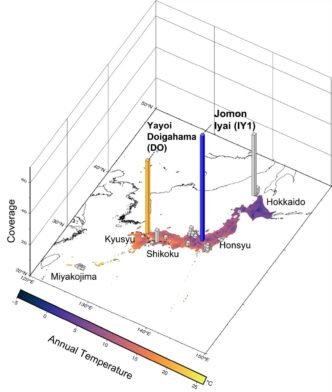
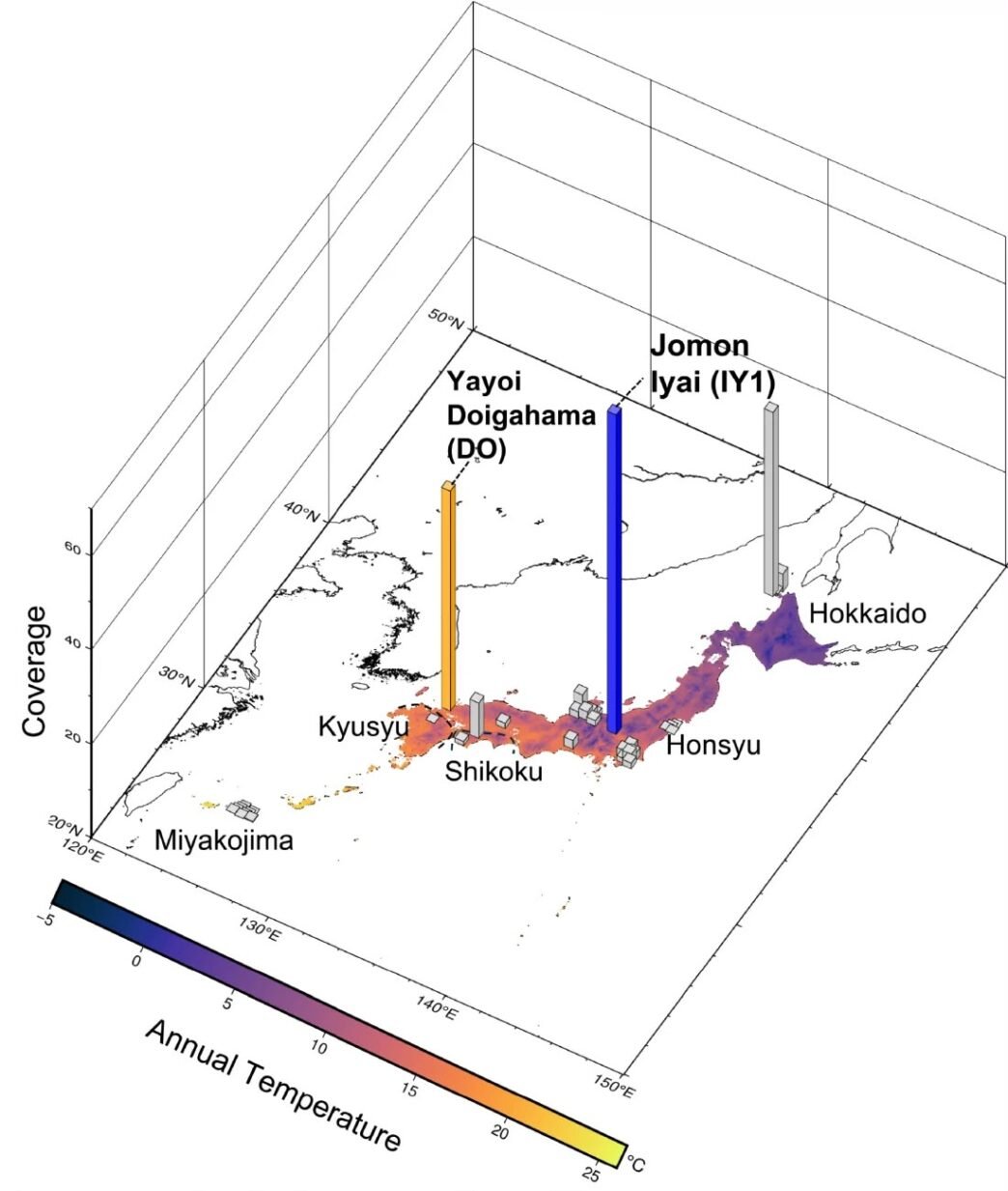
A groundbreaking genetic study has provided new insights into Japan’s prehistoric population history by analysing high-coverage genomes from individuals belonging to the ancient Jomon and Yayoi periods. The research offers one of the clearest pictures yet of how the ancestors of modern Japanese populations evolved over thousands of years.
The findings reveal that modern Japanese people share a strong genetic connection with the indigenous Jomon hunter-gatherers while also carrying significant ancestry from continental East Asian populations that arrived during the Yayoi period. Rather than replacing the earlier population, the study suggests the two groups mixed over time, shaping the genetic makeup of present-day Japan.
 WhatsApp Image 2024 07 01 at 13.58.28 4cfca4e0
Researchers also discovered evidence of prehistoric adaptations related to starch digestion, indicating that ancient populations gradually evolved to better process carbohydrate-rich diets as agriculture spread across the Japanese archipelago. These genetic changes likely accompanied the transition from hunting and gathering to farming.
By using high-quality ancient genomes, scientists were able to reconstruct population movements and interactions with greater accuracy than previous studies. The research highlights how migration, cultural exchange, and adaptation collectively influenced Japan’s demographic history.
The study not only deepens our understanding of Japan’s ancient past but also demonstrates how advances in DNA sequencing are transforming the study of human history, revealing the complex genetic legacy behind modern populations.