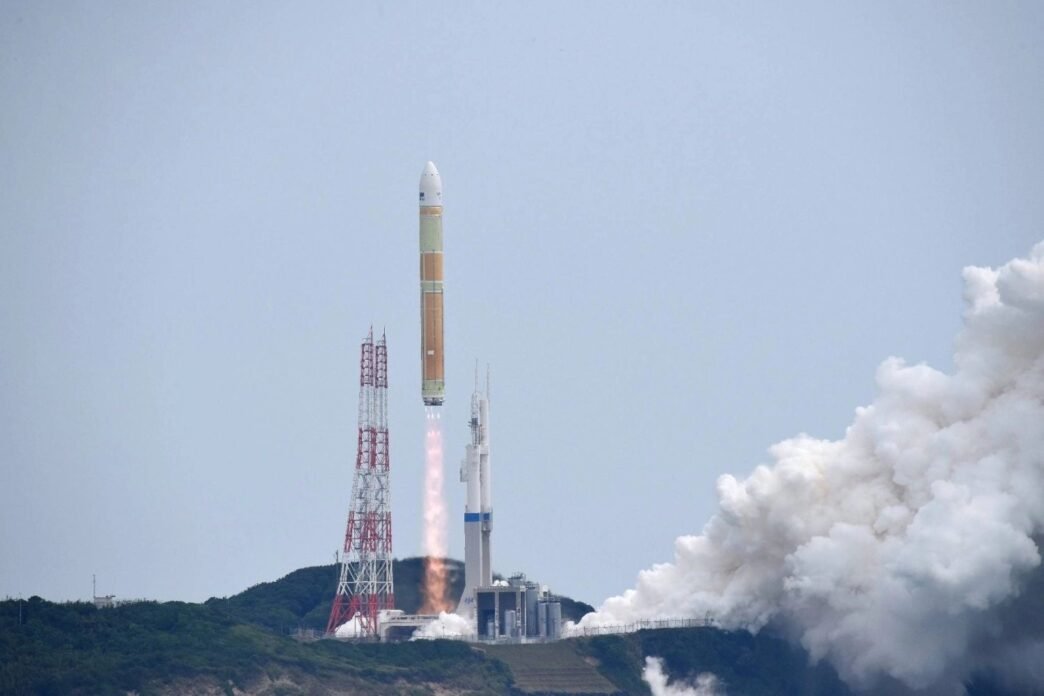
Japan has achieved another significant milestone in its space program with the successful launch of H3 Launch Vehicle No. 6, reinforcing the country’s growing capabilities in advanced aerospace technology and satellite deployment.
The rocket lifted off from the Japan Aerospace Exploration Agency (JAXA)’s Tanegashima Space Center in Kagoshima Prefecture, showcasing Japan’s next-generation launch system designed to deliver reliable and cost-effective access to space.
 WhatsApp Image 2024 07 01 at 13.58.28 4cfca4e0
H3 Rocket Demonstrates Japan’s Next-Generation Space Technology
The H3 rocket represents the successor to Japan’s long-serving H-IIA launch vehicle and is designed to enhance the country’s competitiveness in the global space industry.
Key features include:
● Improved launch efficiency
● Higher payload capacity
● Advanced propulsion technology
● Greater mission flexibility
● Reduced operational costs
● Enhanced reliability
● Support for commercial and government missions
The successful mission highlights Japan’s commitment to expanding its presence in space exploration and satellite services.
Tanegashima Space Center Remains the Heart of Japan’s Space Program
Located in Kagoshima Prefecture, Tanegashima Space Center is one of Asia’s most important launch facilities and has hosted numerous historic missions.
The center supports:
● Satellite launches
● Scientific research missions
● Earth observation programs
● Communication technology projects
● International space collaborations
● Aerospace innovation
● Next-generation rocket development
Its strategic location makes it an ideal site for launching spacecraft into orbit.
Strengthening Japan’s Position in the Global Space Industry
The H3 program is expected to play a vital role in Japan’s long-term space ambitions.
The launch vehicle is designed to support:
● Commercial satellite deployment
● Climate and environmental monitoring
● Navigation systems
● Disaster management technologies
● National security applications
● Scientific exploration
● International partnerships
By investing in advanced launch capabilities, Japan aims to become an increasingly important player in the rapidly expanding global space economy.
Space Technology Drives Innovation Beyond Aerospace
Developments in rocket technology contribute to a wide range of industries and everyday applications.
Benefits include:
● Better weather forecasting
● Improved telecommunications
● Navigation and mapping services
● Disaster response systems
● Environmental monitoring
● Scientific research
● Global connectivity
Successful launches strengthen both technological innovation and economic growth.
Japan Continues Its Vision for the Future
The success of H3 Launch Vehicle No. 6 reflects Japan’s long-term commitment to science, technology, and innovation.
Future priorities include:
● Expanding satellite capabilities
● Supporting lunar exploration initiatives
● Advancing space research
● Encouraging private-sector participation
● Developing sustainable space technologies
● Strengthening international cooperation
● Inspiring the next generation of scientists and engineers
The H3 program is expected to become a cornerstone of Japan’s future space activities.
1. It Demonstrates Advanced Japanese Engineering
The successful mission showcases the reliability and capabilities of Japan’s next-generation H3 rocket.
2. It Strengthens Japan’s Space Industry
The H3 launch vehicle is designed to support both government and commercial space missions.
3. It Expands Opportunities for Scientific Research
Reliable launch systems enable new satellite projects and technological innovation.
4. It Reinforces Japan’s Global Space Ambitions
The mission reflects the country’s commitment to remaining a leading force in aerospace development.
Frequently Asked Questions (FAQs)
A: The H3 is Japan’s next-generation launch vehicle developed to provide reliable, flexible, and cost-effective access to space.
Q: Where was the rocket launched?
A: The H3 Launch Vehicle No. 6 lifted off from JAXA’s Tanegashima Space Center in Kagoshima Prefecture.
Q: Why is the H3 program important?
A: It strengthens Japan’s space capabilities while supporting satellite launches, scientific research, and commercial aerospace activities.
Q: What types of missions can the H3 rocket support?
A: The rocket is designed for satellite deployment, Earth observation, communications, scientific research, and future international space projects.
Q: How does this benefit Japan?
A: The program advances technological innovation, enhances global competitiveness, supports scientific discovery, and contributes to economic growth.
Final Word: Another Successful Launch Propels Japan’s Space Vision Forward
The successful launch of H3 Launch Vehicle No. 6 marks another important achievement for Japan’s rapidly evolving space program.
From the historic Tanegashima Space Center to ambitious future missions, the H3 rocket symbolizes the nation’s commitment to innovation, scientific excellence, and expanding its role in the global space community.
As Japan continues investing in next-generation aerospace technology, each successful mission brings the country one step closer to shaping the future of space exploration.