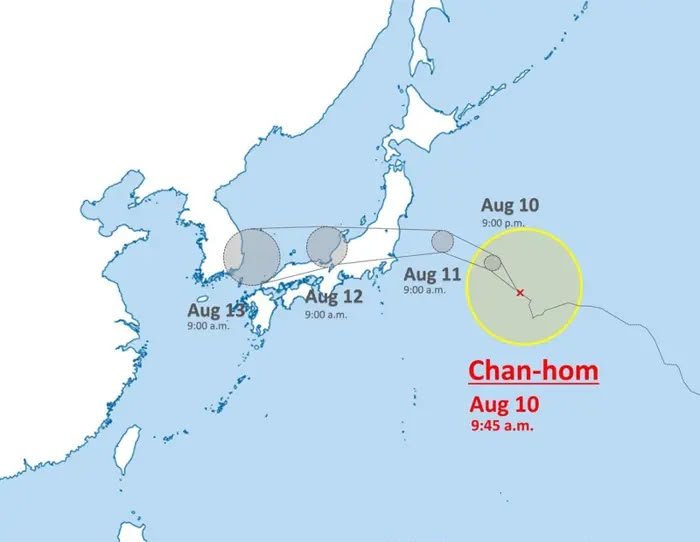
Typhoon Chan-hom is expected to approach Japan’s main island on Tuesday, prompting authorities and residents to prepare for potentially severe weather. The storm could bring strong winds, heavy rainfall, rough seas, and disruptions to transportation across affected areas.
Weather officials are closely monitoring the typhoon’s movement and advising people in vulnerable regions to remain alert and follow the latest safety information.
 WhatsApp Image 2024 07 01 at 13.58.28 4cfca4e0
Typhoon Chan-hom Approaches Japan
As Chan-hom moves closer to Japan, authorities are preparing for the possibility of hazardous weather conditions.
Key concerns include:
● Heavy rainfall
● Strong winds
● Rough seas
● Flooding risks
● Landslides
● Transport disruptions
● Power outages
Residents in areas along the storm’s projected path have been advised to monitor official weather updates and prepare for changing conditions.
Heavy Rain and Strong Winds Expected
Typhoons can bring intense rainfall over short periods, increasing the risk of flooding and landslides, particularly in mountainous and low-lying areas.
Strong winds may also affect buildings, trees, power lines, and transportation networks. Coastal communities could experience dangerous waves and rough seas as the storm approaches.
Potential Impact on Travel
The approaching typhoon could disrupt flights, railway services, ferries, and road transportation depending on its strength and path.
Travellers are advised to:
● Check flight and train schedules
● Monitor weather warnings
● Allow extra time for journeys
● Follow instructions from transport operators
● Avoid unnecessary travel during severe weather
Airlines and railway operators may announce schedule changes if conditions deteriorate.
Japan Strengthens Storm Preparedness
Japan regularly experiences typhoons and maintains extensive systems for monitoring severe weather and issuing public warnings.
Local authorities may open evacuation facilities or issue evacuation guidance if flooding, landslides, or other hazards become a serious threat.
Residents are encouraged to secure loose outdoor objects, prepare emergency supplies, charge mobile devices, and identify nearby safe locations.
Why This Matters
1. Public Safety
Early warnings and preparation can help reduce risks to residents in areas affected by strong winds and heavy rain.
2. Travel Disruptions
Typhoons can cause significant interruptions to Japan’s extensive air, rail, road, and maritime transport networks.
3. Flood and Landslide Risks
Heavy rainfall can quickly increase the risk of flooding and landslides, particularly in vulnerable areas.
4. Importance of Preparedness
The approaching storm highlights the importance of monitoring official forecasts and following local emergency guidance.
Final Word
With Typhoon Chan-hom expected to approach Japan’s main island on Tuesday, authorities are keeping a close watch on the storm’s movement. Strong winds, heavy rain, rough seas, and transportation disruptions remain potential concerns, making preparedness and timely access to official weather information essential.