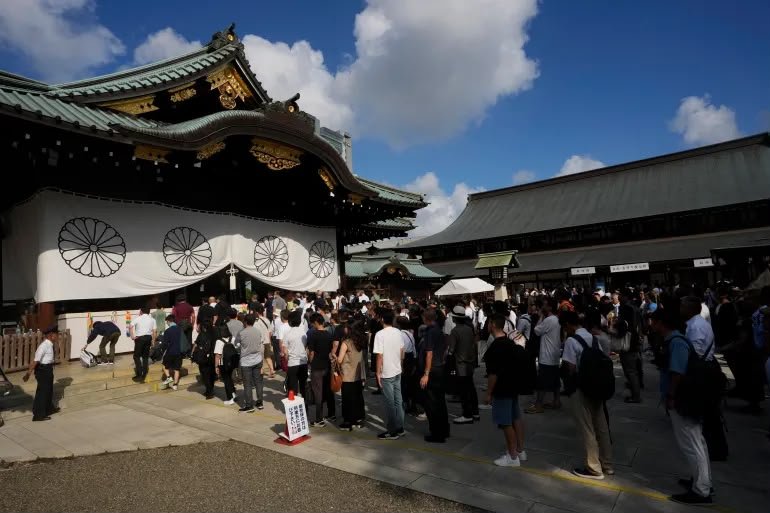
Yasukuni Shrine is a Shinto shrine in Tokyo dedicated to people who died while serving Japan, including military personnel who died during wars. Founded in 1869, it has become one of Japan’s most politically and historically controversial religious sites.
The controversy is largely connected to the shrine’s enshrinement of 14 Japanese leaders convicted of Class-A war crimes by the International Military Tribunal for the Far East after World War II. Among those enshrined is former Prime Minister Hideki Tojo, who was executed in 1948.
 WhatsApp Image 2024 07 01 at 13.58.28 4cfca4e0
Why China and South Korea Object
China and South Korea strongly criticize visits by Japanese political leaders to Yasukuni because they view the shrine as glorifying Japan’s wartime militarism and failing to adequately acknowledge atrocities committed during Japan’s occupation and wars in Asia.
For many people in these countries, the shrine is therefore associated with painful memories of Japan’s wartime actions.
Why Japanese Politicians Visit
Supporters of visits argue that Yasukuni is a place to honour Japan’s war dead and remember those who sacrificed their lives for the country. Some Japanese politicians distinguish between paying respects to the dead and endorsing wartime actions.
However, visits by senior political leaders can trigger diplomatic tensions, particularly when they take place on significant national commemorative dates.
A Symbol of Japan’s Difficult Wartime Legacy
Yasukuni Shrine sits at the intersection of religion, memory, nationalism, and international diplomacy. Its significance goes beyond the shrine itself because it reflects continuing disagreements over how Japan should remember and discuss its wartime history.
Final Word
Tokyo’s Yasukuni Shrine remains one of the most sensitive symbols of Japan’s wartime past. While supporters see it as a place to honour fallen Japanese soldiers, critics argue that the presence of convicted war criminals makes political visits deeply troubling and historically contentious.