
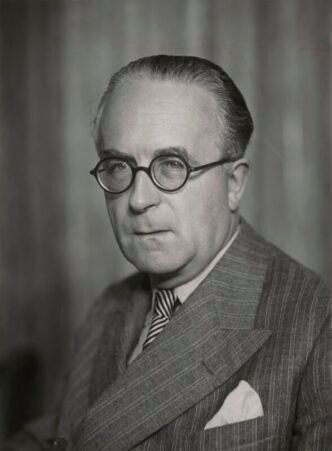
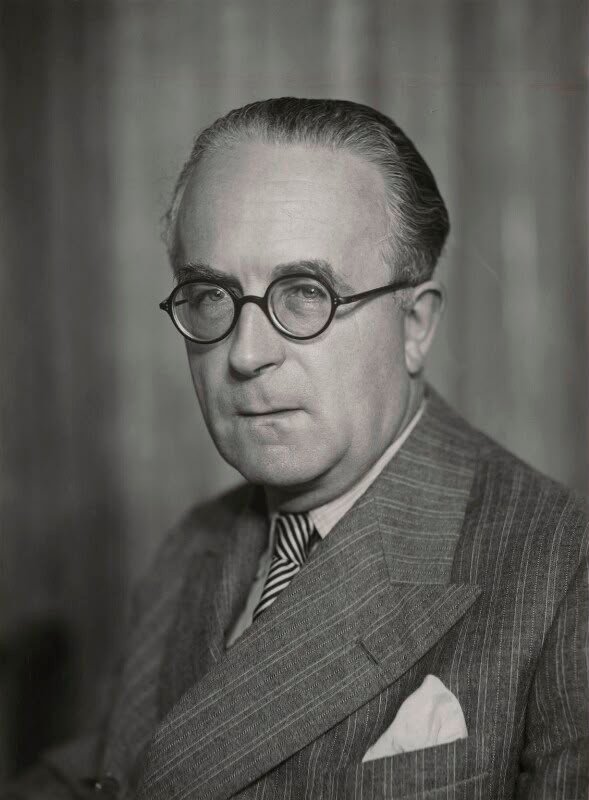
In 1947, as British rule in India was coming to an end, one of the most consequential tasks of Partition was handed to a British lawyer who had never previously visited the subcontinent.
Sir Cyril Radcliffe was appointed chairman of two Boundary Commissions tasked with determining the new borders between India and Pakistan in Punjab and Bengal. He arrived in India on July 8, 1947, and had only about five weeks to complete the work.
 WhatsApp Image 2024 07 01 at 13.58.28 4cfca4e0
The decision to choose Radcliffe was partly based on his lack of previous connections to India. The idea was that an outsider could be viewed as impartial rather than favouring either side. However, the extraordinary time pressure and complexity of the task have made his role one of the most debated aspects of Partition.
Who Was Sir Cyril Radcliffe?
Radcliffe was a British barrister and civil servant who had built his career in Britain. Before 1947, he had no experience of India and had never travelled to the subcontinent.
His lack of familiarity with the region was unusual given the scale of the assignment. He was expected to help divide territories containing millions of people while considering religious demographics, geography, communications, waterways, irrigation systems and other factors.
The Five-Week Deadline
Radcliffe’s biggest challenge was time.
He was given roughly five weeks to determine boundaries for Punjab and Bengal before British power was transferred to the newly independent dominions. Each commission included representatives nominated by the Indian National Congress and the Muslim League, but disagreements between the sides made reaching consensus extremely difficult.
Ultimately, Radcliffe had to make many of the decisive choices himself.
What Was the Radcliffe Line?
The Radcliffe Line refers to the boundary created through the Partition of British India. It divided Punjab and Bengal between India and Pakistan.
The final boundary awards were officially published on August 17, 1947, two days after India became independent and after Pakistan’s independence.
The line later became part of today’s India-Pakistan border in Punjab and the India-Bangladesh border in Bengal.
Why Was the Border So Controversial?
Drawing a border across Punjab and Bengal meant dividing communities, villages, agricultural areas, transportation networks and administrative territories.
The consequences were enormous. Partition triggered one of the largest mass migrations in modern history, with millions of Hindus, Muslims and Sikhs leaving their homes amid widespread communal violence.
The boundary therefore became much more than a line on a map. It changed the lives of millions of people and continues to influence South Asian politics and society.
Why Was Radcliffe Chosen?
The reasoning behind Radcliffe’s appointment was that someone without established political or personal connections in India could potentially make a decision without being seen as favouring one community or political organisation.
However, impartiality did not eliminate the enormous practical difficulties of the assignment. Radcliffe had limited time, incomplete familiarity with the region and competing political demands from the representatives involved.
The Legacy of the Radcliffe Line
The border created in 1947 continues to shape South Asia.
Its legacy includes:
● The India-Pakistan border in Punjab
● The India-Bangladesh border in Bengal
● Mass migration during Partition
● Displacement of communities
● Long-term political tensions
● Enduring memories among Partition survivors
The decisions made in those few weeks continue to be studied by historians and debated because of their enormous human and political consequences.
Why This Matters
1. A Border Drawn Under Extreme Pressure
Radcliffe was given only weeks to make decisions affecting millions of people.
2. A Landmark Moment in Indian History
The Radcliffe Line became one of the defining geographical consequences of the 1947 Partition.
3. Millions Were Affected
The boundary contributed to the upheaval, migration and disruption that followed Partition.
4. Its Effects Continue Today
The borders created during Partition remain central to India’s relationships with Pakistan and Bangladesh.
Final Word
Sir Cyril Radcliffe’s story is one of the most extraordinary chapters of the 1947 Partition. A British lawyer with no previous experience in India was given the immense responsibility of drawing boundaries across Punjab and Bengal in just a few weeks. The resulting Radcliffe Line became a defining feature of South Asian history, with consequences that continue to be felt nearly eight decades later.