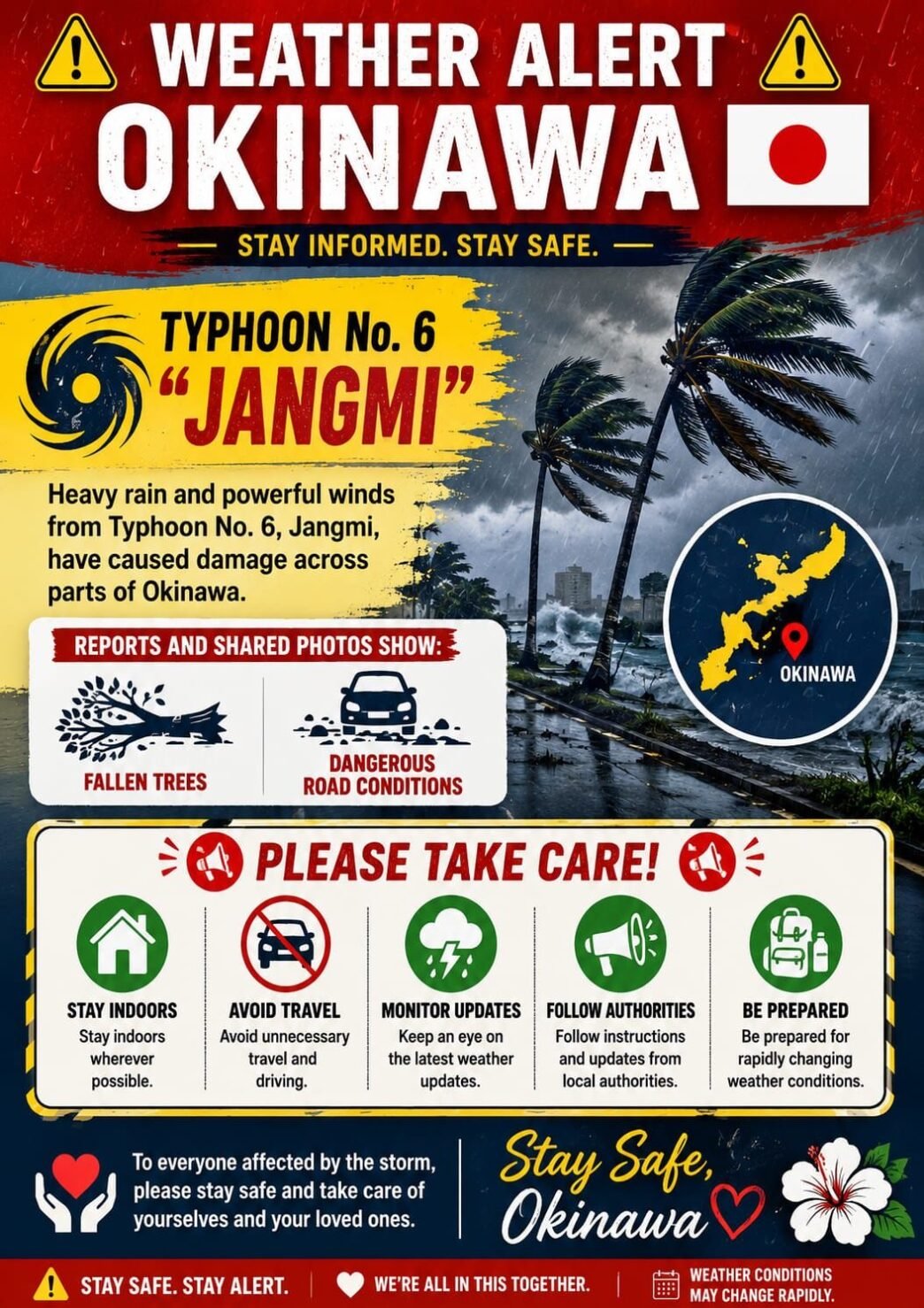
Residents across Okinawa are being urged to remain vigilant as Typhoon No. 6, Jangmi, continues to bring heavy rainfall, powerful winds, and hazardous conditions to parts of the prefecture.
Reports and images shared from affected areas show fallen trees, debris on roads, and dangerous driving conditions as the storm system moves through the region.
 WhatsApp Image 2024 07 01 at 13.58.28 4cfca4e0
Authorities are encouraging residents and visitors to prioritize safety and closely monitor official weather updates as conditions may change rapidly.
Heavy Rain and Strong Winds Impact Okinawa
Typhoon Jangmi has brought severe weather conditions across parts of Okinawa, resulting in disruptions to daily life and transportation.
Reported impacts include:
● Fallen trees and branches
● Flooded or slippery roads
● Reduced visibility for drivers
● Strong coastal winds
● Rough sea conditions
● Local transportation disruptions
● Potential power outages in affected areas
Emergency services remain on alert as the storm continues to affect the region.
Residents Urged to Take Precautionary Measures
Officials are advising people to exercise caution and avoid unnecessary risks during the storm.
Safety recommendations include:
● Stay indoors whenever possible
● Avoid unnecessary travel
● Monitor official weather updates
● Follow instructions from local authorities
● Secure outdoor belongings
● Prepare emergency supplies
● Stay away from coastal areas and flooded locations
Weather conditions can change quickly during tropical storms, making preparedness essential.
Okinawa Frequently Experiences Typhoon Activity
Located in southern Japan, Okinawa is among the country’s regions most frequently affected by tropical storms and typhoons during the Pacific typhoon season.
Common impacts of typhoons include:
● Heavy rainfall
● Strong winds
● Coastal flooding
● Transportation disruptions
● Agricultural damage
● Power interruptions
● Temporary business closures
Local authorities have extensive disaster preparedness systems designed to help communities respond effectively.
Travelers Should Monitor Transportation Updates
Visitors currently in Okinawa are encouraged to check with transportation providers regarding possible disruptions.
Potential impacts may include:
● Flight delays or cancellations
● Ferry service suspensions
● Road closures
● Public transport adjustments
● Tourist attraction closures
● Event postponements
● Weather-related travel advisories
Travelers should follow guidance issued by airlines, hotels, and local officials.
Community Preparedness Remains Essential
Japan is internationally recognized for its disaster preparedness and emergency response systems.
During severe weather events, residents are encouraged to:
● Keep emergency kits ready
● Charge mobile devices
● Stay informed through trusted sources
● Check on family members and neighbors
● Follow evacuation guidance if necessary
● Avoid risky outdoor activities
● Remain calm and prepared
Preparedness plays a critical role in minimizing risks during storms.
Why This Weather Event Is Receiving Attention
1. Typhoon Jangmi Has Caused Localized Damage
Reports indicate fallen trees and hazardous road conditions in some areas.
2. Okinawa Is Vulnerable to Typhoons
The region frequently experiences tropical storms during typhoon season.
3. Safety Remains the Top Priority
Authorities are urging residents and visitors to remain cautious.
4. Weather Conditions Can Change Rapidly
Heavy rain and strong winds can quickly create dangerous situations.
Frequently Asked Questions (FAQs)
A: Typhoon No. 6, Jangmi, is bringing heavy rain and powerful winds to parts of Okinawa.
Q: What damage has been reported?
A: Reports include fallen trees, debris, and dangerous road conditions in some locations.
A: Residents should stay indoors where possible, avoid unnecessary travel, and follow official weather updates.
Q: Could transportation be affected?
A: Yes. Flights, ferries, and local transportation services may experience disruptions due to weather conditions.
Q: Why is Okinawa often impacted by typhoons?
A: Okinawa’s location in the western Pacific places it along common tropical storm and typhoon paths.
Final Word: Safety First as Okinawa Faces Severe Weather
As Typhoon Jangmi continues to affect Okinawa, residents and visitors are being encouraged to remain alert, follow official guidance, and prioritize personal safety.
While Japan’s disaster preparedness systems are among the world’s most advanced, changing weather conditions can still pose significant risks. Staying informed and taking precautionary measures will be essential as the situation develops.
To everyone affected by the storm, stay safe, look after your loved ones, and continue monitoring updates from local authorities.