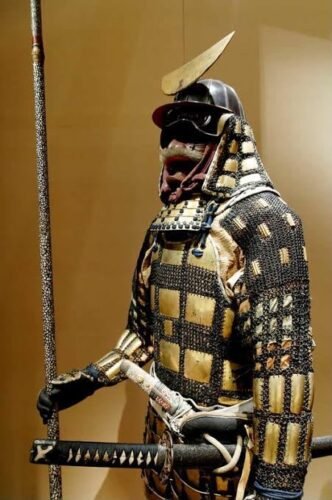
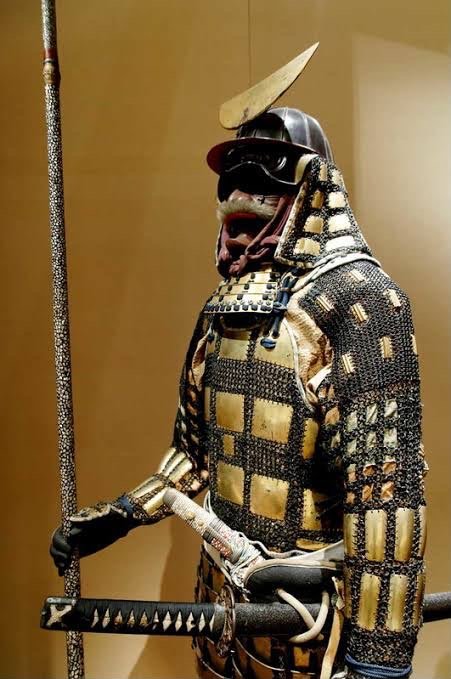
For centuries, samurai armour symbolized the strength, discipline, and prestige of Japan’s warrior class. Carefully crafted to protect against swords, arrows, and spears while allowing mobility, the armour was perfectly suited to the style of warfare that dominated feudal Japan. However, as military technology evolved and firearms became more widespread, the very armour that had once been a symbol of power gradually became a battlefield weakness.
The arrival of matchlock firearms in the 16th century transformed warfare across Japan. Traditional samurai armour, designed for close combat, offered limited protection against bullets, forcing military leaders to rethink battlefield tactics and equipment. As firearms became more common during the Sengoku period, armies increasingly relied on massed infantry and coordinated gunfire rather than individual swordsmanship and cavalry charges.
 WhatsApp Image 2024 07 01 at 13.58.28 4cfca4e0
Changing military technology challenged centuries-old combat traditions.
Key developments included:
● Widespread use of firearms on the battlefield
● Declining effectiveness of traditional samurai armour
● Shift from individual combat to organized infantry tactics
● Adoption of stronger and modified armour designs
● Greater emphasis on strategy and battlefield coordination
● Transformation of Japan’s military culture
These changes marked a turning point in Japanese warfare, where innovation became as important as martial skill.
From Symbol of Strength to Tactical Challenge
Although armour continued to evolve with thicker plates and improved designs, it could not fully offset the growing effectiveness of firearms. Military commanders increasingly recognized that victory depended not only on personal bravery but also on modern tactics, disciplined formations, and technological adaptation.
The transition reflected a broader lesson in military history: even the most iconic equipment can become obsolete when warfare changes.
Today, samurai armour remains one of Japan’s most recognizable cultural symbols, admired for its craftsmanship and artistic beauty. Museums and historical sites preserve these remarkable pieces as reminders of a time when the samurai shaped Japan’s history, while also illustrating how technological innovation can redefine the balance of power.
1. Understanding Military Innovation
The story shows how advances in technology can transform warfare.
2. Appreciating Samurai History
Samurai armour remains an enduring symbol of Japan’s cultural heritage.
3. Learning from History
Adapting to new technologies has always been essential for military success.
4. Preserving Cultural Heritage
The armour continues to inspire interest in Japan’s history, craftsmanship, and warrior traditions.
The evolution of samurai armour illustrates how even the most celebrated military innovations can lose their advantage as technology advances. While it remains a powerful symbol of Japan’s warrior heritage, its changing role on the battlefield serves as a reminder that adaptability has always been the key to survival and success.